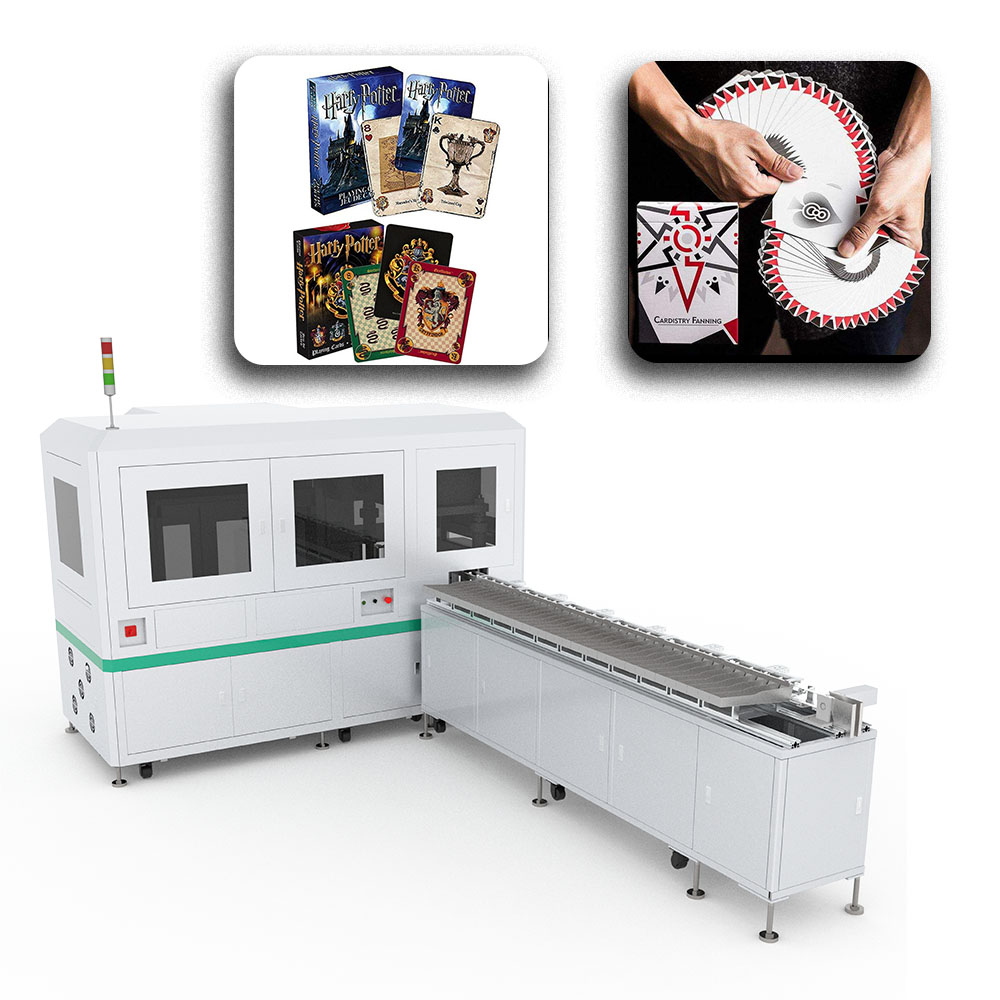
Industrial high-precision punching machine: punch and cut automatically for game cards, smart cards and special filter paper
1.Development of Industrial Punching Technology and Contemporary Manufacturing Specifications Card punching machines have become the core of the post-processing stage in the modern card manufacturing, anti-counterfeiting document printing, and special industrial material processing. Whether it is the strict requirements of TCG game cards for edge flatness and dimensional tolerances, the strict specifications of smart […]
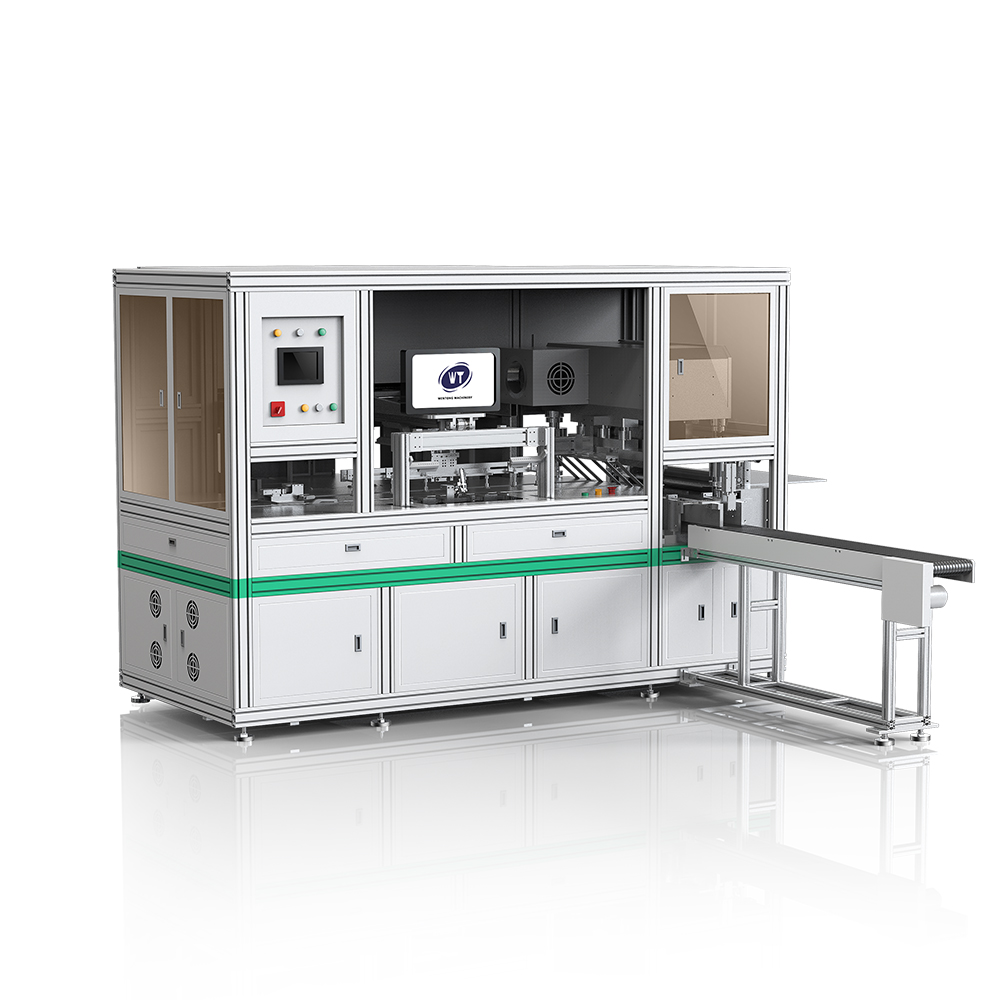
1.Development of Industrial Punching Technology and Contemporary Manufacturing Specifications
Card punching machines have become the core of the post-processing stage in the modern card manufacturing, anti-counterfeiting document printing, and special industrial material processing. Whether it is the strict requirements of TCG game cards for edge flatness and dimensional tolerances, the strict specifications of smart IC cards for burr-free and anti-delamination cutting, or the high standards of industrial filter materials for edge fibre non-damage, the quality of punching process directly determines the qualification rate and market competitiveness of the final product.
Traditional punching and cutting equipment usually has industry pain points such as large accumulated alignment errors, rapid mould wear, cumbersome mould replacement, and single material compatibility. This is especially true for thick cardboard, tough polymer materials such as PVC and PET, or dense industrial filter paper. Traditional mechanical punching often leads to problems such as chipped edges, layers separating, burrs and even shape changes of the material.
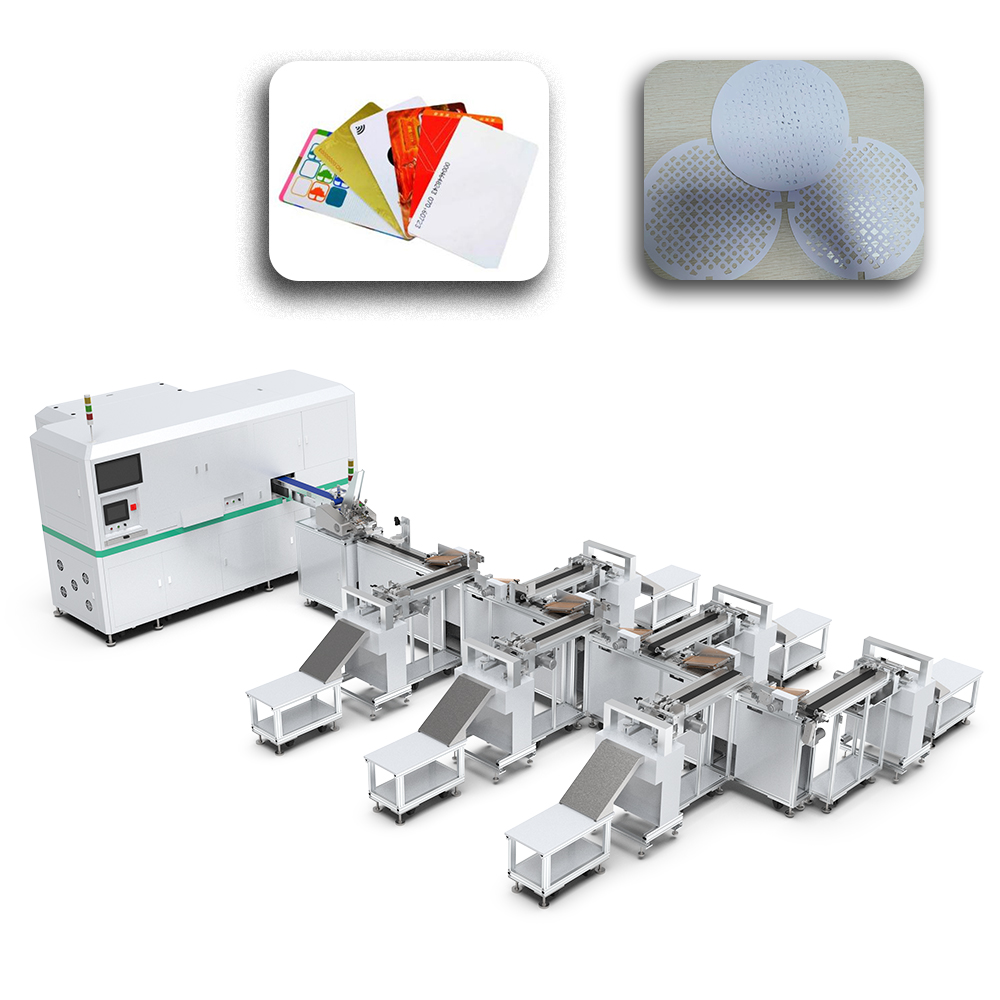
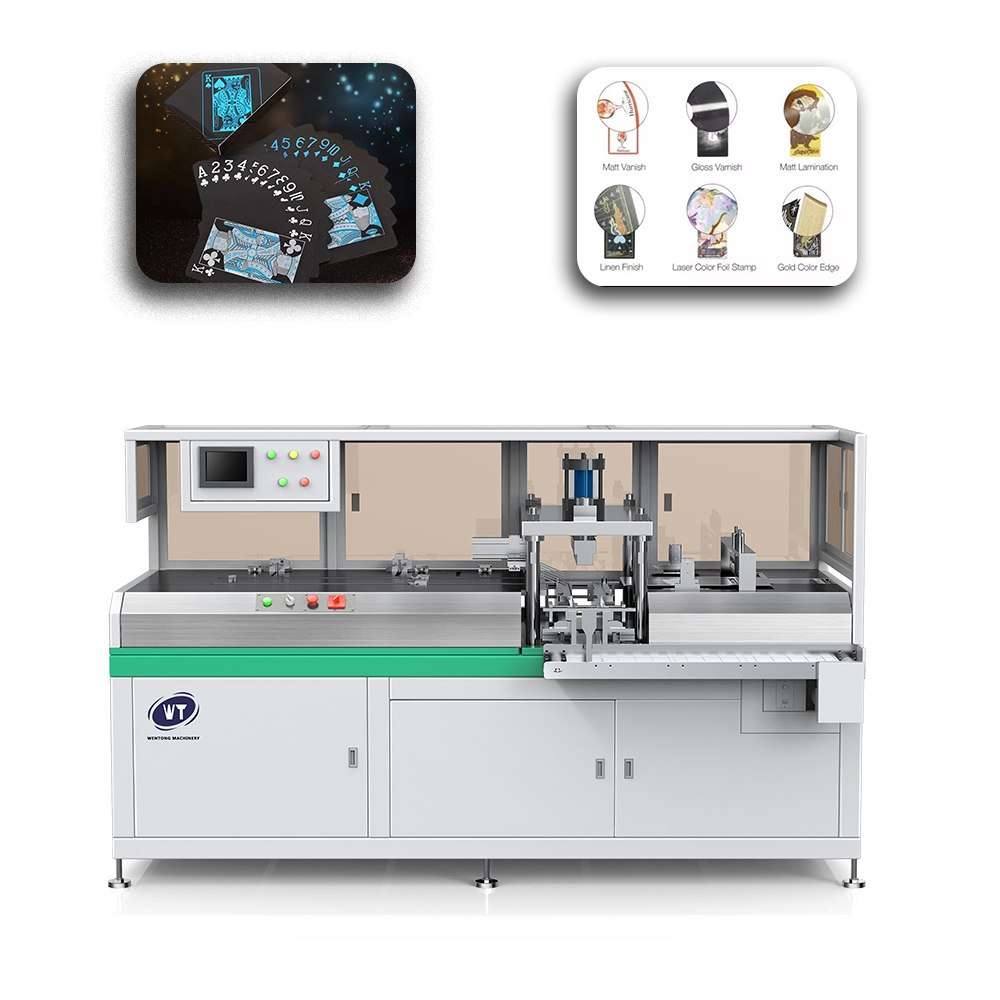
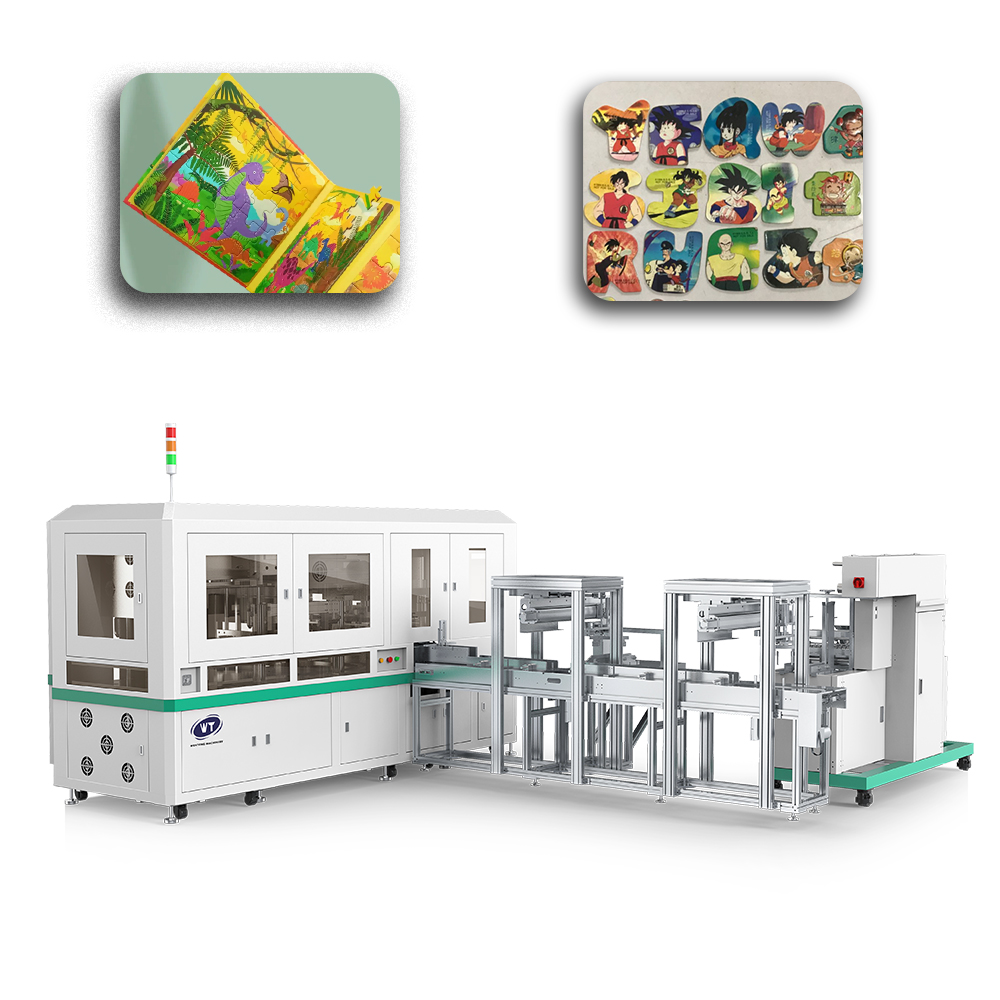
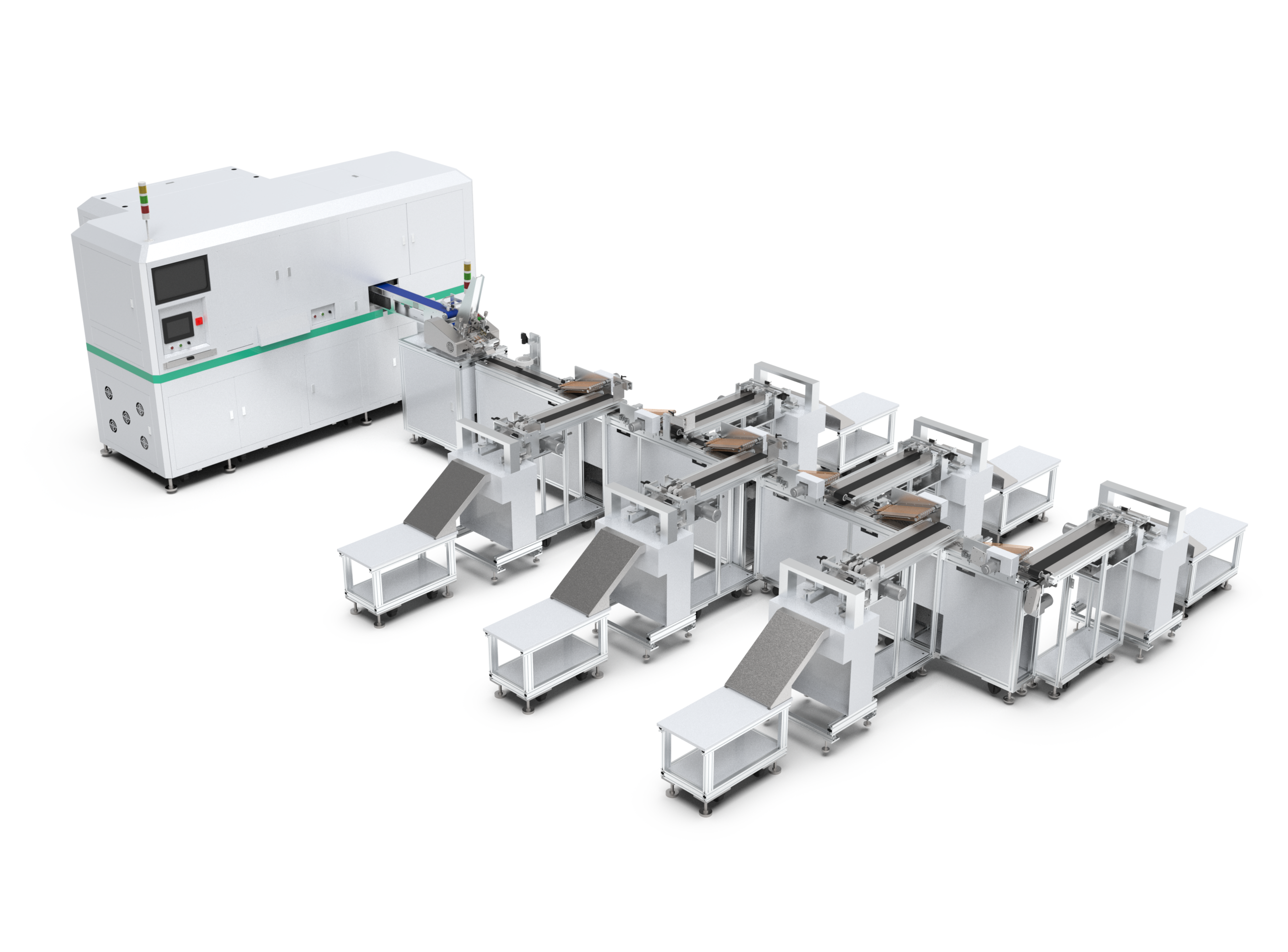
That’s what our industrial strength automatic card puncher was built for. The equipment integrates the advanced high-precision mechanical transmission, servo-driven pressure control system, photoelectric/CCD visual automatic correction system and high wear-resistant alloy mould technology to realise the whole process automation from single/roll automatic feeding, precision positioning, high-speed punching to finished product automatic collection and waste discharge.
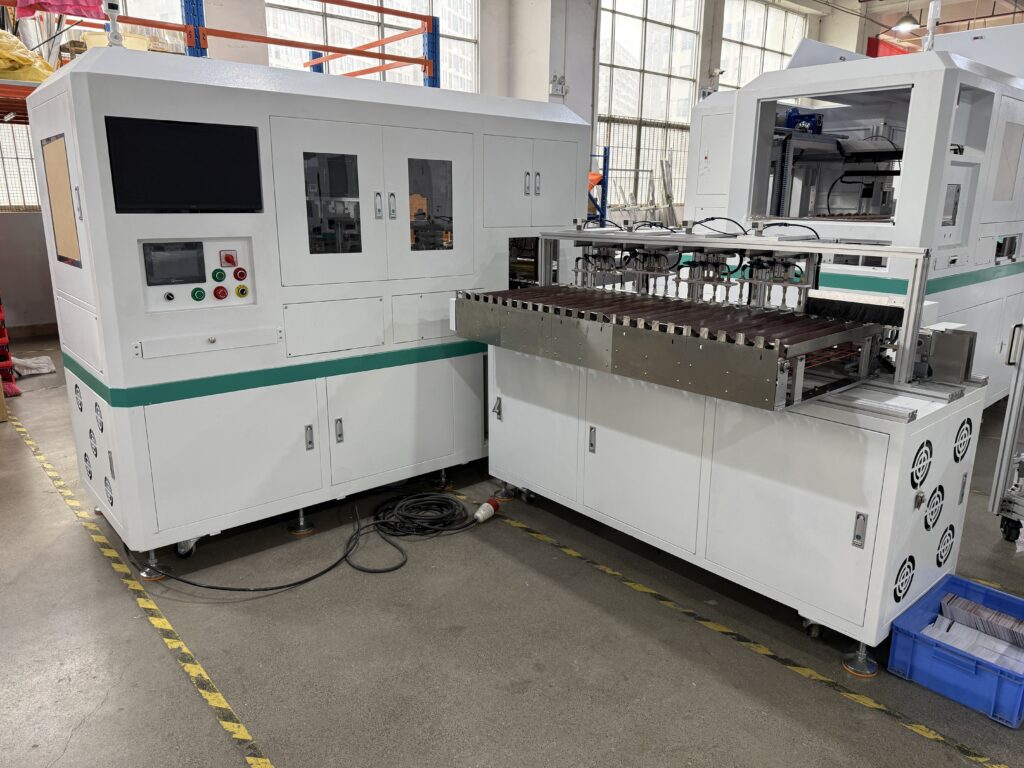
2.Working principle and advanced technology at professional level
2.1 The core workflow of card punching machine and mechanical transmission structure
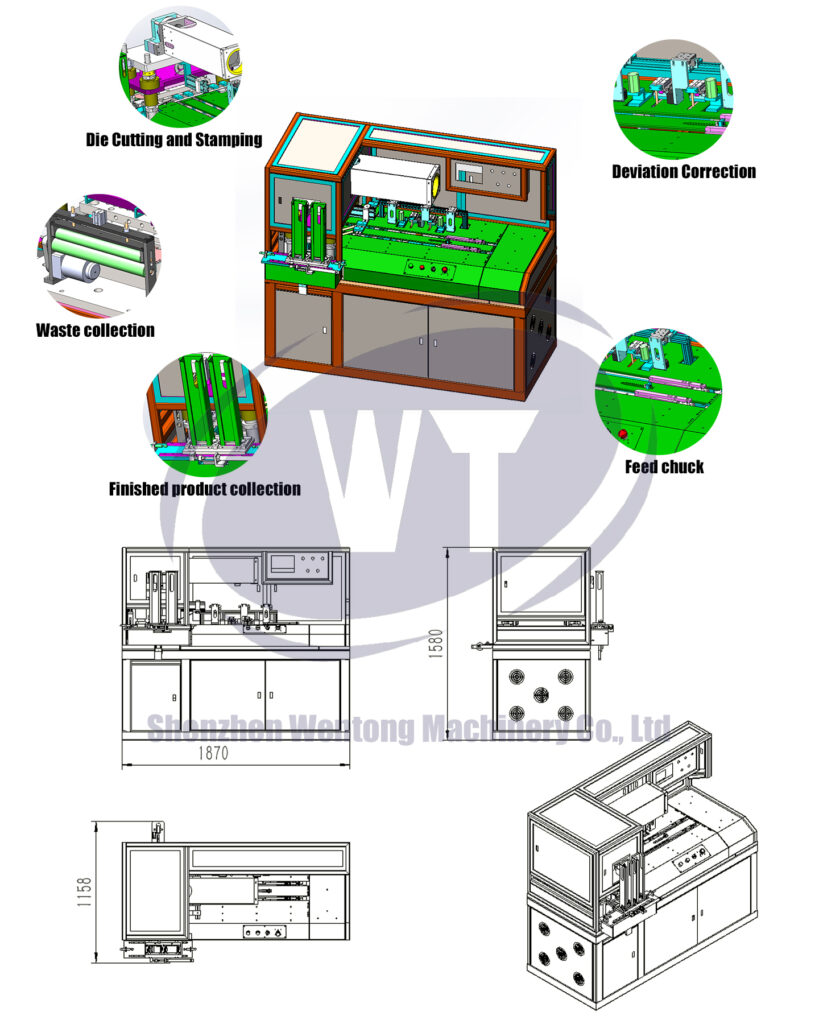
The basic workflow of modern high-precision punching machines can be divided into four core stages: automatic feeding and front positioning, optical/visual secondary correction positioning, mould punching and forming, and finished product sorting and waste collection.
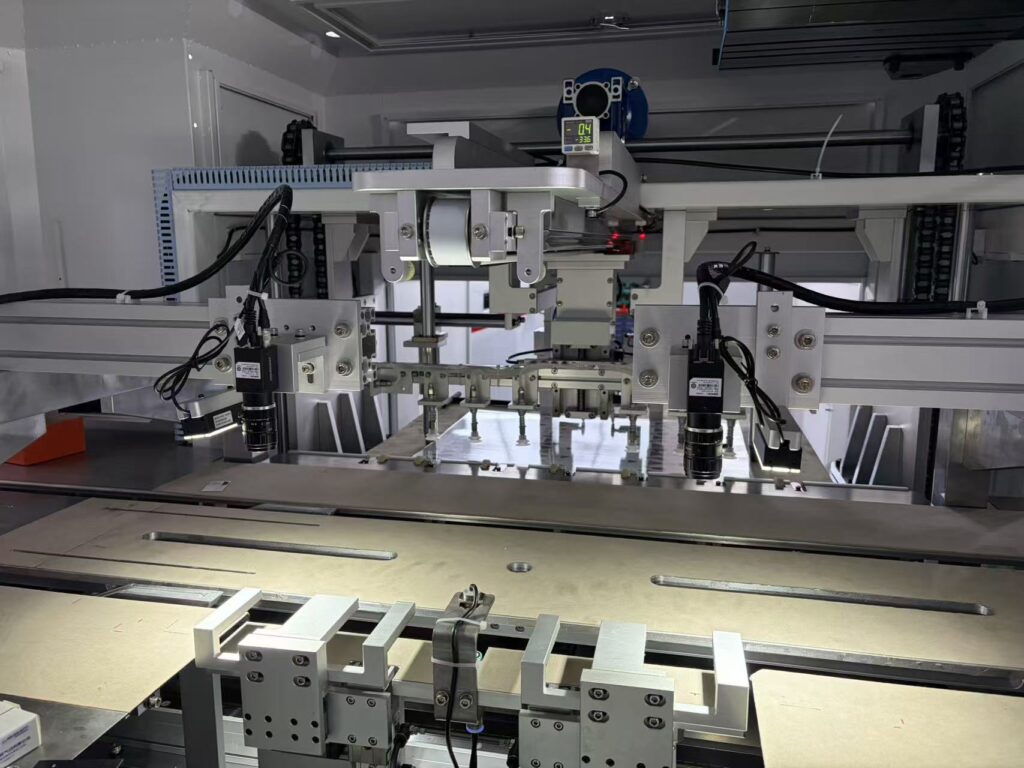
1.Feeding and conveying system: The high-precision servo motors drive the suction cups or rollers to smoothly feed the printing plates or rolls to be punched into the punching station.
2.Secondary precision alignment: The coordinate offset (X-axis, Y-axis and rotation angle) is calculated in real time according to the measurement marks on the plate taken by high-sensitivity photoelectric sensors or industrial CCD cameras.
3.Drive stamping: The control system sends commands to drive the spindle (servo or hydraulic drive) to move the upper die down to form a micrometre level gap between the upper and lower die and create a precise shear force to cut the material.
4.Finished product collection and waste cleaning: The punched card or filter paper block is sent into the collection tank through the falling channel or pneumatic lifting device, and the waste net is automatically taken out by the winding shaft or pneumatic blowing device.
From the perspective of power system, the equipment is divided into two mainstream structures according to the application scenario, i.e. servo-electric control drive and hydraulic pulse drive
- Servo drive: It has the features of fast response speed, accurate impulse output, low noise and no oil pollution, it is very suitable to cut demanding game cards, smart cards and medical special papers.
- Hydraulic drive: can provide huge unit punching force, the stability of punching thick cardboard, multi-layer wood-plastic composites (WPC) and rigid fibreboards is second to none.
Detailed knowledge of Mechanical performance and Mechanical losses of servo drives and hydraulic systems at various stamping frequencies ? To see how the equipment can reach a repeated punching accuracy of $\pm0.05 \ \textmm$, please read the detailed explanation of the working principle of the card punching machine and CCD visual alignment technology.
At the same time, it can also refer to in-depth analysis of the structure and drive technology of professional punching machines to evaluate the equipment rigidity, shock absorption structure design and annealing stress relief process of body castings under high-frequency stamping.
3.Material Adaptability, Application Solutions and Core Consumables
A good industrial card punching machine should have strong material adaptability. Different materials have different physical properties, such as hardness, toughness, ductility, and fibre density, which demand the punching machine to have a high degree of flexibility in stamping force control, mould gap design and feed tension balance.
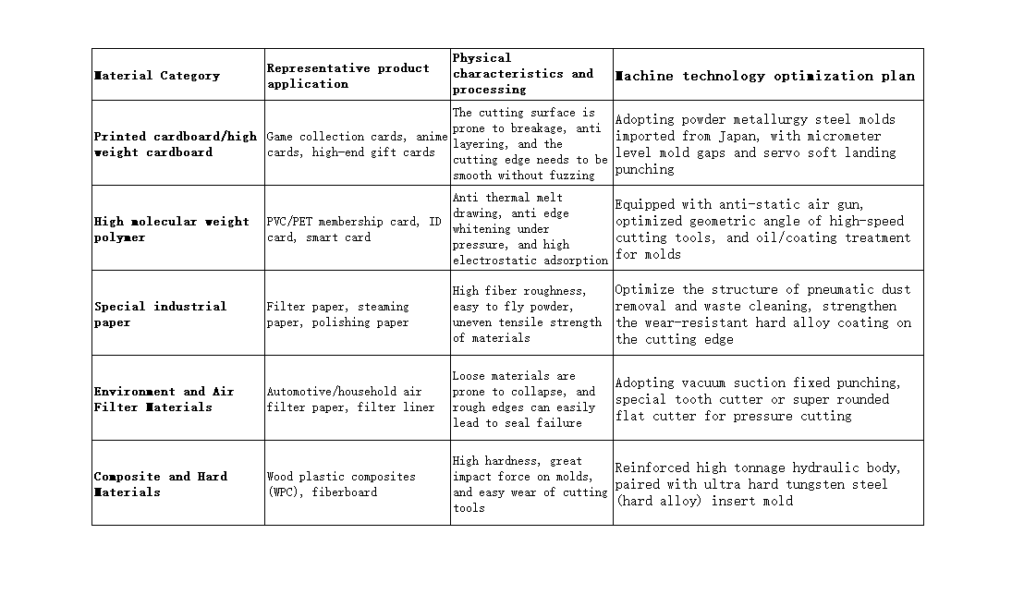
3.1 Material Adaptation and Application Matrix in Different Industries
The table below shows the adaptability and technical optimisation solutions of our punching machine in different industries and materials:
3.2 Selection Rules for Core Consumables and Accessories
The card punching machine is working efficiently with reasonable combination and periodic maintenance of core consumables. Main consumables and vulnerable parts are:
- Stamping Die: The die is the “heart” of the equipment. Moulds optionally equipped with SKD-11, DC53 or hard alloy (tungsten steel) depending on the material hardness.
- Suction cups and feeding belts: They usually wear out or age with prolonged use, and should be checked regularly for surface friction and airtightness.
- Photoelectric sensors and optical lenses . Dust accumulation on the lens should be cleaned off regularly to ensure accurate reading of alignment marks.
- Hydraulic Oil & Grease Anti-wear hydraulic oil needs to be replaced periodically for the hydraulic system, and high-viscosity extreme-pressure grease should be used on mechanical transmission parts.
For special materials (e.g., high grammage cooking paper, wood plastic panels with a thickness greater than 1.5 mm), please refer to the [Guidelines for Multi-Material Adaptation and Application of Punching Machines] for stamping parameter configuration and mould clearance calculation.
If you need to buy customised moulds or replace long-life punching knives and alignment accessories, please refer to “Punching Machine Core Consumables Maintenance and Mould Accessories Selection Manual“.
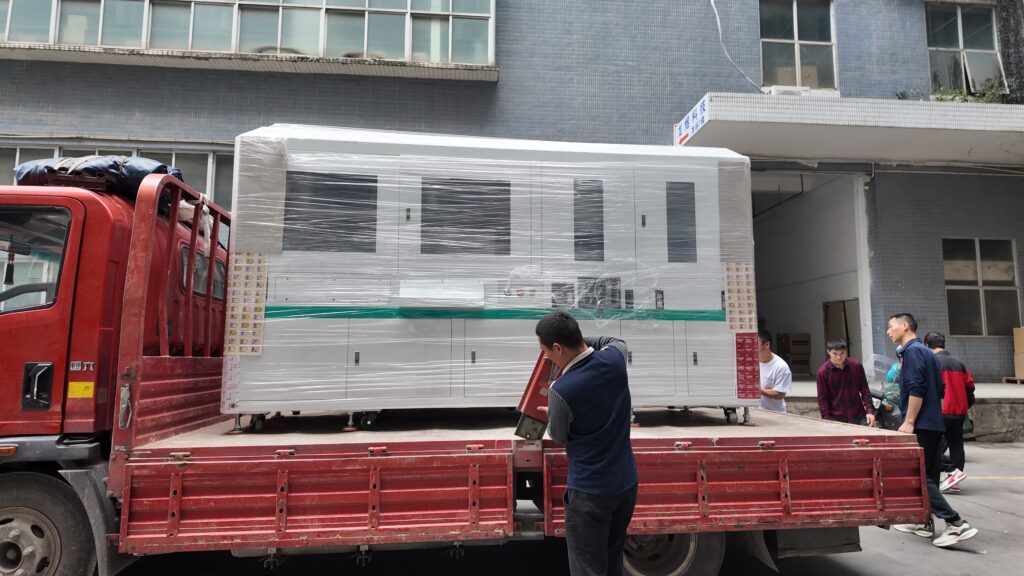
4.Industry pain points, real cases, procurement selection and investment return
4.1 Four major pain points of industrial customers
1.High scrap rate due to incorrect alignment : Conventional card punching machines are based on manual feeding or simple mechanical block positioning. The printing offset is serious after the plate is stretched or deformed in the printing, and the high-value game cards or smart cards are directly scrapped.
2.Long mould changing time and high cost for small batch orders: The rapid switching of multiple specifications of cards or different shapes of filter paper makes the traditional mould adjustment cumbersome and time-consuming, which seriously restricts the production flexibility.
3.The service life of the cutting die is short, and the cutting edge is easy to burr: When punching polishing paper or high-hardness WPC composite materials containing abrasive particles, the cutting edge of the mould is easy to passivate, resulting in white and fuzzy cutting edges of the finished product.
4.The equipment has high maintenance cost, no fault self-inspection, and no self-protection mechanism once the equipment is stuck or overloaded, which will easily cause mould breakage and even damage the transmission shaft of the machine body.
4.2 Real customer case: Capacity upgrade of a renowned TCG card printing factory
- Customer pain point: When cutting 350g black core paper cards, the original equipment has obvious layering on the edge incision, and the visual alignment tolerance is above ±0.2mm, which cannot meet the certification requirements of international high-quality collectable cards.
- Solution: Launch our industrial punching machine with CCD visual automatic correction and servo electronic control stamping system and precision tungsten steel stamping dies.
- Performance: Alignment accuracy has been improved to $\pm0.03 \ \textmm$, scrap rate reduced from 4.5% to below 0.2%; cutting speed increased to 18000 sheets per hour, equipment investment fully recovered within 7 months.
Table 4.3 Core Te
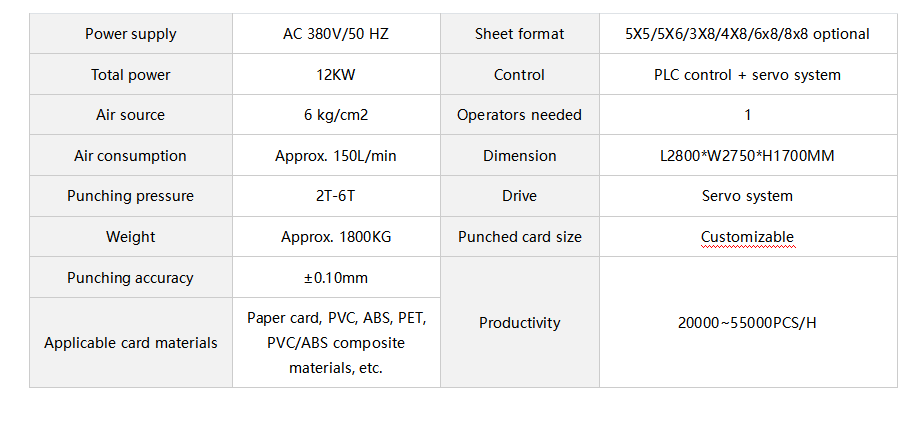
chnical Specifications
Please refer to [Pain Point Analysis and Customer Real Cases in the Card Punching Machine Industry] for details of the implementation cases and solutions in the game card, smart card and special filter paper fields.
Are you in the process of developing a budget for the purchase of equipment? Welcome to our online tool or reading guide, [Comparison of Card Punching Machine Specification Parameters and ROI Calculation Guide] for accurate calculation of equipment payback period.
5.After-sales service and standardised equipment troubleshooting
The 24-hour industrial production of continuous high intensity demands extremely high requirements on stability and subsequent guarantee of equipment. With a comprehensive preventive maintenance plan and a standardised troubleshooting process, the risk of unexpected downtime can be reduced by more than 90%.
5.1 Common fault and quick handling guide of card punching machine
1.Routine deviation from punching alignment.
- Dirt on the lens of the photoelectric sensor, loose tension on the feeding belt or zero offset of the servo motor can be the causes.
- Troubleshooting : Clean optical lens with dust free cloth. $\\rightarrow$ Check belt tension $\rightarrow$ $Recalibrate the zero point on the HMI interface
Finished cards or filter paper: burrs/brushed edges:
- Possible reasons: Gap between upper and lower mould increased, blade passivation and wear, or severe material static electricity.
- Troubleshooting steps: Check the mould fastening bolts $\\rightarrow$ Check the situation of the blade edge breaking with a magnifying glass $\\rightarrow$. Turn on the antistatic unit or change the mould gap.
Hydraulic system oil is too warm or there is not enough impulse
- Possible reasons: Low hydraulic oil level, cooler fouling, or relief valve pressure setting deviation.
- What to do: 1. Check the oil level gauge 2. Clean the air-cooled/water-cooled radiator 3. Fine-tune the pressure valve by a professional
Are you working with complex electrical alarms or 500 hours of regular equipment maintenance? Through [Common Troubleshooting Manual and After-Sales Maintenance Guide for Card Punching Machine], you can get complete electrical circuit diagrams and hydraulic circuit diagrams and 24/7 global remote technical support channels at any time.
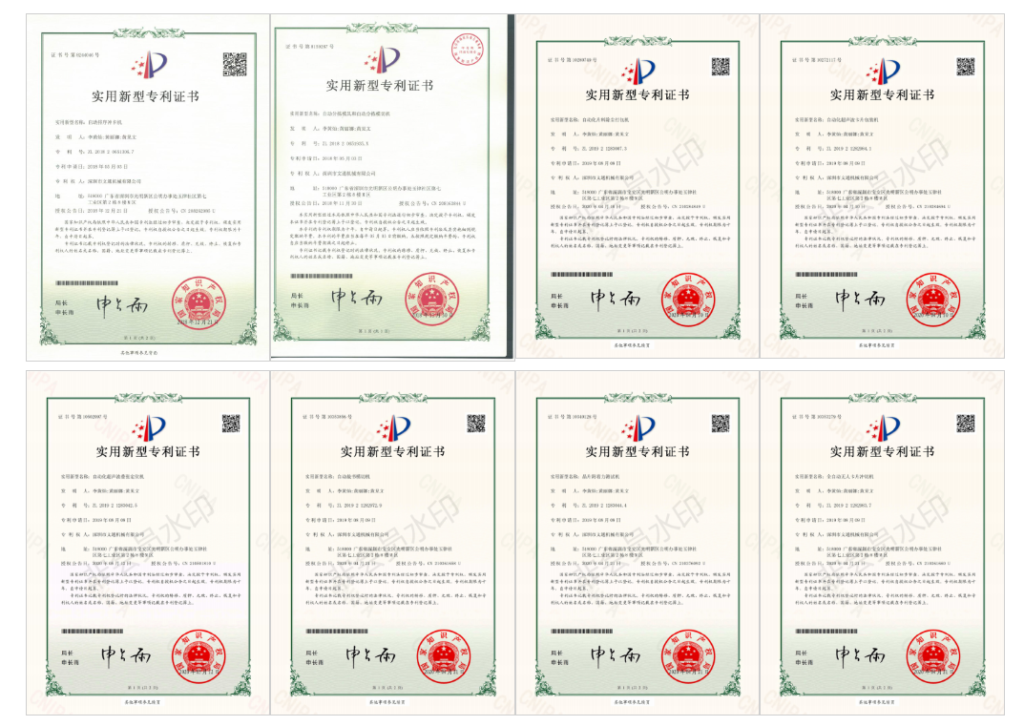
6.Certificate of award
We are a manufacturing enterprise rooted in the fields of industrial cards and special materials processing for many years. We always stick to technological innovation and rigors quality control systems.
6.1 International authoritative certification and quality system
Our all series of card punching machines have passed strict international quality certification, safe and compliant to operate in major industrial markets in Europe, America and around the world.
- ISO 9001:2015 Quality Management System Certification: the entire process of quality traceability from component procurement and machining to complete machine assembly and factory testing.
- RoHS green certification: All the electrical components and equipment coatings are RoHS compliant, environment friendly and non-toxic.
6.2 Capitalisation and accumulation of knowledge of industrial technology
We leverage years of experience in research and development and data of on-site adaptation from thousands of customers and distil this into a standardised industrial knowledge base. From special die design specification for air filter paper stamping to high strength stamping data manual of wood plastic composites (WPC), our technical asset library provides detailed white paper support.
For verification of our technology patents, third-party test reports and ISO/CE certificate copies, please refer to [Punching Machine Technology White Paper and Authoritative Qualification Certification Knowledge Base] to read equipment safety operating procedures and high precision stamping technology white paper.

7.Conclusion
The selection of high-precision and highly adaptable card punching machine is not only a means to improve the immediate production efficiency, but also a long-term strategic investment for enterprises to respond to changing market demands and to reduce comprehensive operating expense. Our equipment has won the trust of many leading customers in various industries around the world, from game cards and smart cards to complex industrial air filter paper and composite materials, thanks to its excellent stability, precise alignment control and comprehensive service support.
Ready to upgrade your punching production line?
- Get an exclusive quote here: Submit your material sample size and capacity requirement of production and our engineers will design an exclusive solution for you within 12 hours.
- Free sample test: Welcome to send your special paper, PVC board or composite materials to our factory, we will provide you the test samples and smoothness test reports.
Related Products
Industrial high-precision punching machine: punch and cut automatically for game cards, smart cards and special filter paper
1.Development of Industrial Punching Technology and Contemporary Manufacturing Specifications Card punching machines h
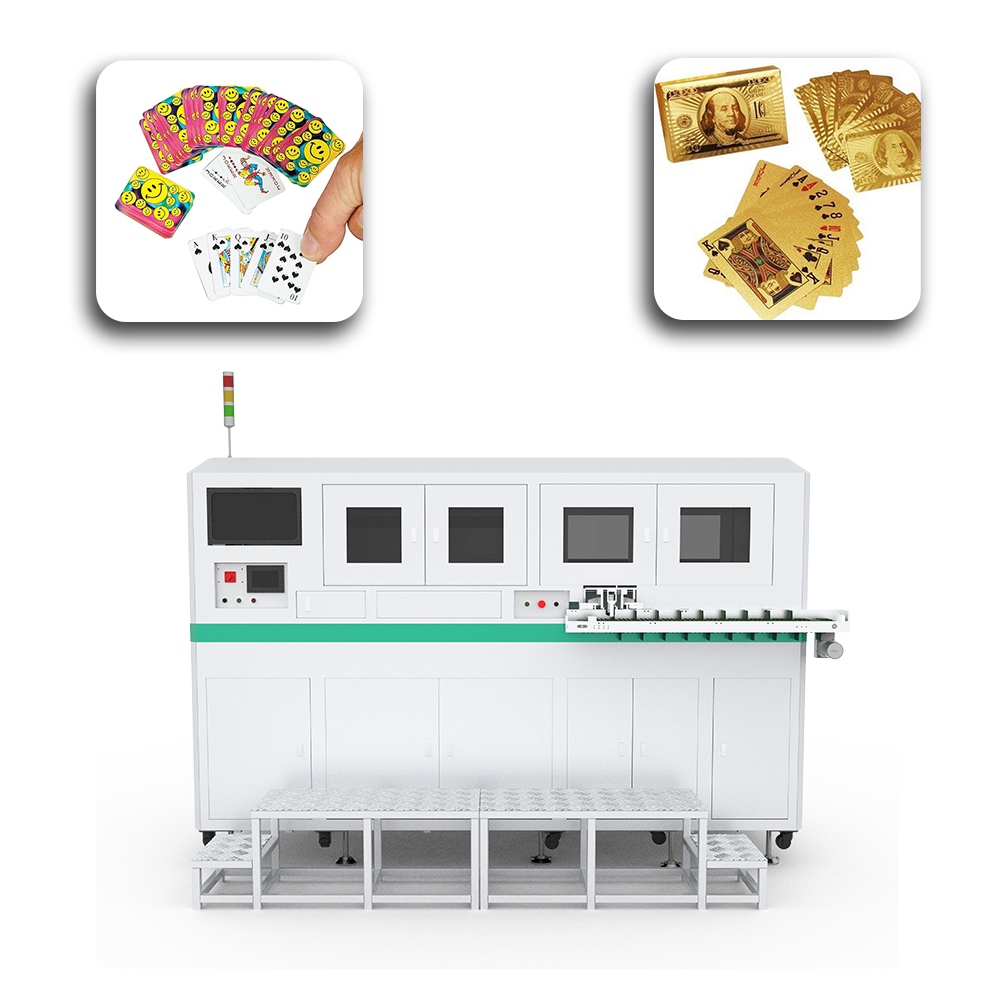
poker card punching machine
The competitiveness of smart cards or game cards in the market depends on two things: the accuracy of punching and the degree
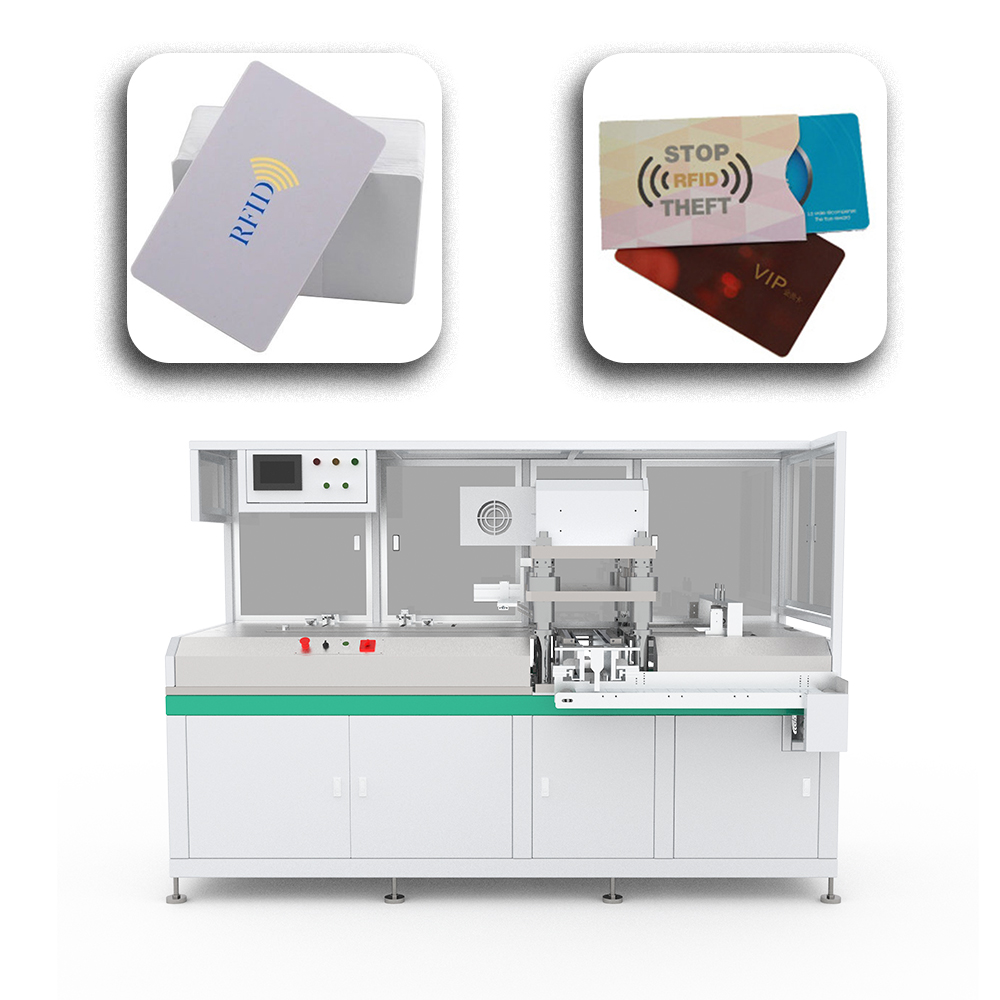
RFID card punching machine
In today’s smart card and RFID industry, manufacturers from other countries not only have to ‘make cards.’

PVC card punching machine
The global smart card manufacturing industry has never had such a high demand for fast, accurate, and customizable smart card
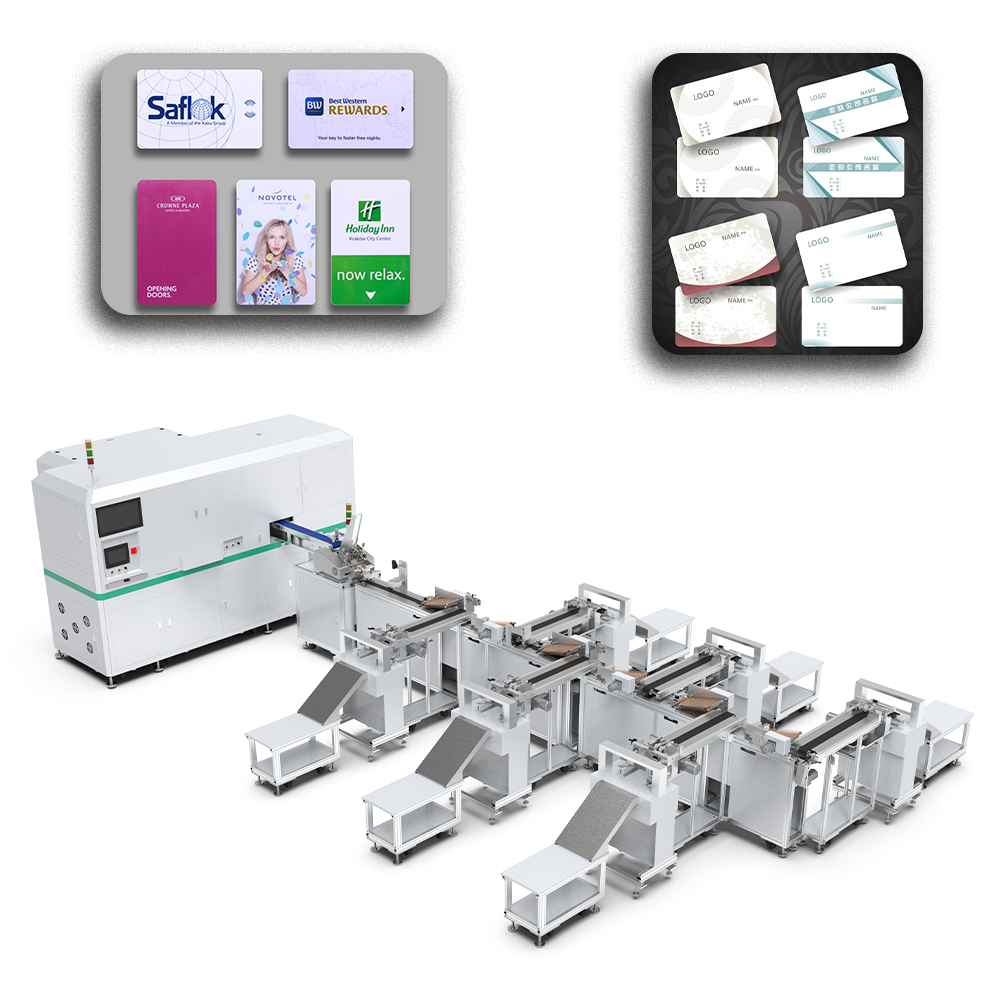
Fully automatic sorting and card punching machine
In the global business card printing industry, competition has surpassed the efficiency of just looking at things. The compan
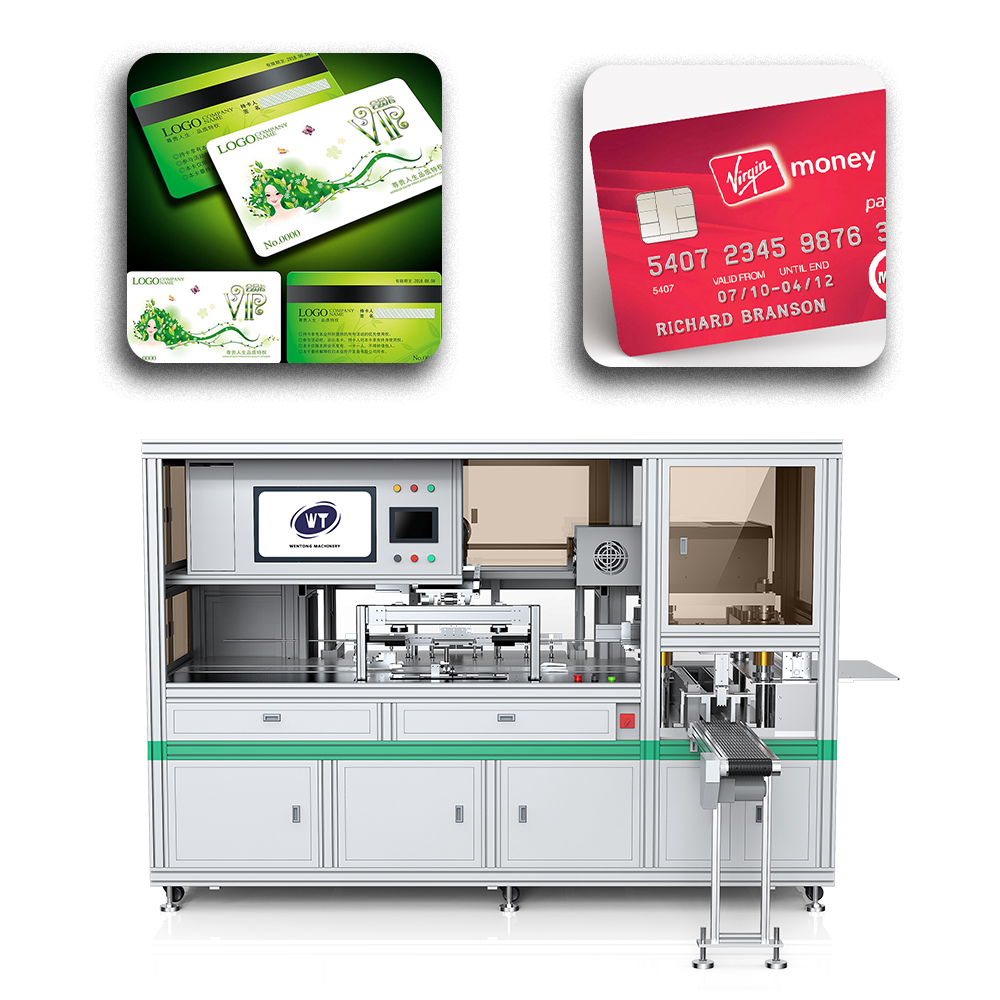
Bank card punch card machine
1. Function and characteristics of bank card punching machine The bank card punching machine is a high-end die-cutting tool t
Fully automatic sorting game card punching machine
1. The main features and functions of the game card punching machine In the card manufacturing business, which includes game

PVC card die-cutting machine
The main functions and features of the PVC card die-cutting machine In the modern card product manufacturing industry, the ed

Star card die-cutting machine
1. Application field of star card die cutting machine The Star Card Die-Cutting Machine is a professional-grade automa

Transparent card die-cutting machine
Cards are more than just tools for identification and payment. They also represent brand reputation, security level and user