Why has smart card punch become a basic equipment in factories?
blog 2026-05-07 01:12:18 31
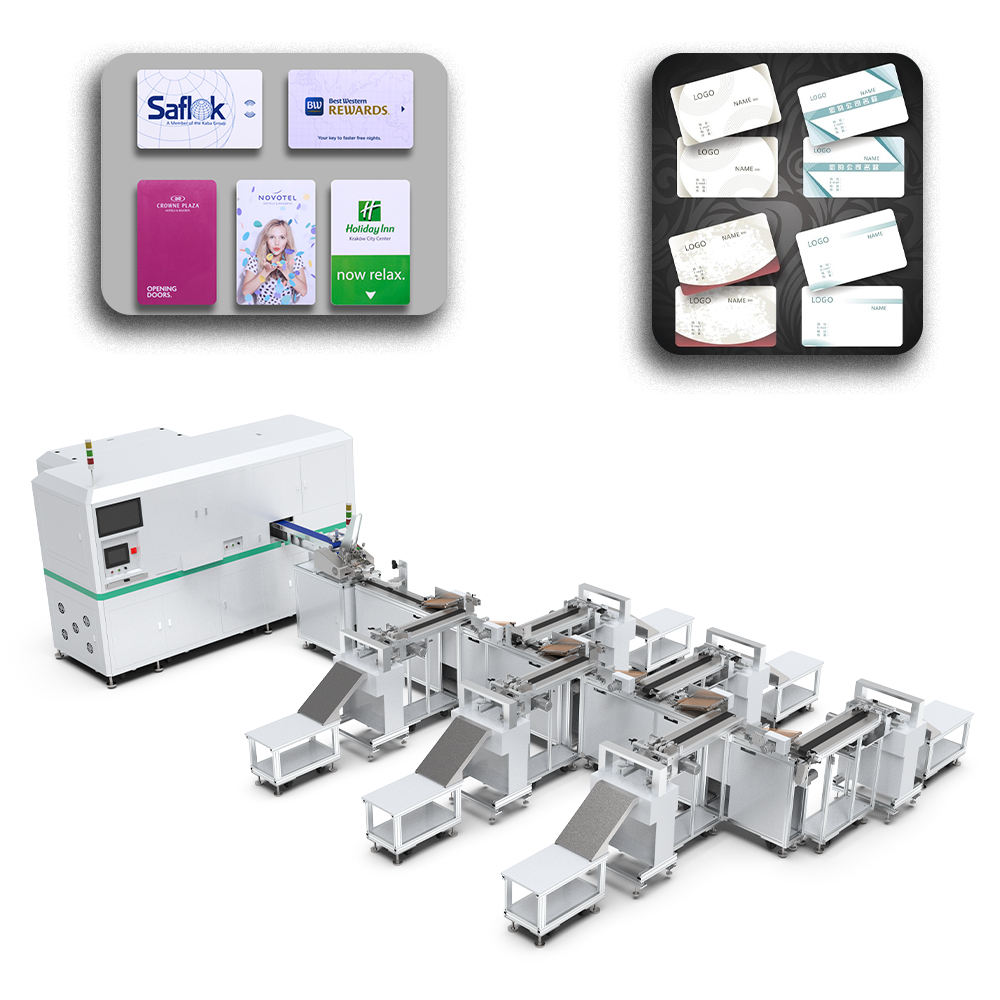
How can automated equipment become the “digital workers” of factories?
In recent years, the global manufacturing landscape has undergone profound adjustments, and labor shortages and rising labor costs have become inevitable challenges for the industry. This trend is very evident in the Indian market. According to Deloitte India’s “2025 Blue Collar Workforce Trends Report,” the turnover rate of blue collar workers in India has increased from 2% -3% three years ago to 5% -7%, with a 10% year-on-year increase in recruitment willingness. But over 58% of blue collar workers earn less than 20000 rupees per month. There is a long-term structural disconnect between wage levels and productivity. In India, the difficulty of recruiting and retaining personnel is not an exception. According to a survey of end-users by the American Packaging and Processing Technology Association, 95% of companies will continue to face difficulties in recruiting skilled operators and technicians by 2026. This is a challenge for printing and packaging companies as they need to rethink the sustainability of their typically labor-intensive production models.
The is a typical solution to meet this changing demand. The high-end smart card punching and cutting equipment in Shenzhen has changed the production process from the source. The traditional method is manual feeding and card collection. For example, taking the typical specifications of a stepper die-cutting machine as an example, the equipment adopts stepper precision feeding technology, and each workstation independently executes processes such as feed flipping, pre positioning, visual correction, punching, and collection, combined with a 7.5kW high-power servo power supply system and lightweight quick change mold design. When changing an order, it takes 2-3 minutes for one person to replace the mold and calibrate the machine. The whole machine calibration time is only 15 minutes, which is several times shorter than traditional manual operation, avoiding long equipment waiting time between large and small orders. Compared with the traditional manual card cutting method, the single shift operation mode of this equipment has increased the overall production efficiency by dozens of times. The traditional manual card cutting method relies on manual repeated picking and placing of cardboard. Modular design can also achieve an overall efficiency (OEE) of over 85% for the equipment. Neelesh Gupta, a partner at Deloitte India, said, “The promotion of Industry 4.0 and automation has increased productivity standards for enterprises by 10% -14%, achieving cost optimization through streamlining manpower. The introduction of smart card punching machines as “digital employees” in printing factories is transforming the factory from a labor-intensive production mode to a technology intensive mode, greatly alleviating the management pressure of enterprises in the environment of difficult recruitment matching and frequent personnel flow.
Multi functional integration of smart card punching machine
In the current global card consumption market, the trend of category segmentation is becoming increasingly evident, from bank cards, social security cards, transportation cards to celebrity cards, anime cards, celebrity cards, and even personalized demands from small and medium-sized enterprises for playing cards, gaming cards, and business cards. Industry clients must handle many different types of orders. When printing companies still retain multiple old single function card punching equipment in various business departments, they not only occupy a large amount of factory space, but also need to reserve multiple sets of molds and corresponding technical workers, resulting in high replacement costs. The high-end smart card punching machine in Shenzhen is designed to solve this pain point, and has implemented the concept of multifunctional integration since the initial product design.
This device is suitable for paper materials and PVC, and can also be used for die-cutting standard bank cards, ID cards, playing cards, business cards, game cards, anime cards, star cards and other card products on various substrates such as thin films and soft magnetic films. They are also suitable for irregular stamping and forming small packaging boxes. One of the core technologies is high-precision machine vision and optoelectronic recognition layout correction positioning system. For example, the device is equipped with a visual correction positioning device that receives registration marks from a batch of pre printed bank magnetic stripe card layouts one by one. Even if there are slight deviations in the substrate during transportation, the system can automatically adjust the stamping coordinates to ensure that the positional accuracy of the finished product is always at a good level, and the quality of the edge and the right angle part are smooth and free of burrs. This is very important for categories such as bank cards that require size and fillet requirements that comply with the ISO/IEC 7810 standard.
The digital and personalized development of modern printing industry has led to a growing demand for “short format fast orders” in the market. Through precise feeding technology and modular mold design in the factory, the above equipment can achieve rapid switching of various card material production. For example, according to ETSI standards, after producing a batch of full-size SIM cards in the morning, the stamping accuracy can reach ± 0.05mm to ± 0.10mm. In the afternoon, switch directly to splicing and punching medium thick PVC membership cards, and the mold model change and punching parameter adjustment can be completed within a few minutes. This solves a major problem that troubles many printing factories, which is how to flexibly expand more card order business without adding too much equipment and asset burden, truly realizing the business model of “one machine for multiple uses” and accepting small batch orders without worry.
Intelligent stamping for green manufacturing reduces waste and waste
Under the global policy trend of vigorously conserving energy, reducing emissions, and changing the manufacturing environment in various countries, the waste rate of materials in the printing and card production process is a sensitive indicator. In traditional semi-automatic or manual punching methods, insufficient positioning accuracy or unstable feed step distance result in significant material loss when using standard bank cards or PVC certificate cards, such as excessive margin, irregular layout, or unreasonable offset product layout. At the same time, it is necessary to reserve “nail holes” or “connection points” for the connection between the body and stamped parts, resulting in more additional corner waste. The smart card punching machine has completely changed the logic of waste generation. The advanced equipment design does not have connection points and nail holes, so there is no need to leave additional circuit board connections and fixing components when stamping finished products, thereby optimizing the width and compactness of the layout and improving the surface utilization of the circuit board.
The scrap rate has been reduced by more than 84%. Based on the actual application data of smart card die-cutting production lines in related industries, card manufacturers using the integrated intelligent system of “printing+die-cutting+quality inspection” have reduced the processing scrap rate of irregular cards from 5% in traditional processes to below 0.8%. The data behind this equipment is the system integration of advanced servo feeding system, visual precision positioning system, and full line intelligent garbage collection and transportation system. When the material belt runs continuously at high speed, the intelligent control module of the equipment will automatically correct the deformation or slight color deviation of graphic and text information, sheet metal, greatly avoiding the continuous scrap problem caused by human experience adjustment or mechanical drift.
The device also has two different finished product collection modes: one mode ensures that the order in which the finished products are released from the card is exactly consistent with the production batch number record; Collecting by category is suitable for situations where the layout is similar but the pattern or card size is different. Based on the recognition results, the device can automatically classify the finished product codes into different stacking areas. At the same time, the waste export system will put the broken corners into recycling bags to keep the production site clean. Accurate positioning at the front end can reduce waste of raw materials, while intelligent sorting at the back end can avoid batch scrap caused by mixing, allowing printing companies to have clearer and more controllable data records of material consumption during the card making process. For enterprise customers who are concerned about environmental certification in overseas markets, reducing material losses in card production is also in line with the current carbon footprint assessment system for smart card products, which requires “reducing non renewable resource consumption” and improves the utilization rate of the entire card base paper and plastic sheets.

Conclusion
The above analysis, supported by clear and reliable industry data and process logic, explains the rapid rise of smart card punching machines as standard equipment in modern printing factories. From the perspective of labor management: Deloitte’s research report shows that the productivity standards of blue collar workers in India have increased by 10% -14%, forcing companies to reduce labor costs by optimizing automation. The intelligent transformation practice represented by Shandong Baichuan Paper Industry in China has proven that after upgrading intelligent equipment, the number of manual workers per shift has been reduced from 8 to 5, the total production capacity has increased by 20%, and the product quality has been improved. The data clearly proves that the main cost savings and efficiency improvement effects of high-performance automatic punching equipment cannot be ignored in the context of labor shortage and increased labor costs. Regarding multifunctional integration, the overall innovation of materials such as bank cards, playing cards, smart IC cards, anime star cards, paper PVC compatible with equipment, film and soft magnetic film, combined with visual correction positioning system and gradually precise feeding mechanism, eliminates the need for factories to repeatedly purchase equipment or idle old models for each specification and layout of cards, greatly improving asset utilization efficiency. In the field of green manufacturing and material utilization, the scrap rate data for card production and processing is more direct. Taking the integrated production line of “printing+die-cutting+quality inspection” of a manufacturer in Taiyuan as an example, the scrap rate of irregular cards has been significantly reduced from 5% in traditional processes to below 0.8%, and the VOCs emissions have been reduced by 65% compared to before. These indicators not only meet the strict entry requirements for green supply chains in overseas markets, but also bring considerable material savings to printing companies themselves. With the gradual entry of artificial intelligence visual assistance systems and IoT interconnection technology into die-cutting production lines in the near future, smart card punching equipment will continue to develop towards higher precision, faster order replacement, and more transparent data. For Chinese printing companies and card suppliers in Shenzhen, this technological upgrade window will bring an irreplaceable first mover advantage in the dual opportunities of global card consumption growth and intelligent manufacturing.