How does a poker card punching machine improve card production efficiency and punching accuracy?
blog 2026-03-20 02:09:34 66
Nowadays, the technological level of machines used for printing and packaging cards directly affects the company’s competitiveness in the market. A major concern for companies producing game cards, gaming cards, smart cards, and other card products has always been how to produce more cards without sacrificing die-cutting accuracy. The poker card punching machine is an important device that this article will explore in depth. It will focus on how this machine can transform the printing business through the use of servo stamping technology, flexible materials, and intelligent automation solutions for “short, flat, and fast” production.
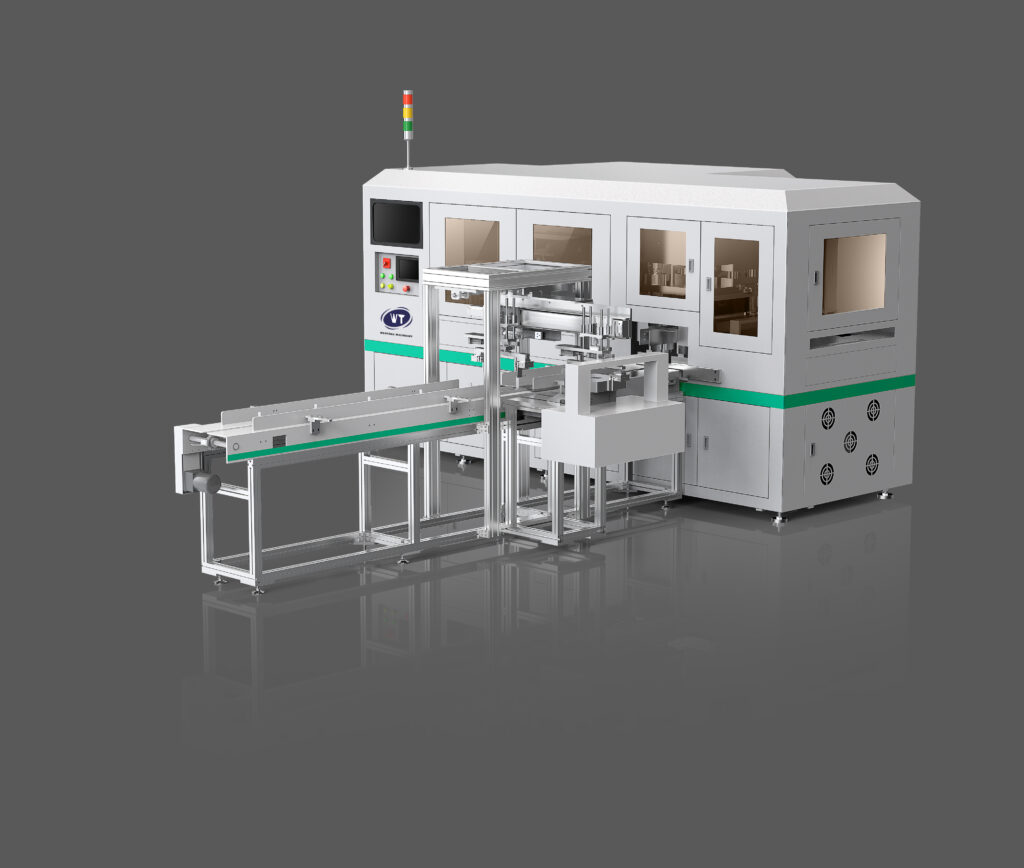
The core equipment of the poker production line
Servo stamping technology enables modern high-speed poker production lines to operate. The servo drive system enables you to control the power and stroke of the punch more accurately than old-fashioned mechanical punching machines. For example, the most common 7.5 kW servo power supply system in the industry not only maintains stable cutting force but also allows you to digitally control the cutting speed and position. This device uses a layout visual correction positioning system to locate positioning marks on printed materials during the die-cutting process. Even if there are slight changes in the material during the transmission process, the system can still send back data and fix its position within milliseconds. This ensures that the finished position of each card is as accurate as possible, and the edges of the card are smooth and free of burrs.
Servo stamping technology is also very suitable for “small batch orders,” which is another major advantage. When you change an order on a traditional die-cutting machine, you usually need to perform complex mold debugging and feed calibration, which takes a long time. The step-by-step precise feed technology controlled by servo makes the machine easy to handle small orders. The operator only needs to enter the new die-cutting settings on the touch screen. Then, the machine will automatically change the distance between the feeding steps. This technological architecture not only makes the mechanical structure easier to understand but also saves a lot of money by reducing the cost of wasting materials. That’s why poker card makers are the best choice for making many different customized game cards in small quantities.
Different materials for punching and cutting in poker card punching machines
The type of paper you use to make cards directly affects the difficulty of cutting the cards. Paper cards (such as poker cards, business cards, and celebrity cards) and PVC (polyvinyl chloride) cards (such as bank cards, smart cards, and membership cards) are the most common types of cards. There are significant differences between these two materials in terms of hardness, toughness, and heat resistance. A good poker machine must be able to handle many different materials so that the yield remains unchanged when you switch between them.
Removing burrs and dust is the most important part of die-cutting paper. Traditional stamping processes sometimes use “nail holes” or “connection points” to eliminate waste, but this may alter the appearance of the final product. Modern and efficient die-cutting machines can find the optimal angle and fastest stamping speed for cutting molds. This makes it possible to cut without creating any holes or connection points. The edges of the finished product are very smooth, so there is no need to polish it again. When using soft magnetic sheets or hard films such as PVC, the equipment needs to be able to control the feeding tension more smoothly. When using expensive materials such as PVC, the machine can precisely control the step distance through a step-by-step feeding system. The mold is made of lightweight wood, so it only takes 2 to 3 minutes to replace. This can prevent stretching and deformation of materials from causing size errors, which is crucial for high-end products such as smart cards and bank cards with strict size restrictions.
How to achieve efficient output of an automated poker punching machine
Being able to print quickly is important for any printing business, as it means more output. There are many types of modern automatic poker card punching machines, each with its own production capacity. They can produce 7000 to 16000 cards per hour. The increase in production capacity is not only due to the fast working speed of the motor; it is also because these processes are highly automated and can work collaboratively. This device integrates precise feeding, die-cutting, waste removal, and finished product collection into one process, achieving a “one-stop” processing from raw materials to finished products.
This device has two flexible ways to collect finished products when receiving them, which helps it generate stable and efficient output. One method is to arrange them neatly, ensuring that the finished products are arranged in the order of die-cutting, in order to check the quality of the packaging in the future. Another method is to sort things by category and use a sorting mechanism to automatically separate good products from potentially damaged ones. This design can be easily added to the backend of the overall packaging solution, making the entire production line fully automated. This automated device can run continuously and remain stable when the company receives large orders of tens or even hundreds of thousands of playing cards or game cards. This completely solves the problem of low efficiency in the manual collection and disposal of garbage. This also makes the “short, flat, and fast” production model of the printing industry a reality.
Precise die-cutting and fast order changing of the poker card punching machine
In the printing industry, orders are becoming increasingly complex, and this is becoming clearer. The company needs die-cutting machines that can be quickly replaced to keep up with market changes. These machines can cut all kinds of things, including regular playing cards, anime cards, game cards, and even strange business cards and packaging boxes. The best thing about a great poker machine is how fast it works and how much time it takes to adjust. The advanced mold quick replacement system allows operators to replace a lightweight wooden mold set in 2 to 3 minutes. You can switch the order of the entire machine within 15 minutes. This includes adjusting parameters and calibrating feed.
This device can respond quickly because it has two main features: “layout visual correction positioning” and “gradual precise feeding.” If the printing pattern and die-cutting position do not match in traditional die-cutting production, the machine usually has to stop before moving the feeder. This is very painful and will cause a lot of waste. The visual correction system can observe events in real time, change its position on its own, and ensure that the final die-cutting position is correct, even if there are material errors during the printing process. Gradual feeding technology can also allow machines to process cards of different shapes and sizes, such as bank cards, star cards, or small boxes, with
In addition, many printing companies need to provide sample services if they want to obtain large orders. Traditional die-cutting machines typically have high sampling costs and longer cycles, as changing molds takes a long time and it is difficult to adjust the machine. This device can easily provide customers with high-quality sampling services because it can quickly change settings and has a very accurate positioning system. The company can quickly send finished products, such as beautiful card samples or complex film packaging boxes. This makes it easier for them to accept orders and adapt to market changes.
Conclusion
Modern poker card punching machines are not just devices. They possess servo stamping technology, capable of handling different materials, and automated production processes. They are now a production platform that combines intelligent control with precision manufacturing. The technical specifications of their equipment are not just numbers for foreign trade companies looking to conduct business around the world, especially in rapidly growing markets such as India. They are also key to solving customer problems.
The data shows that the above die-cutting technology can shorten the time for replacing equipment from 1-2 hours to less than 15 minutes, and when processing small batch orders, the time for replacing molds can be shortened from 2-3 minutes. By using visual correction technology, it is possible to continuously and rapidly produce 7000 to 16000 sheets of paper per hour, reducing waste by over 80%. The finished product is very good because traditional methods of punching and connecting nails were not used. There are no burrs on the edges, and the accuracy error is maintained at the micrometer level. This meets all the requirements of high-end cards such as smart cards and bank cards.
In short, the printing industry needs to purchase poker card punching machines that are “short, flat, and fast,” have high-precision visual positioning, and can be used with multiple materials to make their business more competitive. It not only solves the problems of low efficiency, slow wire changing, and poor accuracy in traditional die-cutting, but also provides strong technical support and data protection for enterprises when they must meet many high standards in the global market.