A complete guide to selecting the appropriate industrial poker card punching machine
blog 2026-03-19 01:33:55 65
The global printing and packaging industry is developing rapidly, and card products are showing a strong trend of “short, flat, and fast.” This means that orders are getting smaller, delivery times are getting shorter, and product quality standards are getting higher. Poker card punching machines used to only require the ability to ‘cut,’ but now they need to be able to ‘accurately punch holes, quickly replace them, and use them economically.’ This is especially true in India, where the gaming and advertising industries are growing rapidly. This article will explore the basic technologies of modern industrial-grade punching machines from four perspectives: power system, mold metallurgy, full-line process, and intelligent transformation. This will help printing companies make scientifically reasonable choices.
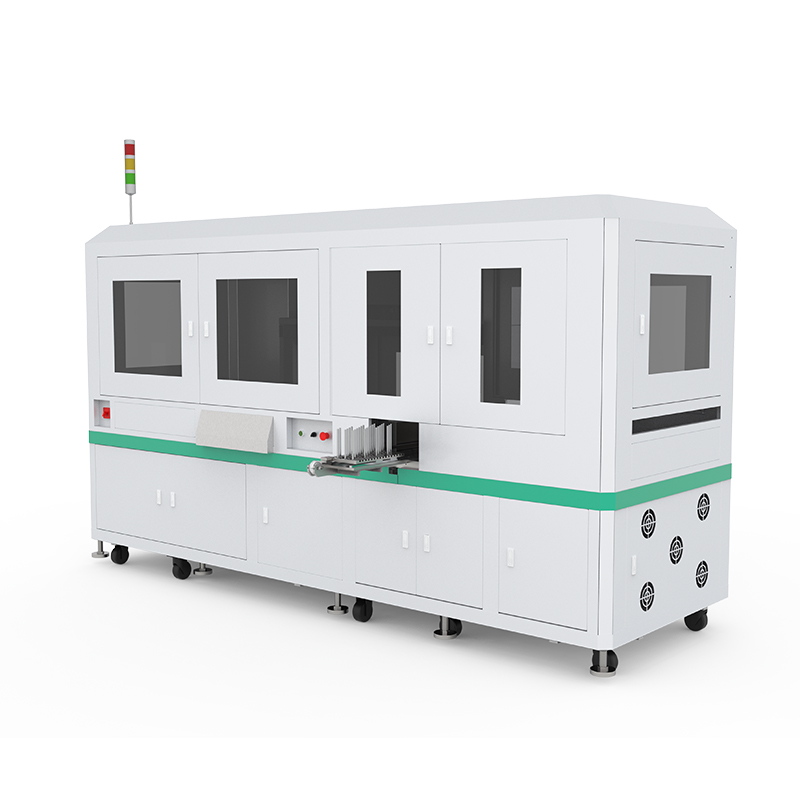
Comparison of Hydraulic and Servo Technologies in Poker Punching Machines
The type of power supply you choose for the poker card punching machine will directly affect how much force it can generate and its operating costs. Due to their ability to provide constant and stable high pressure, hydraulic transmission systems are often used in traditional large-scale carding machine production. Pascal’s Law states that hydraulic systems are highly suitable for heavy-duty die-cutting work that requires handling heavy loads without breaking. But there are also obvious problems with the hydraulic system. For example, their response speed is slow, and they can usually only control the positioning accuracy within ± 0.1 mm. There is a possibility of hydraulic oil leakage, which means that long-term maintenance costs are high.
Modern servo motor technology is very different. A good example is the 7.5 kW servo-driven poker card punching machine produced by our Shenzhen factory. The servo motor immediately converts electrical energy into mechanical energy, thanks to a closed-loop feedback system that can be completed in milliseconds. Servo drives can place things in the correct position with an accuracy of ± 0.01 millimeters or even better. This is very important for making high-precision game cards and star cards. This is much better than a regular hydraulic press. Servo motors have the function of “on-demand power supply,” which means they will not consume too much power without load or maintaining pressure. This uses 50% to 70% less electricity than the old hydraulic model. This means that Indian printing companies that frequently receive “small batch orders” will pay lower electricity bills.
The servo-driven poker card punching machine does not require complex hydraulic valve groups and seals, solving the problem of hydraulic oil decomposition or mixing with other liquids. Cleaning and inspecting bearings are the only daily tasks that need to be done, which greatly reduces downtime. Servo motors may initially be slightly more expensive than traditional hydraulic presses, but their lifespan can typically be extended by over 30%. They can also meet the high-frequency replacement needs of our equipment, which only takes 15 minutes for order switching and adjustment, so they are definitely the best choice for future card production.
The service life and cutting test of the poker card punching machine mold
Another important factor that affects the working effect of poker card punching machines is the mold. Many procurement managers only consider the equipment host, rather than the “knife mold,” which is the part that comes into contact with the most materials. If you want to achieve the best results for “die-cut products without nail holes and connection points” and “edges without burrs,” you need to know how the mold material works.
T10A and 9Mn2V are commonly used steels in traditional low-end molds. Their hardness is acceptable in the early stage, but they are not wear-resistant. Research has shown that molds made of 9Mn2V material can only sustain about 50000 cycles in bending tests. Multivariate alloying “is a new technology proposed for large-scale industrial production of modern die steels, such as Cr12MoV or more advanced high wear-resistant cold work die steels (GM steels). This technology combines appropriate amounts of carbide elements such as chromium, tungsten, molybdenum, and vanadium. After heat treatment, the impact wear resistance of this alloy composition is twice that of ordinary Cr12MoV (with a hardness of HRC 62-66). In real life, when stamping occurs hundreds of times per minute, molds made of this alloy can sustain 2 million grinding cycles. This meets the demand for “clean cutting” of various materials, including paper and soft magnetic sheets.
It is important to remember that higher hardness does not necessarily mean better. Science tells us that die-cutting molds must be the correct combination of hardness and toughness. If you don’t think about it, if you pursue high hardness, you may break the blade. We suggest that customers choose a base made of wood for their poker machine, which is lightweight and comes in many alloys. Our equipment features a quick-lock design that allows you to switch between different alloy molds within 2-3 minutes, making it easy for you to switch between orders. When making copperplate paper playing cards, use molds that are not easily worn out. When making thin film materials, use molds with special coatings to prevent scratches. Before the mold is sent for repair and grinding, this “equipment+mold” science ensures that millions of clean punches can be successfully completed.
One-stop service for punching and cutting paper with a poker card punching machine
Cutting between processes is a common issue in Indian printing factories. The stacked paper after slitting is very messy, and the punching process requires manual feeding, which is slow to inspect. Finally, it was found that the quantity was incorrect during packaging. Nowadays, poker card punching machines are not just standalone machines; they are the ‘heart’ of the entire production line.
A precise feeding system is the first step in what we call the ‘frontline’ workflow. The equipment is set up step by step, with precise feeding for each step. It also has a visual correction and positioning layout system. This design is very important for complex printed materials commonly found in India, such as game cards with hot stamping patterns and gold and silver foil cards. The visual system can automatically locate the cursor (color code), and even if the paper moves a little during transportation, the card punching machine can quickly fix the punching position to ensure that the pattern on each card is centered and there is no “eccentricity” waste.
This machine can collect finished products well after stamping is completed. We can obtain mass-produced playing cards in two ways. One is sequential collection, which means that the machine will automatically classify and stack punched cards in order of 1 to 10, so you don’t have to do it manually. The second method is to group them based on their types and then sort them by color or order. This automated system for receiving materials also eliminates waste by directly connecting the output end of the poker card punching machine to the backend packaging equipment. A large piece of paper comes in and goes out. The automatic packaging machine can now immediately remove neat “stacks.” This makes the process from paper to finished deck truly “one-stop,” reducing manual handling and secondary damage.
Outlook for Industry 4.0 Era and Real-Time Data Monitoring
With the advancement of the “Made in India” project, local printing and packaging factories have to deal with digitalization issues. Replacing old poker card punching machines with intelligent terminals is the first step towards achieving lean production. The control core of our equipment has a state-of-the-art PLC (Programmable Logic Controller), which not only maintains stability during high-speed operation but also allows us to collect data.
Sensors and 2D barcode scanning systems can connect devices to Manufacturing Execution Systems (MES). The specific application scenario is as follows: whenever a new order (such as customized anime cards) is launched, the operator scans the QR code on the work order, and the PLC system of the poker punching machine will automatically call the pre-stored pressure parameters, feed step size, and collection mode, maximizing the advantage of “shortening the machine adjustment time to 15 minutes” without manually repeating the punching. During the product manufacturing process, the system tracks the main motor load, stamping frequency, and actual production capacity in real time.
The core of Industry 4.0 is to make decisions based on what you see. The IoT gateway will send the device’s “health status” in real-time to the cloud or local server. This includes the temperature of the servo drive, the wear mode of the bearings, and the stability of the air pressure. The office manager can see how many sets of cutting equipment are produced per hour and how much waste is produced. If there is a problem with the device, such as burrs on the edges due to changes in cutting power, the system will automatically warn you. It even uses two-dimensional barcodes to identify which batch, mold group, and operator are responsible. This closed-loop control system that uses data makes equipment more reliable and helps printing companies establish trust with customers around the world. This is because you not only provide playing cards, but you also provide digital manufacturing capabilities that can be tracked and verified.
Conclusion
As India’s printing industry becomes more automated and precise, choosing the right poker card punching machine is a systematic process. Technical comparison shows that traditional hydraulic models have higher energy consumption and lower accuracy than models using 7.5 kW servo power. Over time, its operating costs have also decreased. By carefully selecting the appropriate alloy mold, it can maintain a sharp and burr-free cutting die in millions of stamping operations. PLC and barcode endow the equipment with the genes of “Industry 4.0,” and the production line process of “step-by-step feeding + visual positioning” makes it possible for the interface to work together with smart factories in the future.
The data clearly indicates the problem: the power used by the servo drive is less than half, the positioning accuracy is within 0.01 mm, replacing the mold only takes 2-3 minutes, and adjusting the machine only takes 15 minutes. These signs have not only appeared; they are the result of Chinese Shenzhen equipment manufacturers improving product efficiency in response to the trend of “short, flat, and fast” orders. If you want to cut better cards at a lower price in a fiercely competitive market, you need to learn these die-cutting skills.