How to ensure that the RFID card punching machine will not make errors when making RFID cards?
blog 2026-03-13 00:44:29 68
When manufacturing RFID smart cards, RFID card punching machines are like “surgeons.” They turn printed and laminated large sheets of paper into finished products. The ‘zero error’ goal in India’s printing and packaging industry has shifted from a simple technical indicator to strict limits on order quantities. This is because there are more and more types of orders for game cards, star cards, and smart cards. The main job of the RFID card punching machine is to cut with micrometer-level accuracy while running at high speed. It must also ensure the safety of fragile RFID chips and antenna structures. This article will discuss the main technologies that enable modern high-precision punching machines to work. It will discuss how to use intelligent control and mechanical design to solve practical problems in production and provide “short, flat, and fast” solutions for small batches and many different types of short-version orders. From Mumbai to Delhi, printing and packaging companies in India are increasingly using this equipment to meet the diverse card needs of e-commerce logistics and smart city projects. They also use it to shift from traditional printing to intelligent manufacturing.
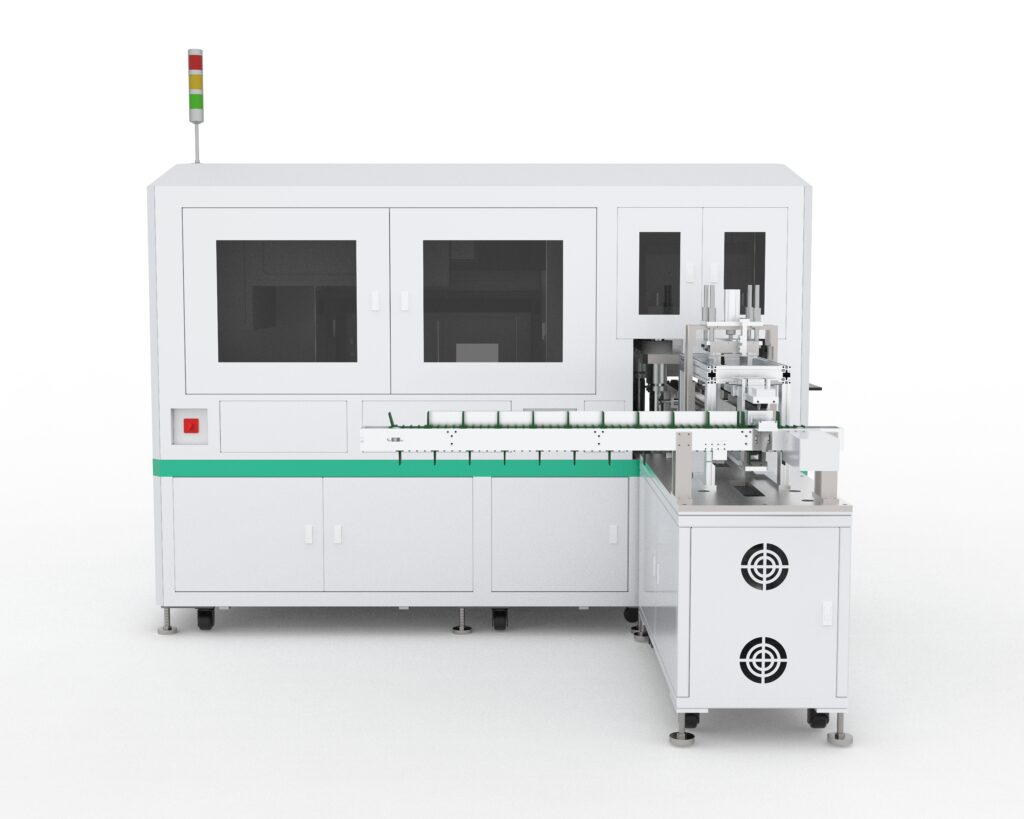
Avoidance and shock absorption technology in RFID chip card punching and cutting
Machines that use RFID chips for punching not only separate physical materials but also play a very precise “force” game. Traditional cutting methods often cause objects to vibrate due to hard impacts. These vibrations entering the interior of the chip may damage the gold wires or create microcracks on the chip, which may reduce the reliability of the chip. The “vibration isolation and damping” design used in RFID card punching is usually used for collaborative innovation of mold structure and power control. The servo-driven nonlinear curve control enables the cutting die to move forward quickly, cut slowly, and move backward quickly when in contact with the material. This allows the die to have some time to ‘buffer’ when cutting into the material, thereby preventing the shock wave from directly hitting the chip. This dynamic avoidance technique can automatically change the cutting speed based on the thickness and hardness of the material. This is very important for multi-layer composite RFID cards (such as PVC+chip layer+transparent film) to ensure that these layers do not separate when they come into contact with something.
The shock absorption effect is also affected by the rigidity and flexibility of the equipment body. Most high-precision punching machines have large tonnage frames and 7.5 kW high-power servo motors as power sources. This ensures stable and smooth torque output during stamping and cutting, rather than shaking or moving forward. The mold design also incorporates a self-directed structure to prevent the mold from closing in a vertical position. This makes it unlikely for lateral forces to compress the edges of the product. This “avoidance” can be seen in the real world, as well as in the protection of materials, especially in flexible materials such as thin films and soft magnetic thin films. If you have good gap control, the material will not tear when you pull it apart. This completely protects the bonding interface between the chip and the antenna. In real life, customers often need to switch between different materials on the same device, such as from magnetic films to paper business cards. The shock absorption technology is powerful enough to protect RFID chips, no matter what they are made of.
What makes high-precision RFID card punching machines so important for RFID cards?
The resonant frequency of chips and antennas is highly sensitive to mechanical stress, which has a significant impact on the performance of RFID cards. Even if the chip is working properly, if the RFID card punching machine is not accurate enough, the card will still be damaged and unreadable. If the edge of the card is not straight, or if the laminated edge falls off after cutting the card, this situation may occur. Therefore, the final step in ensuring that RFID cards comply with ISO standards (such as ISO/IEC 7810) is to use high-precision card punching machines. They are also the “entry permits” that allow high-end products such as financial and transportation cards to enter the market. India is working hard to enable people to use digital payments and intelligent transportation systems. There is also a high demand for bank cards and subway cards that meet international standards. The National Payment Corporation of India (NPCI) and other organizations only accept cards made with very precise machines.
The key is the usage of the term ‘precision’ in numbers. Firstly, the position of the finished product is very accurate, with no burrs on the edges. This means that the punch press needs to be able to control the feed at the micrometer level. Our machine uses a precise step-by-step feeding system to control errors in each step within a very small range. This ensures that all cards in the multi-panel layout are in the correct position on the cutting mold. For example, the size of a standard CR80 bank card is 85.6 mm × 54 mm. If the tolerance is greater than ± 0.1 mm, the card may not function properly in POS machines. Secondly, layout visual correction and positioning systems have become standard, as the material may change shape after RFID card lamination. The system uses a CCD camera to take photos when positioning markers occur in the layout. Then, it will automatically calculate and repair any stretching or twisting of the material before stamping so that ‘where to point, where to hit’ is perfectly aligned. This capability is crucial for manufacturing dual interface cards (contact and non-contact) or UHF RFID cards with fine antennas. Even a small mistake can damage the antenna coil, which means the product is wasted. The visual system can see things as small as 0.01 millimeters and accurately record each position point even when moving quickly.
How to prevent static electricity from damaging RFID chips when making smart cards?
Electrostatic discharge (ESD) is the “invisible killer” of RFID chips in the manufacturing process of smart cards. When RFID antenna carriers quickly feed and rub against each other, they are prone to accumulate thousands of volts of static electricity. This is because they are made of non-conductive plastics such as PET and PVC. When the charging card comes into contact with the stamping die or collection station, the immediately released static electricity is sufficient to penetrate the MOS structure of the chip. This may cause the chip to immediately stop working or make it more dangerous to work with or harm in the future. The floating ultra-high frequency antenna is like a large-area charge collector, which increases the risk of discharge significantly. This is particularly true when manufacturing RFID cards with LF and UHF antennas. The dry season in India lasts for a long time, and static electricity problems are more frequent. That’s why anti-static measures are particularly important for equipment shipped to India.
When manufacturing advanced RFID cards, they need to consider how to protect them from the impact of ESD. Placing static eliminators at important workstations is a good way to protect one’s safety. These tools use ionized air to remove static charges from the surface of materials. To prevent sudden and violent discharge of charges, important components of the equipment, such as conveyor belts and suction cups, are replaced with materials that do not contain or release charges. The grounding system of the equipment must also be reliable in order to slowly and safely release charges. Indian smart card manufacturers who want to make big money need to purchase an ESD-resistant RFID card punch to ensure the security of high-value chips and increase product qualification rates to over 99.8%. Some of our clients have told us that since they added anti-static upgrades, the bulk scrap rate of RFID cards has decreased by 40%. This is especially true for cards operating at high frequencies (13.56 MHz), where the effect is very strong.
How to achieve micrometer-level cutting accuracy for RFID card punching machines?
Micro-level edge-cutting accuracy “is a good way to check the working condition of the entire RFID card punching machine.” To achieve this precision, the equipment needs to be sturdy and durable and requires the use of servo direct drive technology. Traditional punching machines have flywheels and clutches, which makes it difficult to ensure their accuracy. Modern card punching machines use 7.5 kW servo motors, which not only have faster response speeds but also track stroke and punching force in real time. This ensures that each punch has the same force and depth. This method of controlling the machine enables it to quickly change settings and maintain clean cutting edges when processing paper, film, and other materials.
Secondly, the gradual feeding system and visual correction must work together in a closed loop to make the system accurate. The machine has a “stepper+servo” composite drive that allows the feed roller to accurately move the material to the desired location before stamping. The visual system is not just about ‘seeing.’ It also displays direction. It sees the positioning crosshair printed on the material, immediately sends the deviation data to the control system, and then changes the feeding position to compensate for it. This closed-loop control mode completely solves the problem of materials changing size due to heat and moisture. Due to this high precision, service providers can quickly and accurately replicate design effects for customers who require samples. Even for lightweight wooden molds, mold replacement only takes 2 to 3 minutes, allowing the company to quickly meet the constantly changing design needs of the Indian market.
Conclusion
In short, the “zero error” in manufacturing RFID cards is not just a major technological advancement. On the contrary, it comes from carefully combining the RFID card punching machine with mechanical design, motion control, and anti-static protection. From precise control to the selection of anti-static materials, every technical detail is aimed at ensuring the optimal combination of geometric accuracy and electrical performance of the final product. Modern card punching machines can not only easily switch orders within 15 minutes, which is crucial for the growing “short, flat, fast” small batch orders in the Indian printing and packaging industry, but they also solve the last mile from punching to delivery through automatic sorting and collection of finished products and connected packaging solutions. Data shows that using equipment with visual correction and very rigid die-cutting structures can maintain a product qualification rate of over 99.8%. It can also shorten the time required to change orders by one-tenth of before and reduce material losses by about 8%. Choosing a high-precision RFID card punching machine is not just a way for enterprises to manufacture things; this is also a way to enter the high-end smart card market. India’s ‘Digital India’ plan will continue to create new uses for RFID cards. Companies that know how to use the most important tools to manufacture things will definitely be at the forefront of this digital wave.