Multi-Material Adaptation and Application Guidelines of Industrial Punching Machines: High-Precision Punching Solutions from Plastic Cards to Special Filter Paper
blog 2026-07-23 21:00:15 203
An ideal industrial punching machine should be able to achieve high-precision adaptation to various materials, including PVC smart cards, game card cardboard, and special filter paper. The core lies in dynamic adjustment of mold shear clearance, stamping speed, kinetic energy control, and dedicated discharge and anti-static structures.
Plastic (PVC/ABS): less mold clearance (generally ~3%–5% of the plate thickness) and high punching speed to avoid the incision becoming white or breaking;
High-Density Cardboard (Game Card): High edge flatness and cutting tolerance, using high-hardness tungsten steel cutting dies and pneumatic pressure plates;
Special filter paper: A flexible, fragile (or easily drawn) material, which requires a cutting edge with a sharpness of a few micrometers, vacuum suction, and antistatic devices.
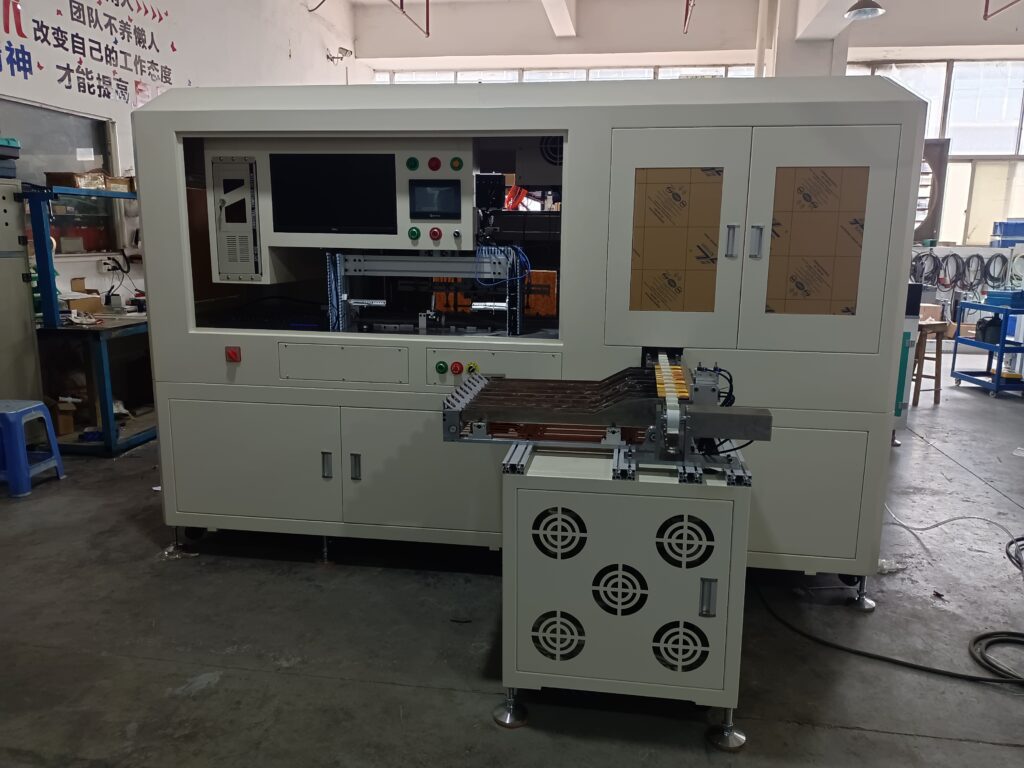
If you need the fully automatic equipment with automatic switching of the different materials and the high-precision punching force, you could check our industrial high-precision punching machine (automatic punching system) technical parameter page.
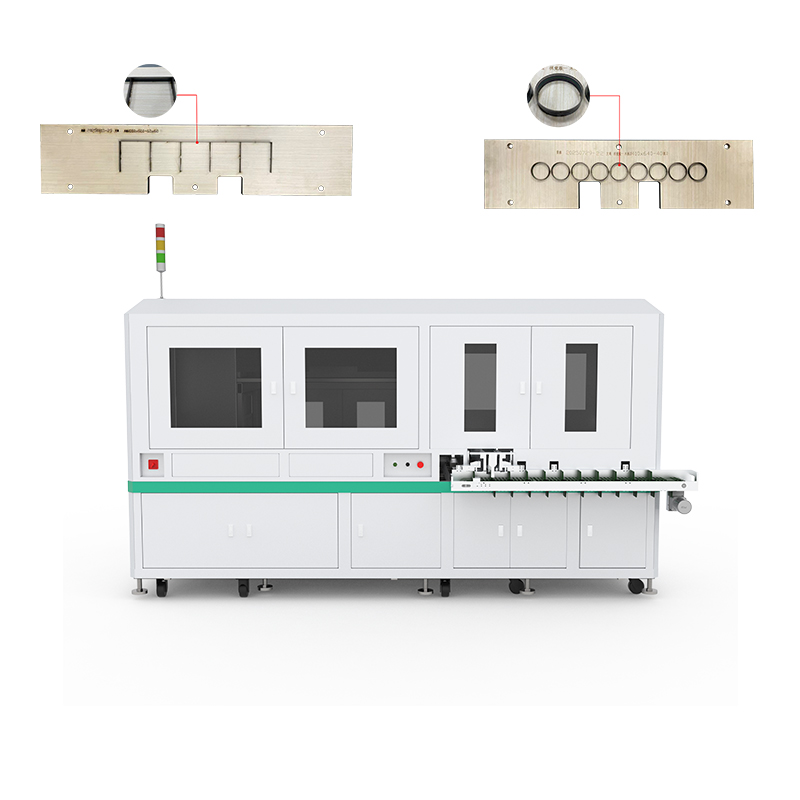
1.The core challenge for industrial punching machines: Processing multiple materials
Modern specialty printing and processing often involves production lines that must process substrates with very different physical properties. Processing equipment is subjected to completely different physical forces from different materials. From flexible polyvinyl chloride (PVC) and high-density black core poker cardboard to extremely fragile and chip-prone industrial special filter paper.
The use of traditional single stamping parameters in multi-material production is often prone to the following industrial pain points:
- Quality defect at the edge of the incision The plastic material is prone to whitening of the incision and stress cracks. The cardboard is prone to delamination or burrs. The filter paper is prone to fiber drawing, which affects the accuracy of the filter aperture.
- Position tolerance drift. The difference of the friction coefficient between flexible and rigid materials is huge during the feeding process. The photoelectric sensor or the visual positioning system should be adaptable in order to avoid excessive dimensional tolerances of machining.
- Abnormal wear and mold jamming. With the same punch gap, blindly processing materials of different hardness can easily cause the punch blade to break, reduce mold jamming, or cause the stamping material to jam.
- A good understanding of the mechanical behavior of industrial punching machines under different materials is important for efficient and quality production.
2.Typical characteristics of the material punching process and adaptability analysis
2.1 PVC/ABS/PET (plastic and smart cards)
Plastic substrates are very tough and highly thermoplastic. The impact force may lead to local plastic deformation of the material during punching the shape of the smart card or avoiding the holes of the chip.
Punching Characteristics: 1. When the gap between the molds is too big, the edge of the cut will have obvious plastic stretching and whitening. 2. When the punching speed is too slow, frictional heating may cause micro-melting at the edges of the material.
Equipment Adaptation Requirements: The punch press is required with extremely high shear force and short-stroke stamping. The die should be coated with anti-adhesion (such as a CrN coating) and be equipped with punch cooling or an antistatic air gun.
2.2 Black core paper/white board/composite board (playing cards and cards for games)
The handling of game cards and playing cards demands strict adherence to rules governing edge smoothness, uniform size, and toughness. At the moment of punching and cutting, multilayer composite cardboard is exposed to enormous shear stress.
Punching characteristics: The paper fiber is anisotropic, and the uneven tensile force can easily cause small burrs or paper scraps splashing at the cutting edge.
Requirements for equipment adaptation: The punching machine should be equipped with stable edge-pressing force so that the cardboard has no microdisplacement during stamping. The knife mold should have a very high surface finish to reduce accumulation of paper scraps.
2.3 Nonwoven fabric/microporous filter membrane/special filter paper (industrial and medical filter paper)
Special filter paper (such as engine filter paper, chemical analysis filter paper, and medical blood filtration membrane) is porous, loose, or very fragile in its physical structure.
Punching characteristics: The filter paper is not cut directly, but it is compressed elastically under pressure. Hence, the pore size or the fiber is deformed, and it breaks instead of cutting.
Equipment adaptation requirements: It is necessary to use the highly accurate shear-type mold (the blade is slightly inclined, like scissors), and the punching machine must be equipped with a dust collection system to avoid the tiny filter paper fibers produced by punching from contaminating the photoelectric positioning sensor.
Table 1: Comparison of Processing Materials and Process Parameters of Industrial Punching Machine
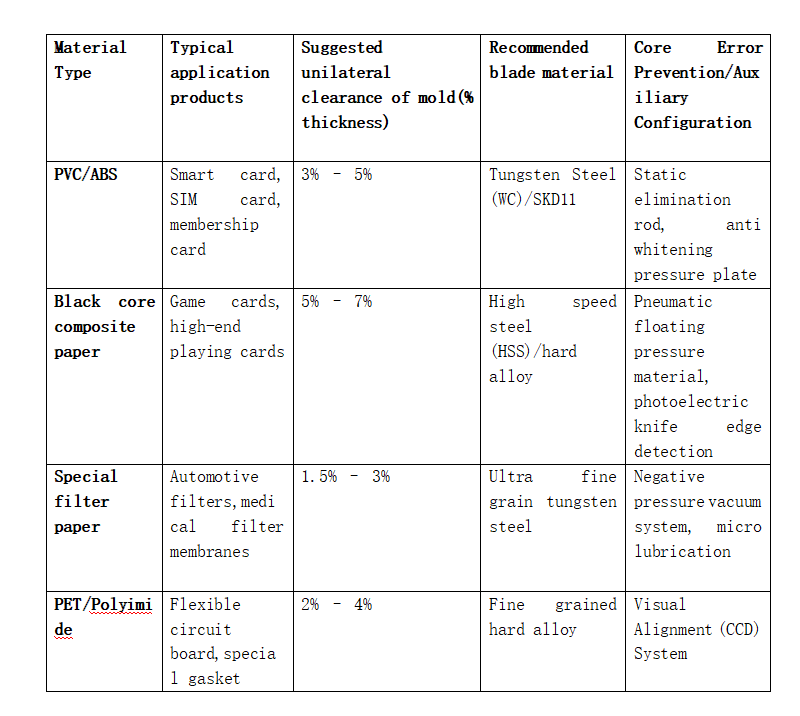

3.Method for adjusting the clearance of a high-precision punching die and die.
Physical matching between molds and equipment is the core to judging the multi-material adaptability of industrial punching machines. Among them, the most important parameter is the unilateral shear clearance ($c$):
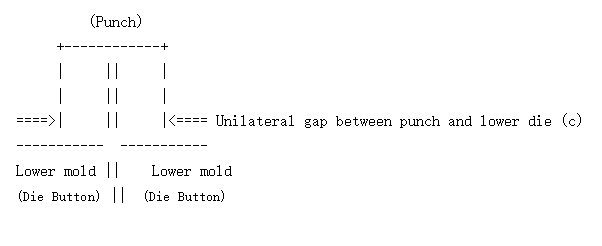
Too small a gap: It can lead to the secondary shear and double fracture zones in the incision and increase the impact force and accelerate the wear of the cutting die.
Excessive gap: The material is overstretched and bent at the incision, causing large burrs and rollovers at the edges.
For multi-material production lines, it is recommended to use quick-change die sets, which can be replaced quickly. For factories that produce high-frequency switching materials, you can refer to our technical guide on daily maintenance and gap adjustment of cutting dies for more detailed mold disassembly and calibration standards.
If you are looking for tool components suitable for certain materials, then take a look at our industrial punch and automated punching machine product line for the latest standard part specifications.
4.Multi-material switching process of optimizing industrial punching machine parameters
When changing from one material (e.g., PVC smart card) to another material (e.g., special filter paper) on the production line, technicians are recommended to follow the following standard SOP for equipment tuning:
[Step 1: Material Physical Measurement] ➔ [Step 2: Mold and Gap Calibration] ➔ [Step 3: Sensor and Feed Adjustment] ➔ [Step 4: Bottom Dead Point and Impact Force Setting] ➔ [Step 5: Test Punch and Sample Inspection]
Step 1: Physically measure the materials.
Measure the thickness of the material to be treated precisely with a micrometer. 1.2.2. Check the Shore hardness or the tensile strength of the material.
Step 2: Check for mold and gaps.
According to the material type, replace the corresponding punch and lower die kit. For example, when processing special filter paper, it is necessary to ensure that the cutting die has no small breakage and the gap is strictly controlled in the range of 0.01 mm to 0.02 mm.
Step 3: Sensor & Feed Adjustment
Optoelectronic/visual alignment: For plastic materials (especially transparent or semi-transparent PET), you need to change the spectral mode of the optoelectronic sensor or change the brightness of the CCD visual background light source.
Feed roller pressure: Flexible filter paper needs to reduce the clamping force of the feed roller to avoid the material being pressed in the transportation process. Hard plastics need enough friction to avoid slip.
Step 4: Stamping stroke setting and bottom dead center position.
Adjust the stroke of the crankshaft or servo shaft of the automated high-precision punching equipment so that the depth (overlap) of the punch entering the lower die is appropriate. The depth of the punch entering the lower mold is not too deep for the filter paper materials, generally controlled at 0.5 mm-1.0 mm, so that unnecessary tool wear can be reduced.
Step 5: Punching tests and sample tests
Make 3-5 single stamping test runs. Look at the edge profile with a high-power magnifying glass or microscope:
If the ratio of fracture layers is too high, the gap should be reduced accordingly;
In case of plastic whitening of the edge, it is necessary to reduce the stamping impact force or to fine-tune the bottom dead center position.
When troubleshooting complex processes like chip avoidance and positioning in actual practice, we can refer to the common defect troubleshooting of smart card chip avoidance, punching, and positioning.
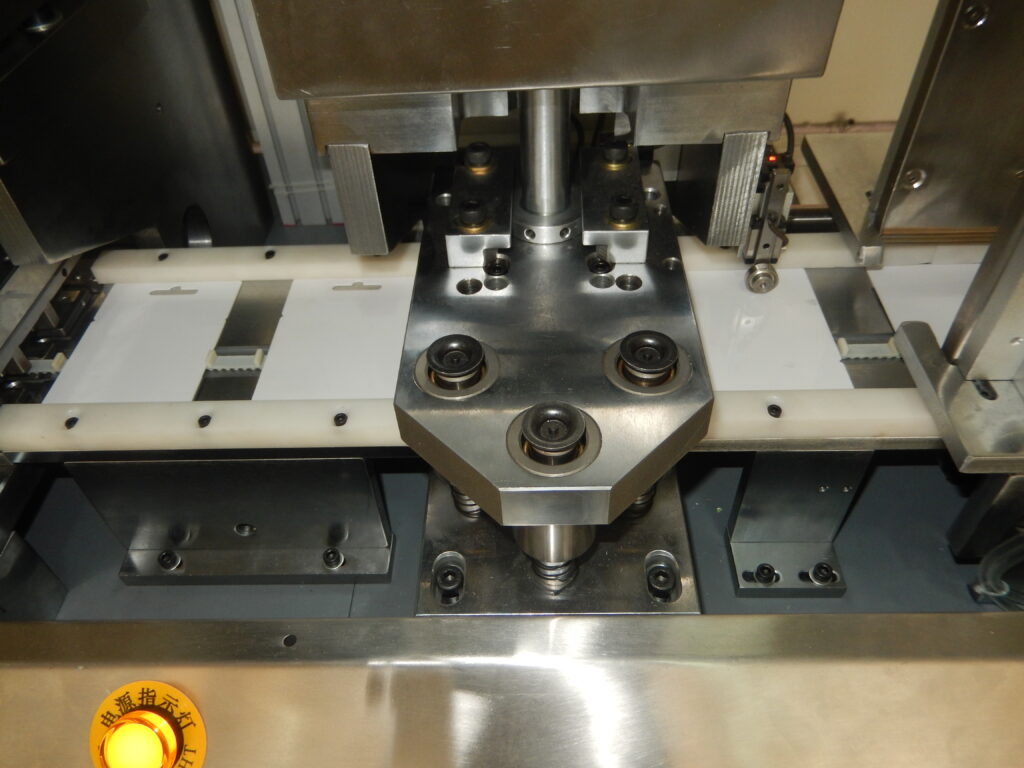
5.Operational risk, safety regulation, professional technical countermeasures
Caution Reminder Industrial Safety & Engineering
There are some engineering risks of adjusting high-tonnage punching force and high-frequency automatic feed mechanisms of industrial punching machines. Operators must adhere to the following safety and engineering regulations:
Overload protection: When cutting high-hardness materials (e.g., thick ABS or composite materials with metal layers), it is necessary to calculate the nominal force of the equipment. It is strictly forbidden to exceed the equipment’s tonnage curve chart limit; otherwise, this may cause the crankshaft to break or the servo motor to burn out.
Antistatic and dust explosion protection: Cutting special filter paper and dry cardboard with high speed will produce a lot of fine paper dust; punching PVC plastic will produce high-voltage static electricity. The production workshop should be equipped with industrial-grade grounding anti-static systems and explosion-proof dust-removal equipment.
Engineering Support: When punching with special composite materials (e.g., copper foil, PET membranes, or glass fiber filter paper), do not forcibly adjust the punching stroke. Before setting up, it is suggested to contact the original factory engineering personnel for material shear testing.
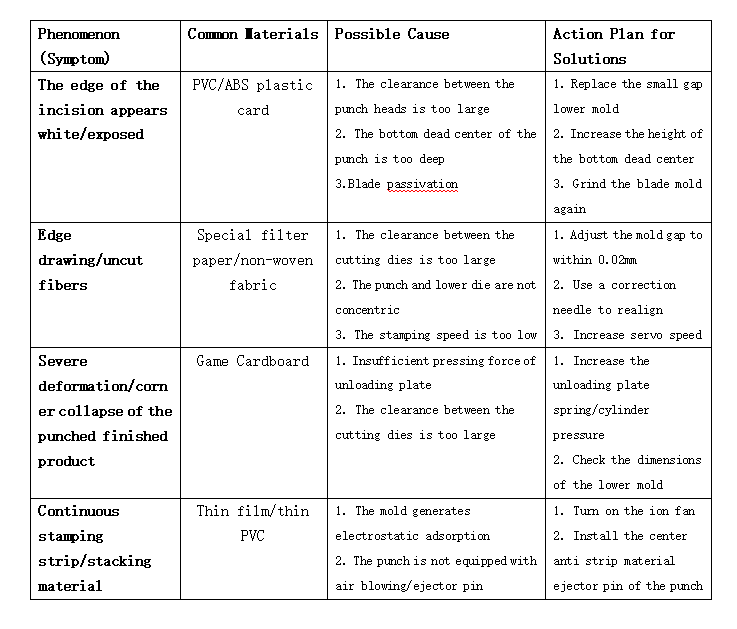
6.Common processing defects and troubleshooting checklist
If the quality of the cut is found to be decreasing during the multi-material punching process, the following table can be used for quick troubleshooting:
Table 2: Troubleshooting Guide for Industrial Punching Machines Multi-Material Processing
7.FAQ (Frequently Asked Questions)
Q1: Is the industrial punching machine able to punch PVC and special filter paper simultaneously without changing the mold?
Answer: No. Just to be clear, it is not allowed. The physical properties of PVC and special filter paper are quite different. PVC needs a shear gap that can withstand stress, while filter paper needs a very small gap at the micrometer level to cut off fibers. Repeated use of the same mold set can cause brushed filter paper edges or badly exposed PVC edges. But with the modern Quick Change System, industrial punching machines are able to change the mold and parameters in 5 minutes, which enables adapting the production line to different materials.
Q2: There are a lot of tiny burrs generated when cutting the special filter paper. What is the quickest way?
The first thing is to check the gaps between the molds. Filter paper burrs are usually caused by too much space between molds or dull blade wear. If the fibers are “pulled apart” rather than “cut off,” burrs will be generated. Please pay attention to the use of a high-power magnifying glass to check the smoothness of the punch blade and tighten the single-sided gap of the lower mold to about 1.5%-3% of the material thickness. At the same time, check whether the negative pressure suction system of the equipment is normal to prevent paper scraps from raising the substrate.
Q3: When cutting game cards/boards, why is it easy for the punch to lift the material?
Material carrying is mainly due to two reasons: 1. The cardboard produces electrostatic adsorption in the process of stamping; 2. The spring compression force of the stripper plate is insufficient, or the punch is not equipped with an anti-strip material ejector pin. Recommend increasing the pre-tightening force of the unloading plate. Install an anti-static ion fan around the mold.
Q4: How to select the appropriate die material for industrial high-precision punch machines?
For ordinary cardboard and paper cards, SKD11 or HSS (high-speed steel) is used to achieve very high cost performance; for PVC, ABS, and high-wear special filter paper, it is strongly recommended to use particle tungsten carbide material, which has 5-10 times the wear resistance of traditional steel and can effectively maintain long-term high-precision edge cutting.
8.Summary and Best Practice Recommendations
In the field of automated printing and special processing, the industrial punching machine is valuable not only for its stamping speed but also for its deep process adaptability to various materials. For the constant quality of cutting edges:
Each time the material is replaced, re-verify the single-sided shear gap and bottom dead center of the stroke strictly in accordance with the SOP.
Realize full life cycle management of molds: regularly check wear status of tungsten steel punch and lower mold to avoid operation with defective parts.
Depend on a mature automation equipment platform: Choose equipment with a high-rigidity frame, servo precision control, and good scalability, which can greatly reduce the technical threshold for multi-material processing.