How to ensure that the poker card punching machine complies with ISO and CR80 standards
blog 2026-03-17 01:18:47 42
The poker card punching machine is the most important equipment for making game cards and smart cards around the world. They check whether the quality of the finished product is high and whether it meets international standards. Indian printing companies not only need to figure out how to make money but also need to ensure that every card in the global supply chain meets strict international standards. This is because there is a high demand for anime cards, smart cards, bank cards, and game cards. The ID printing factory in Delhi and the game card customization workshop in Mumbai can only sell their products around the world if the machines can produce cards that comply with the ISO/IEC 7810 standard. The Indian government is promoting “Digital India” and financial inclusion. This has led to a significant increase in the number of identity cards and bank cards manufactured in India. This has forced Indian printing companies to improve their machines to meet the high standards set by the Bank for International Settlements and government agencies for card quality.
Many different types of cards, such as smart cards, business cards, game cards, poker cards, anime cards, bank cards, star cards, etc., are made using poker card machines. Modern high-precision die-cutting machines need to do more than just punch holes. They also need to have intelligent functions such as precise feeding, automatic collection, and waste removal. This device can read paper cards weighing between 200 grams and PVC and PETG plastic sheets with a thickness of 0.8 millimeters. It can even be used in conjunction with soft magnetic chips used for RFID and magnetic stripe cards. This article will discuss how new technologies can help industrial-grade punch presses meet international standards and provide everything needed for Indian printing companies from sampling to mass production. The growing demand for smart cards in the Indian Cricket Super League and schools has made people want to collect cards. Printing companies that excel in these technologies will have a clear advantage over their competitors.
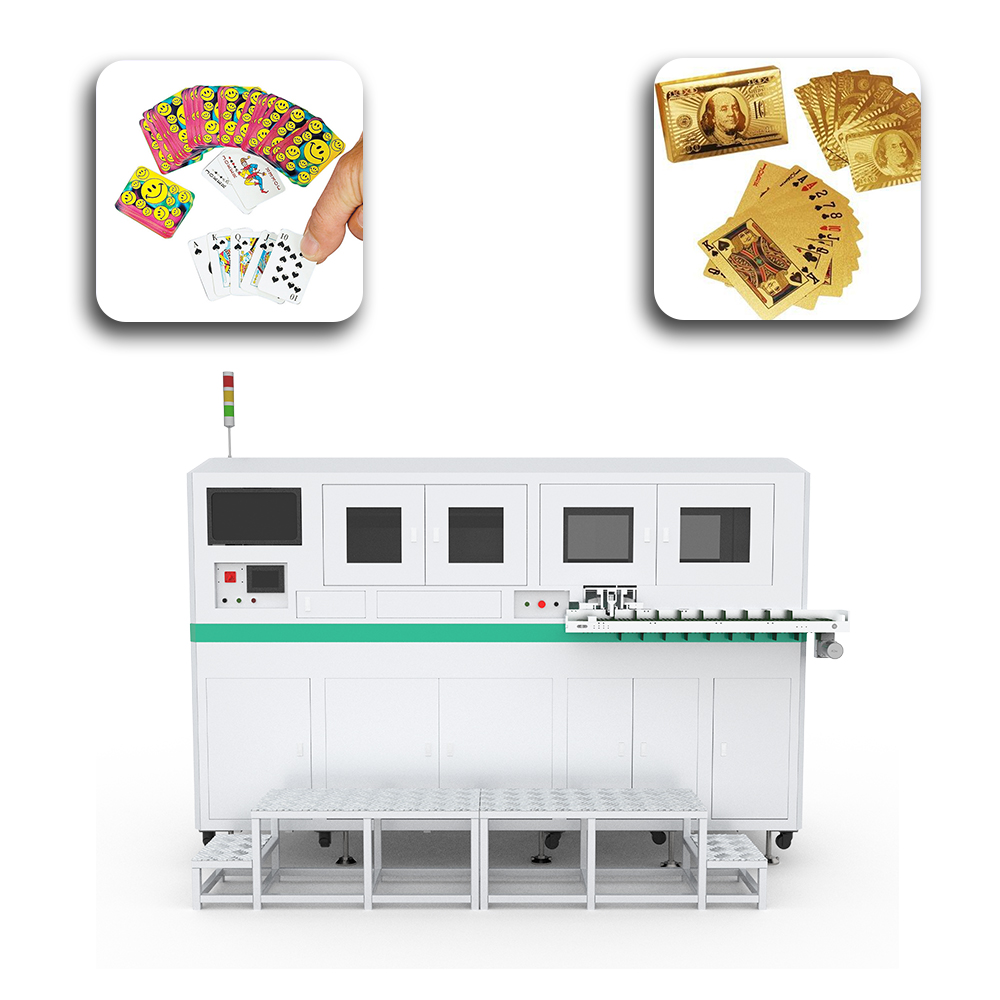
CR80 standard: Why cards need to have the same fillet radius to work collaboratively around the world
The CR80 standard, also known as the ISO/IEC 7810 ID-1 standard, is the most important global standard for business card printing. It tells you how big a standard credit card is: 85.60 millimeters long, 53.98 millimeters wide, and 0.76 millimeters thick. But the fillet radius is the most important technical indicator and is easily overlooked. The rule stipulates that the fillet radius of ordinary plastic cards must always be between 2.88 and 3.48 millimeters. This small detail enables the card to be smoothly installed into ATMs, card readers, or gaming terminals. If the fillet radius is too large and the card contact is poor, the card may get stuck in the ATM machine. If the radius is too small, it may seriously harm the user or damage the precise read-write head of the device. Bus cards and access control systems are very common in India. If the corners of the card reader are not well rounded, the card reader will wear out faster, which will significantly increase maintenance costs.
With high-precision poker card punching machines, manufacturers can solve this problem by using layout visual correction and positioning systems. This technology uses industrial cameras to capture real-time positioning marks on printed materials. It can also automatically repair a few millimeters of offset during transportation and ensure that each punch falls on the set circular path. Advanced visual systems can detect printing register differences as small as 0.01 millimeters and automatically make changes to repair them before the next stamping cycle begins. The precise feeding function of this device ensures that multi-layer materials will not layer or move during the stamping process. The same applies to common composite material cards in India, such as PVC, PETG, or environmentally friendly ABS materials. This feeding method is driven by a servo motor, with an accuracy of within ± 0.02 millimeters per step. This ensures that the four edges of the card are evenly cut. Indian manufacturers can accept orders from international banks and multinational gaming companies because they can control this level of detail. This indeed links them to the global industrial chain. For example, in the smart card industry cluster in Bangalore, southern India, manufacturers with high-precision card punching machines are already able to send EMV-compliant bank cards to Europe. This has reduced their scrap rate from 8% using traditional methods to below 1.5%.
Safety first: Industrial poker card punching machine certified by CE and UL
In the rapidly growing printing industry in India, safety and adherence to equipment standards are now the most important considerations when making purchases. The poker punching machine has a 7.5 kW servo motor, which makes it a very sturdy punching machine. The EU CE certification and the US UL certification have set standards for its electrical safety, mechanical protection, and emergency braking systems. Not only do you need these certifications to conduct business in Europe and the United States, but you also need to ensure the safety of those who work with them. The Indian Factories Act stipulates that stamping machines must have all necessary safety functions. CE-certified machines have taken these requirements into consideration from the very beginning, which helps Indian importers avoid making changes in the future to meet these needs.
In terms of safety design, there are many things to consider for die-cutting machines that have already obtained certification from other national organizations. For example, the cutting power transmission link of the device uses servo motors and closed-loop control. When it sees overload or something strange coming in, it can stop within a few milliseconds. The working speed of the servo stamping system is more than 20 times faster than that of old-fashioned mechanical clutch stamping machines. This can help people avoid harm when making mistakes. In India, the common way of making things is “small batch, multi-batch,” which means making customized star cards or anime cards. This means that the equipment needs to be replaced and adjusted frequently. Equipment that meets CE standards has a protective cover that covers everything and a photoelectric sensor in the mold area. The device can only be opened after proper protection is in place, which means that accidents will not occur during the stamping process. In addition, the rapid mold change design of lightweight wooden molds (only 2-3 minutes) not only speeds up the process but also allows workers to stay away from hazardous areas in a shorter amount of time, making the process safer. This rapid mold replacement technology makes Indian printing factories more flexible when receiving urgent orders, such as producing a large number of voter cards during elections or fan cards before major sports events.
Solution for medical and high-security ID cards suitable for cleanrooms
India’s “Digital India” plan is moving forward, with places producing high-security identity cards, medical cards, and smart cards increasingly approaching cleanroom standards. Chips, antennas, or holograms are usually on these types of cards. These things are very sensitive to dust during stamping. The die-cutting machines used in the past did not perform well in controlling plastic dust and cutting paper fibers. This may lead to poor chip packaging or read/write failures. Even the smallest dust can make RFID chips difficult to read and write in very secure situations, such as when making Aadhaar cards (Indian national identity cards).
Modern high-end poker machines have done better in this area due to their new design. Firstly, the device adopts the method of “punching first, then separating,” which means that die-cut products do not require nail holes or connection points like other methods. This reduces the dust and other substances generated when the connection point is pulled apart. This new technology smooths the edges of the incision, removes burrs, and reduces the number of particles by over 90%. Secondly, it is easy to connect the equipment to the dust removal system. It uses vacuum collection to generate negative pressure at the stamping station and waste discharge outlet, thereby quickly pulling up dust particles as small as micrometers. This cleanroom compatibility means that the product can enter the packaging process directly without the need for further cleaning. This means it can be used to make medical-grade ID cards. It is important to remember that there are two methods for collecting finished products: sequential collection and classified collection. This meets the strict standards for managing batch tracking and classification in the medical card production process. For example, when hospitals produce wristbands to identify patients, different colored classification cards may be required for the same batch. The automatic classification and collection system can send finished products to different collection warehouses according to a preset schedule. This reduces the risk of pollution and the need for manual classification, thereby slowing down the process.
Dust removal and recycling system for recyclable waste
Due to environmental regulations and ESG policies, the global printing industry is facing significant pressure. The Indian market is no exception. The waste generated by traditional card stamping is usually a mixture of different types of waste that are difficult to recycle. But the new generation of poker card machines is changing the way of “zero waste” production. The precise feeding system of this equipment optimizes the layout to maximize material utilization and reduce waste. For example, the optimized layout of standard CR80 cards can increase material utilization from 75% to over 85%. This means that each ton of material can produce an additional 3000 cards. The garbage disposal system also sorts and collects garbage. For example, paper waste and plastic waste, such as PVC and PETG, will start different recycling cycles through different recycling channels.
Printing companies can easily switch between environmentally friendly materials according to the needs of each order, as the equipment can handle various materials such as paper, film, and soft magnetic sheets. For example, if you use naturally decomposed PLA corn or cellulose paper cards, the stamped waste can be composted or used to make more paper. Indian printing companies can not only comply with the country’s stricter environmental regulations (such as the Central Pollution Control Board’s regulations on handling plastic waste) but also enter the high-end markets of Europe and the United States as “green suppliers” if they consider environmental protection from the design process. The effective dust removal system of the equipment is more important because it can prevent excessive dust in the workshop, which is beneficial to the health of workers and the external environment. At the modern printing plant in the Delhi-Mumbai industrial corridor, punching machines with dust removal systems have reduced the PM2.5 level in the workshop by 70%. This has led to a significant decrease in the number of workers suffering from respiratory diseases, which is a significant improvement that should be noted in the company’s ESG report.
Technical Summary
In short, poker card punching machines that meet international standards are no longer just ordinary punching machines. It is now an intelligent terminal that can protect the environment, ensure people’s safety, and provide precise transmission and visual positioning. The equipment must possess the following core skills, as there are issues with order interruptions, short delivery times, and a wide variety of materials in the Indian market:
Firstly, the ability to respond quickly. This machine can process feed and die cutting in steps and only takes 15 minutes to change orders and make changes to the machine. Replacing the wooden mold only takes 2 to 3 minutes. This makes it easy for printing companies to fulfill small custom orders, such as limited edition anime cards and event game cards. The printing factory can accept orders as low as 500 sheets in such a fast response time. For conventional equipment, the minimum order quantity is usually 3000 sheets.
Secondly, surface quality and physical accuracy. The finished product has no burrs on the edges and a positional accuracy of ± 0.02 millimeters. This means that there is no need for secondary pruning. This fully complies with the CR80 fillet tolerance zone. This machine can produce 2500 to 3600 sheets of paper per hour, which is sufficient for small-scale testing production and large orders.
Thirdly, it should be able to work collaboratively with the backend. You can connect the device to the overall solution of backend product packaging, which completes all these tasks at once: punching, cutting, collecting, and packaging. This reduces operating costs and the need for manual labor. Indian printing companies that want to compete better on the world stage should purchase equipment with the aforementioned technological features. It’s like choosing a ‘technical passport’ that connects you to the global market. Market feedback shows that the export rate of Indian printing companies using this equipment has increased by an average of 25 percentage points, and the time required to recoup investment has been reduced to less than 18 months. With the advancement of technology and equipment, the competition between India’s printing industry and other countries is becoming increasingly fierce. This happened in the business card printing industry, where old and new ideas are integrated.