How to achieve perfect compatibility between high-frequency and ultra-high-frequency processes on an RFID card punching machine?
blog 2026-03-09 20:26:17 13
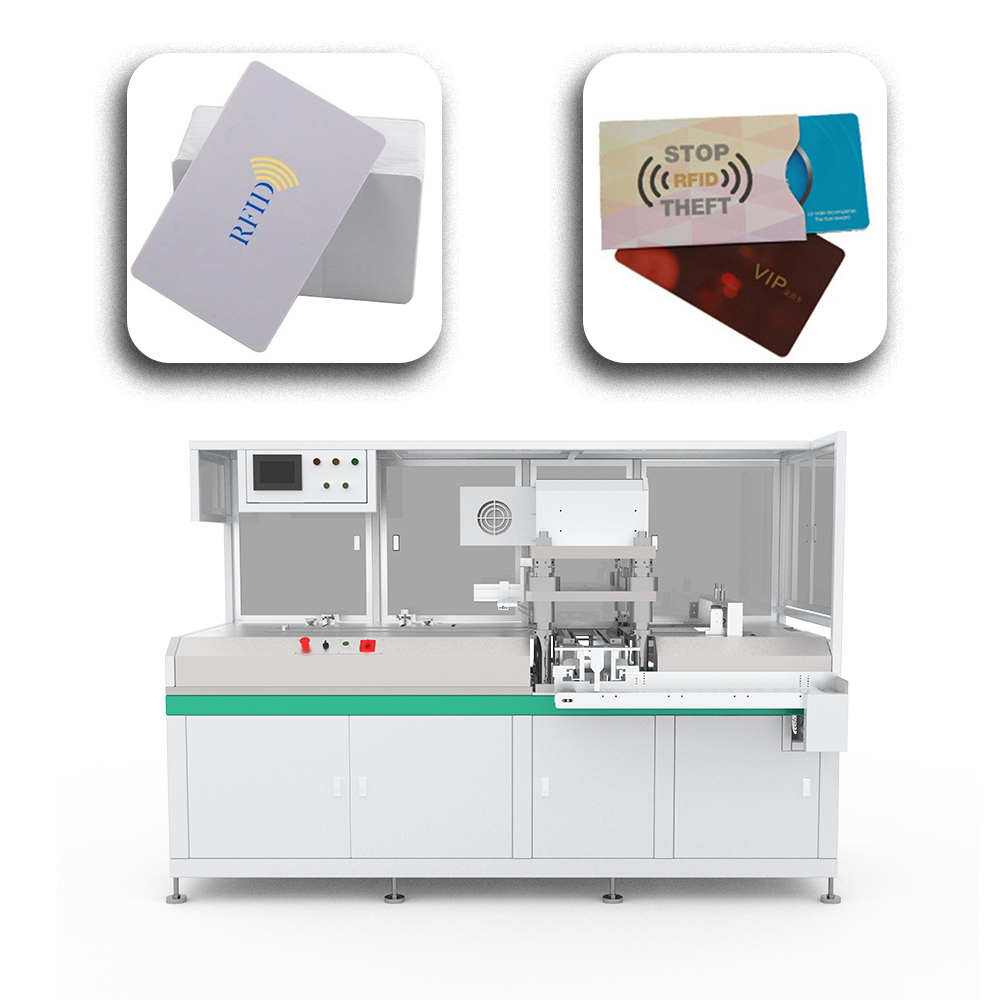
Physical characteristics and issues of high-frequency and ultra-high-frequency cards
There are more technical differences between high frequency (HF) and ultra-high frequency (UHF) cards than just their operation at different frequencies. The antennas of most high-frequency cards (13.56 MHz) are either wound or etched aluminum, and the packaging of the chips makes them look flat. Cards are mainly made of PVC, PET, or a mixture of both, with a thickness ranging from 0.3 mm to 0.8 mm. For this type of card, the cutting pressure needs to be very uniform. Excessive pressure can easily crush the internal coils, while insufficient pressure can leave burrs at the edges. This may change the appearance and duration of the card.
Ultra-high frequency cards (860 MHz to 960 MHz) have very different physical characteristics. The dipole antenna is very large, and the raised area of the chip is not always the same. The thickness of the card exceeds 1.2 millimeters. Tags operating at ultra-high frequencies have complex antenna designs that require special requirements for the die-cutting process. For example, during stamping, it is necessary to avoid chip protrusion, and shear stress must not affect the antenna line. Ultra-high frequency cards are also very important for managing logistics and supply chains, as they have strict regulations on reading distance and batch recognition speed. Any slight damage caused by punching to the antenna may directly affect the reading and writing performance of the tag.
It is obvious that these two processes cannot work well together in terms of material level and punching layout setting. The high-frequency working card chip is very small and usually placed in one place, usually in a standard matrix. You can put many cards on a large board, such as dozens or even hundreds. Antennas are so complex that ultra-high frequency cards typically need to be laid out in an abnormal or single-line manner. A truly good RFID card punching machine needs to be able to recognize two layout methods simultaneously and switch between them without any problems.
Design of nail-free buckle and connection point for RFID card punching machine
The common method of die-cutting is to use nails or connecting points on the mold to fix the finished product in place and prevent it from falling off after stamping and cutting different cards. But this design is not suitable for RFID cards with precision chips. The stress at the nail opening will damage the internal solder joints, and the vibration that occurs when the connection points separate will change the impedance of the ultra-high frequency antenna, resulting in the inability to read and write cards.
Since the introduction of step-by-step precise feeding technology, this situation has undergone significant changes. The CNC control system can calculate each step of the feed with an accuracy of ± 0.05 mm. The feed roller is driven by a high-precision servo motor. The punching method of “no nail mouth, no connection point” has many very important process benefits. For example, the cost of making molds has decreased by about 30% because complex nail structures and connection point bridge positions no longer need to be processed. RFID chips are completely safe during the separation process of finished products and will not be damaged because there is no stress release. Productivity and production efficiency have also greatly improved.
For example, in the production of ultra-high frequency logistics labels, the seamless design allows the product to directly enter the composite packaging process. This means you don’t have to rely on manual labor like traditional crafts. This technology enables RFID card punching machines to quickly meet the sampling needs of customers with the common “small batch, multi-variety” order mode in the Indian market. This makes designing and delivering a set of molds faster. This machine can cut bank cards, game cards, or ultra-high-frequency logistics labels with the same high efficiency.
Quick Order Replacement System for RFID Card Punching Machine
India has many languages, currencies, and cultures. Business card makers often need to collaborate with people from different fields. For example, they may receive bank credit card orders in the morning, ultra-high frequency tickets for the Delhi Metro in the afternoon, and anime cards for wedding invitations in the evening. This high-frequency sequential switching makes it difficult for the device to tune properly.
The main goal of the fast order switching system is to make the switching between orders faster. The main goal of equipment structure design is to make it easy to quickly change orders, which is accomplished by three main modules. The first module is the rapid replacement mold system. The mold frame is made of aluminum alloy used on airplanes. It weighs only one-third of a steel mold. It also has built-in magnetic adsorption and an automatic positioning system. The operator can close the mold without any tools within a few minutes, and there is no need to recalibrate the positioning.
The servo parameter automatic transmission system is the second module. By using intelligent drivers and high-power servo motors, thousands of pressure curve parameters can be saved. When the operator selects the “high-frequency PVC card” mode, the system will automatically call the optimal stamping pressure and buffer curve for thickness. When you select the “ultra-high frequency paper card” mode, it will switch to the optimal cutting speed and holding time for fiber materials.
The third module is the part of the system that controls the power supply of the feeding track. You don’t need a wrench to change the feed width and pressure roller gap, as the motor can do it for you. This makes it easier to change orders.
Automatic classification and sorting system for RFID card punching machine
The collection method of finished products often determines the final working effect of the entire production line. After issuance, high-frequency and ultra-high-frequency cards process data in very different ways. For example, you usually have to collect high-frequency bank cards and ID cards before you can write data to them and print out your name. If the command is not followed, the issuing system may encounter errors. On the other hand, ultra-high frequency cards and anime star cartoons often need to be classified and collected because a large plate may contain products with different patterns or codes mixed together. These products need to be stacked and packaged separately.
The dual-mode automatic card collection system is very suitable for these two completely different collection needs. The first type is the sequential collection mode, which is suitable for situations that require strict classification, such as social security cards and bank credit cards. The feed robot on the machine picks up the completed cards in the order of perforation and places them on the card receiving platform in the same order. The sequence accuracy of each stack of cards is 100%. The second type is the classification collection mode. This mode is very suitable for making mixed products such as anime cards and game cards. The visual system reads the pattern features or QR code information on each card before punching it. After punching, send the card to the correct slot based on the discovered content. It can handle multiple classification channels simultaneously.
To switch between two modes, click on the touch screen to select. The system has changed the path taken by the card-receiving logic itself. This flexibility allows the machine to work for both financial card manufacturers and collectible card printing factories, making it truly a multi-purpose machine.
The efficiency of mold replacement for RFID card punching machines
You can judge the stamping activity and speed by the speed of changing the mold with the RFID card. Replacing molds on traditional equipment usually takes over 30 minutes and requires two people to work together and use lifting equipment. This time, not only will it cost direct labor, but it will also require stopping the entire production line and spending money.
Thanks to its lightweight design and fast clamping mechanism, one person can replace the mold in just a few minutes. The main part of the mold is made of sturdy aviation aluminum, which is 40% lighter than ordinary molds. Finite element analysis is used to improve the structure while minimizing its weight. The quick clamping mechanism works using the principle of pneumatic self-locking. The operator only needs to push the mold into the positioning slot, press the start button, and several clamping cylinders will work simultaneously, quickly connecting the mechanical and pneumatic circuits of the mold.
The positioning pin of the mold is conical in shape, and even if it deviates slightly, it can automatically center when pushed by the operator. The system has undergone extensive and rigorous testing to ensure its durability. It can change the mold dozens of times a day without losing its precise positioning ability. This device is very flexible because it can quickly replace molds. This is a good thing for the common short-order and sample business in the Indian market. This allows customers to confidently place high-quality card orders, with small quantities but high profits.
Material adaptability of RFID card punching machine
The Indian market is very open to card materials. It can be anything, from cheap white cardboard to mid-range PVC plastic cards to high-end soft magnetic cards with metallic textures. The card punching machine must be able to do the right thing for each material. The pressure adaptive system, mold gap fine adjustment technology, and feed roller pressure balance system are all applicable to various card materials.
The pressure adaptive system allows the servo power to change the cutting pressure from 0.5 tons to 8 tons at any time. It can also calculate the optimal pressure range for 1.5 mm thick film and 0.2 mm thick paper. The fine adjustment technology of mold clearance aims to adapt to the cutting characteristics of different materials, and operators can make precise changes to the mold clearance on the machine. When cutting pure paper, make the gap smaller to obtain clean and sharp cutting edges. If you are using composite materials containing fibers, increase the gap so that the materials do not stick together.
The pressure balance system on the feed roller is made of materials such as soft magnetic sheets that are prone to scratching. It reduces the pressure on the feeding roller and self-improves the compensation of the feeding step to ensure that the material is fed correctly without damage. When using magnetic materials, the system ensures that there are no roller marks on the finished product. This makes the magnetic card appear intact and undamaged. This is a very important part of manufacturing anti-metal tags with soft magnetic layers that operate at very high frequencies.
Technical guarantee for burr-free edges and precision of finished products
The quality of the edge directly affects the level and price of high-end cards such as star cards, game cards, and collectible cards. If there are small burrs or broken edges, the entire card can be marked as defective.
Rigid body design makes it easy to accurately punch, as it provides a solid foundation for the machine. The device adopts a fully cast wall panel structure, which has been carefully processed and aged to maintain small deformations within 0.01 mm under high cutting forces. Use slow wire cutting to shape the mold, use an optical curve grinder to sharpen the cutting edge, and ensure the accuracy of the mold to ensure the operation of the system. This ensures that the gaps in the mold are uniform within micrometers. There is also a special coating on the cutting edge of the mold, with a hardness of HRC65 or higher. This makes the mold have a longer service life and maintains the edge quality unchanged over time.
Anti-sticking technology is the most common adhesive material in ultra-high frequency cards. During stamping, high-pressure air flows through the small holes on the mold to separate the finished product from the waste material. This completely solves the problem of tearing edges when materials stick together. Actual test data shows that the edge burr height of the standard PVC card of this machine is less than 0.03 mm. This is the standard for “no burrs” in the printing industry.
Technical Summary and Data Support
In short, an RFID card cutting machine that can be used well with high-frequency and ultra-high-frequency processes requires in-depth technical integration in four main areas: visual positioning, feed control, collection and sorting, and rapid mold replacement. The manufacturing equipment in Shenzhen, China, demonstrates that this integration is not just a combination of functions; it is based on a profound understanding of the key differences between these two processes.
Actual production data shows the effectiveness of this technology: the recognition success rate of the visual correction system has increased from 95% of traditional equipment to over 99.8%; step-by-step feeding can reduce mold costs by 30% and completely prevent chip damage; The high-power servo power supply covers all materials from 0.2 mm paper cards to 1.5 mm soft magnetic sheets; the dual-mode collection system has increased the backend packaging speed by over 50%; and rapid mold replacement and order switching have increased daily production capacity by over 40%.

If people engaged in printing and packaging work in India and around the world choose equipment suitable for multiple different processes, they can obtain more market orders with less equipment cost. This RFID card punching machine can help customers take the lead in the global card manufacturing market by producing burr-free card edges and very precise finished products. It can produce standard bank cards, playing cards, anime cards with your name printed on them, celebrity cards, and even high-tech RFID smart cards that work at very high and ultra-high frequencies. Customers can link the overall solution of the equipment with backend packaging to create a fully automated production line from coil to finished product. This indeed makes “short delivery time, small batch size, and wide variety” a flexible manufacturing method.