How does the efficiency of the fully automatic sorting and card punching machine improve when producing access cards?
blog 2026-02-09 19:58:09 8
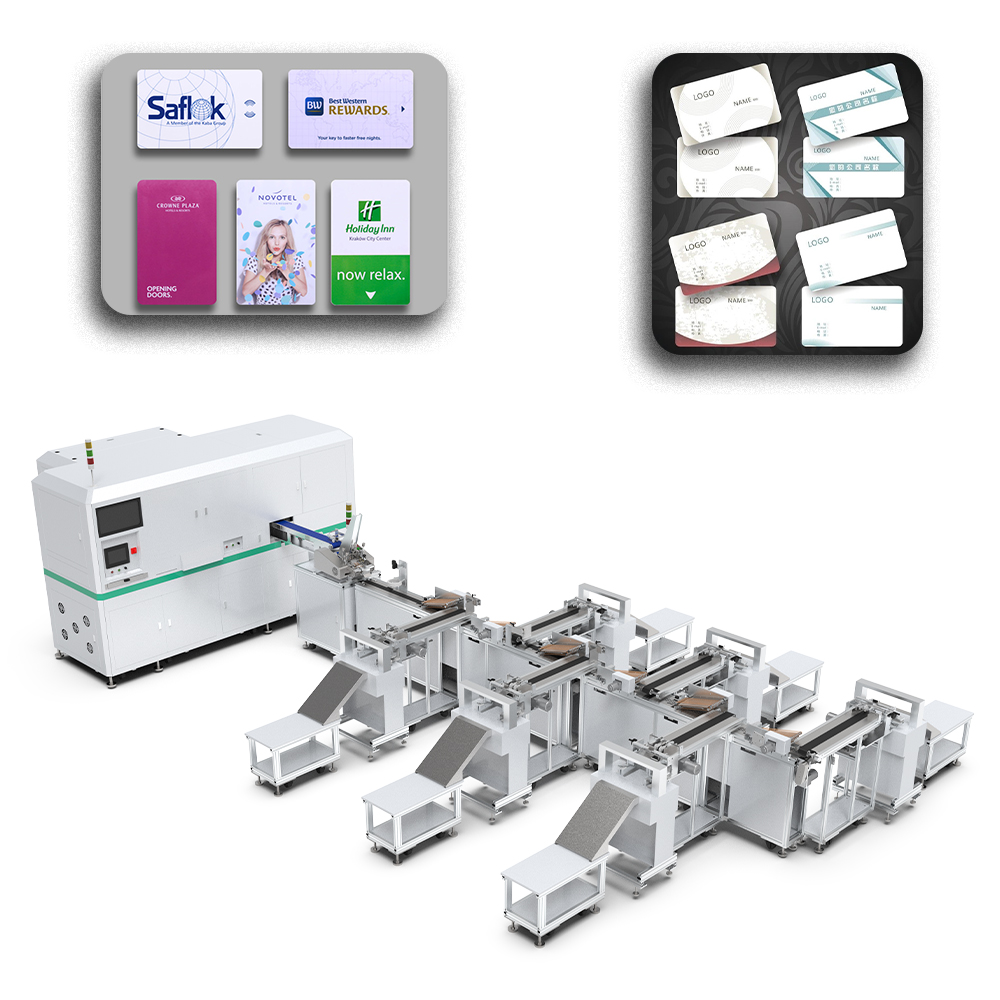
Split design of low-frequency and high-frequency card mixing production line for fully automatic sorting and punching machine
When making RFID access cards, smart card manufacturers often have to handle mixed orders of low-frequency (LF) and high-frequency (HF) chip cards simultaneously. It is very important to separate these two types of cards during the production process because their chips, antennas, and packaging technologies are different. This is to maintain clarity and avoid confusion for customers. Traditional production lines use manual sorting or semi-automatic separation, but these methods are not very effective and may result in errors. This directly affects the delivery time and accuracy of bulk orders.
The fully automatic classification, sorting, and clocking machine adopts intelligent sorting design, which solves this problem from the core. The main technology behind it is the use of high-frequency induction recognition modules and visual inspection systems. This allows the system to immediately know what kind of cards are on the production line. When chips with card substrates enter the feeding system, the machine uses non-contact frequency scanning to find out within milliseconds whether the card is low frequency (such as 125kHz) or high frequency (13.56MHz). Then, it sends the information to the main control system.
The system manages the precise sorting mechanism of physical separation based on the pre-set sorting logic. The step-by-step precise feeding system is crucial for this process. The servo motor moves the feed roller with an accuracy of 0.01mm to ensure that each card is in the same position at the sorting station. The layout visual correction positioning system simultaneously fixes the horizontal and vertical deviations of the cards to ensure correct diversion actions. The transferred cards enter different stacking units or processing modules to maintain smooth and parallel production processes.
This diversion design not only has a high degree of automation, but also has strong adaptability. The device can easily change the diversion logic to adapt to the needs of each order. It can be sorted by frequency type or many other factors, such as chip manufacturer, packaging type, and even customer code. The system can automatically change the flow rhythm of orders with varying mixing ratios over time. This keeps the production capacity of each channel balanced and prevents bottlenecks from occurring. In real life, using this design of production line can sort mixed frequency/high-frequency orders with an accuracy of 99.97%, increase single shift production capacity by more than 40%, and eliminate batch mixing problems that may occur during manual sorting.
Hotel logo printing quality and how to set sorting triggers
Hotel access cards are not only useful; They are also important factors in people’s perception of brands. The quality of the logo printing on the surface of the card, such as the clarity of the pattern, the brightness of the color, the accuracy of the covering layer, and the glossiness of the surface, directly affects customers’ perception of the brand. The traditional quality control methods use manual sampling, which is slow, has different standards, and misses many things. This makes it difficult to meet the strict quality standards of high-end hotel guests.
The fully automatic classification and sorting card punching machine checks the printing quality online and uses a high-resolution visual inspection system and programmable sorting trigger conditions to automatically sort. After the card is punched and formed, the system uses industrial grade color cameras and light sources to take photos from different angles. Visual algorithms measure many important LOGO parameters, such as the ability to detect pattern integrity and identify printing defects, drawings, or white exposures. The color difference analysis module checks whether the color matches the Pantone color code by comparing it with a standard color card. The precision testing module ensures that each color palette is in the correct position for clear visibility of fine text and edges.
The most important new feature of this device is that it can directly convert the results of quality inspections into sorting actions. The operator can change the conditions for starting sorting through the human-machine interface. For example, a color difference tolerance Δ E ≤ 1.5 is acceptable, 1.5<Δ E ≤ 3.0 is not good and needs to be separated, and Δ E>3.0 is garbage and should be thrown away immediately. If the registration error exceeds 0.1mm, it will be sent back to the channel for a second check. They should also tell you any defects they see on the surface and where they are. This closed-loop control of “detection decision execution” fully automates quality control.
It is important to remember that there are many levels of logic involved in setting triggering conditions for this system. A single parameter threshold can be used to create a complete evaluation model. This allows small changes in color and other factors to occur on their own, but not simultaneously. For chain hotels with many different types of rooms and card levels (such as regular room cards, executive floor cards, and VIP cards), the system can store multiple sets of quality standards and automatically call the correct standards when switching production modes. This means you don’t need to recalibrate. When the system was used to make cards for an international chain hotel, the number of customer complaints decreased by 76%, the number of returns due to printing issues decreased to less than 0.02%, and the cost of quality inspection labor decreased by two-thirds.
Order Batch Management System and Equipment Data Integration Protocol
Modern card production is developing towards small batches, multiple batches, and fast delivery, especially for hotels, trade shows, and commercial promotional activities. Many times, there are only a few hundred cards in a batch, but you must complete them within a day and switch between several orders. In the past, order information and machine production data were stored separately. This means that you need to keep paper work orders and manual records, which makes it difficult to track batches, view production progress, and accurately control delivery times.
The company’s order batch management system (OBMS) or manufacturing execution system (MES) can be fully integrated with fully automated classification, sorting, and clocking machines through standardized machine data docking protocols. This creates a numerical loop from placing an order to storing the finished product. This protocol is based on industrial communication standards such as Modbus TCP and OPCUA. It tells higher-level devices and systems how to send and receive data bidirectionally.
OBMS sends order information to the card punching machine during the production preparation phase. This includes order number, customer code, card type, card quantity, process parameters, quality standards, etc. The device controller automatically fills in preset parameters, such as the distance between feeding steps, punch pressure, visual inspection standards, sorting logic, etc. The lightweight wooden mold design and quick locking mechanism of this device allow you to change orders within an average of 15 minutes. Replacing the mold only takes 2 to 3 minutes. This machine can accurately fill out small batch orders because their feeding speed is very slow. This reduces waste. This feature is very useful for making samples and conducting small-scale trial production.
During the production execution phase, the equipment sends real-time OBMS status data, such as the current production order number, number of completed projects, pass rate, sorting statistics (normal, defect, and scrap quantities), and equipment operating efficiency (OEE). The system will automatically create a batch production report, which includes records for each card that can be followed. If there are quality issues, it can quickly find accurate production time, process parameters, and pre – and post production cards. The protocol also allows you to send real-time alert messages, such as when materials are about to run out, molds need to be cleaned, or there are strange changes in quality. This makes it easy for managers to intervene when needed.
The two data collection methods of this device perfectly complement the order management during the finished product processing stage. The ‘collect in order’ mode maintains the order of card output, making it easier to use for personalized printing in the future (such as printing room numbers). The ‘Classification Collection’ mode will automatically arrange the cards in order and stack them based on the classification results. Good products enter the packaging line directly, while bad products enter the repair area. Garbage is automatically cleared through the negative pressure system to keep the production area clean and free of burrs. Protocol docking allows the packaging station to know in advance how many cards are in each batch and how they need to be packaged. This can help you prepare the packaging materials.
The design of this data protocol takes into account the needs of globalization. It supports multiple character sets (including localized text commonly found in the Indian market), automatically adjusts to different time zones, and complies with ISO data security standards. After establishing the system in a multinational company that produces smart cards, the average delivery time for orders decreased by 34%. The time required to track batches has been reduced from one hour to one minute, and the equipment utilization rate has increased to 86%. When small batch orders are frequently switched, the stability of production capacity is increased by 41%.
Conclusion
The fact that the fully automatic sorting punching machine can produce RFID access cards shows that the intelligent sorting design of the frequency/high-frequency hybrid production line can sort with 99.97% accuracy in one shift and increase production capacity by more than 40%. The sorting trigger system related to print quality has also reduced the number of customer complaints by 76% and quality inspection costs by 66%. The standardized machine data docking protocol has reduced the average delivery time of orders by 34% and increased equipment utilization to 86%. These numbers indicate that the main value of the device lies in how it combines precise mechanical engineering, intelligent sensing technology, and real-time data analysis to enable flexible production for both small and large scale operations.
Short, flat, and fast machines are very suitable for the current trend of high mixing and low batch production in the printing industry. This is because it can quickly change the machine’s settings (order switching only takes 15 minutes), work reliably (7.5KW servo cutting power ensures long-term stability), and quickly replace molds (2-3 minutes). This machine can process various card materials, including paper, PVC, PET, and soft magnetic sheets. It can make many different types of cards, such as game cards, poker cards, anime cards, bank cards, celebrity cards, hotel room cards, and so on. It also produces paper products, such as small boxes used for transportation.
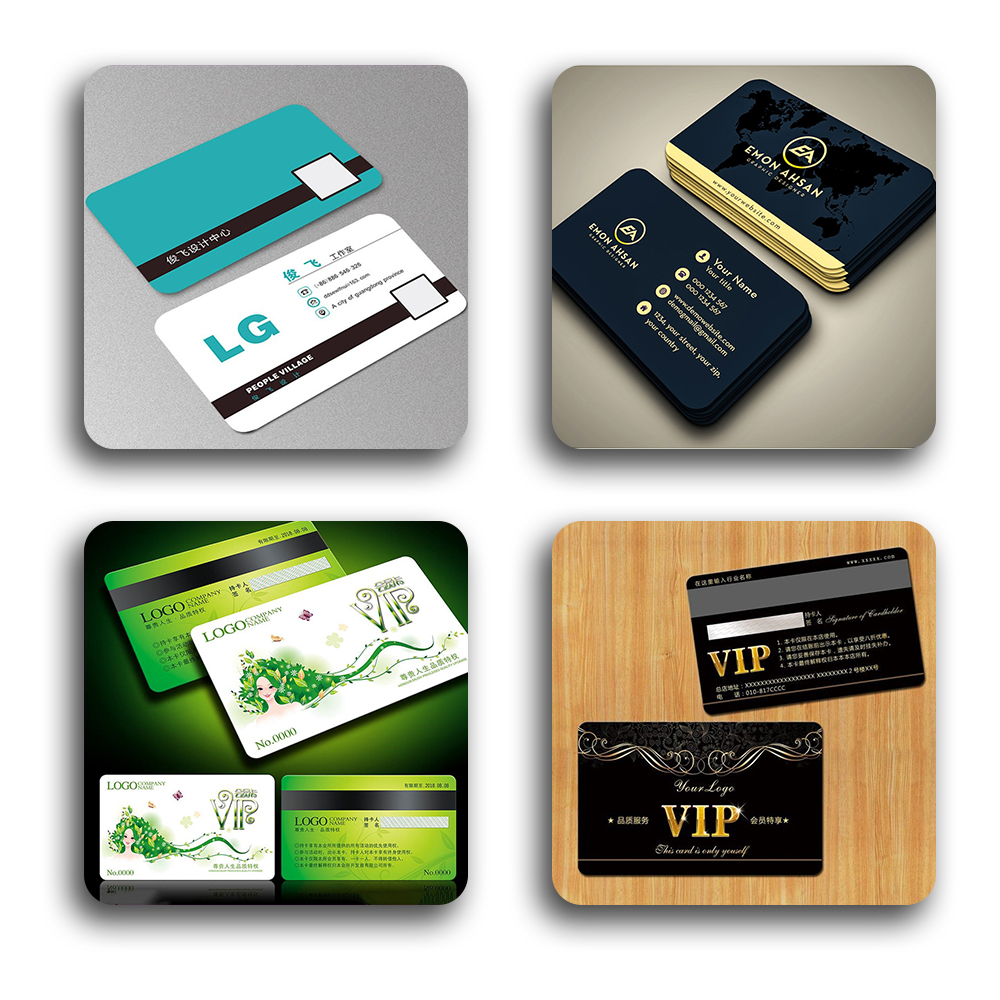
The fully automatic sorting and card punching machine is not only a manufacturing tool, but also a key part of the company’s digital manufacturing system construction. It naturally combines functional modules such as precise feeding, automatic collection, waste removal, quality inspection, and data exchange. This has changed the old business card printing method that relied on manual experience and personal operation, making it a predictable, controllable, and optimized continuous process. It also provides a reliable way for global smart card manufacturers to ensure large orders reach customers, especially in India where delivery is difficult and expensive. With the increasing popularity of Industry 4.0 and the Internet of Things, devices that combine intelligent control with precision machinery will become better and better. This will make the entire process of printing business cards more adaptable, faster, and better.