Optimisation scheme of production efficiency of bank card punching machine
blog 2026-02-03 18:39:48 27
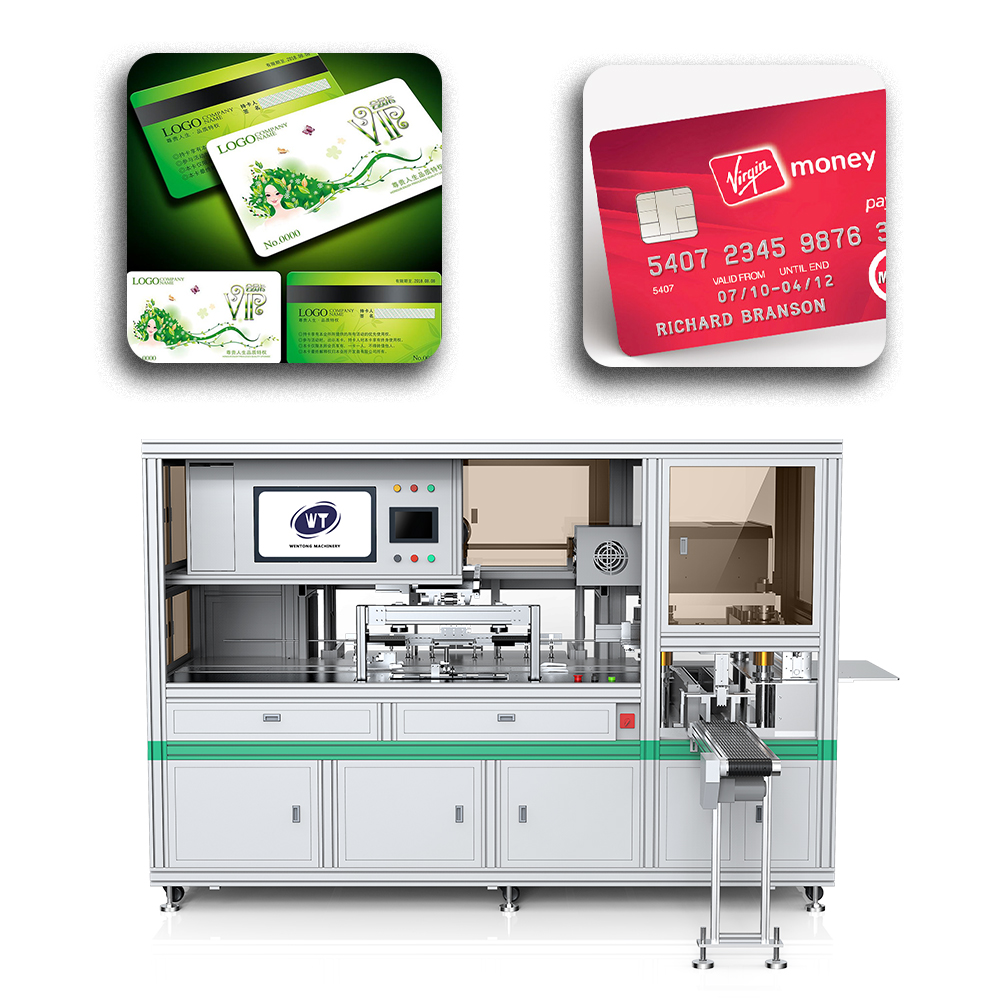
Quick mould change solution for bank card punching machine
In the printing industry, products such as star cards, animation cards, and table game cards are often produced in small batches and in multiple specifications. Traditional bank card punching machines often have problems such as long mould changing time, difficult machine adjustment, and poor flexibility, resulting in low production efficiency and a long order delivery cycle. Considering the size range and the simplicity of production, the stepping feeding bank card punching machine has created an efficient mould replacement scheme. In response to this industry pain point, it can also meet the production adaptation of small packaging boxes and adapt to the die-cutting needs of various materials such as paper, film, and soft magnetic sheets.
The rapid mould change capability of the bank card punching machine is mainly due to the structural optimisation of the lightweight wooden mould and the modular design of the equipment. Because the wooden mould is much lighter and more adaptable than the traditional metal mould, it can quickly meet the production needs of cards of different sizes and shapes. The mould-changing time is only two or three minutes, and the mould-changing efficiency is more than 80% higher than that of the traditional metal mould, which effectively solves the efficiency bottleneck caused by frequent mould changing of multi-specification orders. The equipment also has the ability to quickly adjust the machine in 15 minutes. When switching orders, there is no need for complex parameter debugging. Just replace the mould and simply calibrate the parameters to start production, which greatly shortens the order connection time and adapts to the production rhythm of small batches and multiple batches in the printing industry.
Technically, the bank card punching machine adopts a stepping precision feeding structure and is equipped with a visual correction and positioning technology for the layout, which can ensure the punching accuracy, prevent the feeding deviation caused by the mould replacement, and quickly realise the accurate positioning of the material after the mould replacement. The visual correction system uses servo drive to complete dynamic compensation, and the industrial camera captures the material positioning mark image in real time, and the pixel-level image processing algorithm calculates the deviation. The closed-loop response time of ≤50 ms enables the feeding accuracy to be controlled within ±0.1 mm. Moreover, the punched products can be directly formed without the need for connecting points and nail holes to fix the materials. This not only improves production efficiency but also ensures that the formed products are free of burrs and the quality of the card edge meets the standards, without the need for grinding treatment.
In addition, the adaptability proofing function of the bank card punching and cutting machine can meet the needs of printing enterprises for sample trial production. Before the production of small-batch orders, the equipment can be used for rapid proofing to verify the die-cutting effect and the adaptability of the mould. Since there is no need to purchase additional proofing equipment, the production cost of the enterprise is reduced. Since the proofing accuracy is consistent with the mass production accuracy, the quality risk in mass production is successfully avoided. By adopting the special wooden mould and the stepping feeding technology, the adjustment can be made for the special shape and different sizes of the board game cards. While ensuring efficiency and cost control, it not only avoids material waste in the process of special-shaped die cutting but also increases the material utilisation rate to more than 98% and realises the precise control of each step of feeding.
The joint production of card punching machines and offset printing, digital printing
Under the trend of automation upgrades in the printing industry, the connection and integration capabilities between equipment have become key factors in improving production efficiency and reducing labour costs. As the main equipment for the manufacture of card products, the bank card punching machine can establish an integrated automatic production line with offset printing and digital printing equipment to realise the fully automatic production process of die-cutting, printing, waste removal, finished product collection, and back-end packaging. It is suitable for the needs of automation upgrades in the global printing industry. The equipment developed and produced in Shenzhen, China, with its advanced integration technology, is widely used in the global market for the large-scale production of playing cards, smart cards, bank cards, business cards and other cards.
The main basis for the integrated automation capability of the bank card punching and cutting machine is the modular control architecture and the power support provided by the 7.5KW servo drive system. Compared with the traditional 4kW frequency conversion motor, the 7.5kW servo motor has more stable power output and can realise stepless speed regulation. The super-large flywheel design can save 15% more energy than traditional equipment while maintaining stable and sufficient punching force. The power consumption per unit output is ≤0.10 kWh/km, which takes into account the requirements of energy saving and consumption reduction and can accurately match the production speed of offset printing and digital printing equipment. The rhythm of the entire production process is guaranteed to be stable, and the speed breakpoints of online production are avoided. In addition to ensuring the stability of progressive feeding, the servo drive system is also connected to the output speed of the printing machine in a closed loop through its precise adjustment, so as to realise the continuous feeding and die cutting of materials.
In terms of integrated logic, the bank card punching machine is connected with offset printing and digital printing equipment through a special interface to establish a unified control system, realise synchronous adjustment of parameters, and realise real-time linkage of production status. After the printing equipment completes the card printing, the material directly enters the bank card punching machine through the conveying line, avoiding the material wear and positioning deviation in the manual transfer process. In addition, the equipment can also automatically discharge waste. The waste produced during die-cutting is automatically discharged through the integrated conveying structure, avoiding waste accumulation and hindering production. When the waste removal efficiency reaches 100%, there is no need for manual cleaning, and the degree of automation is further improved.
The reason why the bank card punching machine can realise differentiated adaptation is that the production characteristics of offset printing and digital printing are different. The production speed of offset printing equipment is faster. The equipment is speed-regulated by the servo drive system to adapt to the continuous discharge rhythm of the offset printing equipment. The stepping feeding structure of the bank card punching machine can not only ensure the die-cutting accuracy but also prevent the material from stretching and deforming. Digital printing equipment can be used for customised and small-batch printing. The equipment can be quickly changed and moulded, without frequent changes in the production mode, and can realise the automatic online production of customised orders, so that the equipment can match the production rhythm of digital printing. The equipment can simultaneously build a full-process automated production line of “printing-die cutting-packaging”, connect with the back-end packaging solution, and directly enter the packaging link after the finished product is die-cut. Compared with the traditional segmented production, the production efficiency is increased by more than 40%.
The finished product collection function of the bank card punching and cutting machine provides more support for online automated production. The equipment has two card-collecting modes, which can be easily switched according to the needs of the production process: sequential card collecting is suitable for the production of batch unified specification cards, ensuring that the finished products are arranged neatly and facilitating subsequent packaging; classified card collecting is suitable for the mixed production of multiple specifications and can automatically distinguish finished products of different sizes and types, avoiding confusion and reducing the cost of manual sorting. Both card collection methods are automated and highly accurate. They can be connected to backend packaging machinery without manual intervention, improving the closed loop of the automated production line, enabling it to meet the needs of printing companies of all sizes in the global market.
How does the monitoring system of the card-punching machine propose the bad cards?
Poor printing (such as overprinting deviation, missing plate, colour difference, stains, damage, etc.) is the primary problem affecting the quality of card products. Because traditional bank card punching machines do not have effective online detection capabilities, they must rely on manual sorting to eliminate defective products. There is a possibility that defective products will flow into the market, with low efficiency and low sorting accuracy. However, manual sorting is costly and not suitable for the large-scale production needs of the printing industry. The bank card punching machine is integrated with the online visual inspection system to realise real-time quality inspection and automatic elimination of defective products during the punching process. It reduces the labour cost and greatly improves the quality control.
The online visual inspection system for bank card punching and cutting machines adopts a high-precision industrial camera and intelligent image processing algorithm to analyse the products after punching and cutting in real time. The detection range includes key indicators such as die-cutting accuracy, printing quality, and card edge flatness. The detection speed is comparable to the production speed of the equipment, and the production efficiency is not reduced. The system can detect 12,000 products per hour with a detection accuracy of 99.8%, which is more than 30% higher than manual sorting. The system can preset the inspection standards for different card products, flexibly adjust the inspection parameters, and adapt to the inspection needs of different products such as smart cards, game cards, and bank cards.
From the perspective of the detection process, the material enters the visual detection area after printing and die-cutting. The industrial camera takes photos of the finished product from all angles, recording its size and surface details. By comparing the image data with the pre-set standards, the algorithm can quickly identify defective products, thanks to the real-time transmission of image data to the processing terminal. In order to automatically separate the defective products with overprint deviation greater than ±0.1 mm, stains, missing images, edge burrs, etc., the system can quickly send a signal to start the rejection mechanism. It can also record the types and quantities of defective products. The inspection report provides data support for the production optimisation of printing enterprises, which is convenient for quickly locating quality problems and accelerating the production process.
The visual inspection, visual correction and visual positioning systems of the bank card punching machine work together to complete the process quality control of “prevention-inspection-rejection”. To ensure that all defective products are rejected and the product quality is doubly guaranteed, the online visual inspection system performs a secondary inspection of the finished products after moulding. During the feeding and die-cutting process, the visual correction system corrects the material deviation in real time and minimises the die-cutting defects caused by the positioning deviation from the source. The die-cut products have high positional accuracy, good edge quality, and no burrs. Combined with the equipment’s finished product accuracy control capability, the defective product rate can be controlled below 0.2%. This is far lower than the industry average of 3% for the defective product rate and 7.8 percentage points lower than traditional equipment.
In addition, due to the scalability of the detection system, printing companies can modify its detection parameters to meet the special needs of special card quality detection. For example, soft magnetic sheet cards are identified through magnetic detection, and smart cards are identified through chip fitting accuracy. The system is seamlessly integrated with the equipment control system and can adjust the die-cutting and detection parameters in conjunction. When the defect rate increases abnormally, the system can issue an early warning to remind the operator to check the equipment parameters or the mould status and kill the batch quality problems in the bud. Further improve the level of intelligent quality control, adapt to the needs of the global printing market, and produce high-quality cards.
Conclusion
As the main equipment for the printing industry to produce card products, the bank card punching machine uses its own technical advantages to effectively solve the three major problems of quality control, automatic connection, and multi-specification mould replacement. It can adapt to the rhythm of small batch production and can also adapt to the rhythm of multi-batch production, meeting the production needs of various materials and various product types. It provides a solid technical solution for the printing industry to improve efficiency and optimise quality. The equipment developed and produced in Shenzhen, China, with its advanced technical system, has been greatly transformed to meet the production needs of the global market.
According to the data, the core technical indicators of the bank card punching and cutting machine are at the leading level in the industry: the mold changing time of the wooden lightweight mold is 2-3 minutes, the order switching and machine adjustment time is 15 minutes, and the efficiency is increased by more than 80% compared with the traditional equipment; with the support of the 7.5KW servo drive system, the stepping feeding accuracy reaches ±0.1mm, the finished product has high position accuracy and no burrs, and the card edge quality pass rate reaches 99.8%; the online visual inspection system has a defective product rejection rate of 99.8%, and the defective product rate is controlled below 0.2%, which is 7.8 percentage points lower than the traditional level in the industry; the material utilization rate is increased to more than 98%, the energy consumption is reduced by 15% compared with the traditional equipment, and the power consumption per unit output is ≤0.10kWh/km; after being integrated with offset printing and digital printing equipment, the production efficiency is increased by more than 40%, and the labor cost is reduced by 60%; the two finished product collection methods can adapt to different production needs, and the finished product collection accuracy rate reaches 100%.

From the perspective of application value, the main goal of the technical optimisation of the bank card punching machine is to meet the production needs of the printing industry. While realising automatic online production and precise quality control, it solves the efficiency bottleneck of small batch and multi-specification orders. It can also produce a variety of cards, such as playing cards, smart cards, bank cards, and micro packaging boxes. Its flexible proofing function can meet the needs of printing enterprises of various sizes around the world. In the future, with the improvement of the automation level and the intelligent upgrading of the printing industry, the online integration ability and quality detection accuracy of bank card punching and cutting machines will be further optimised. It provides technical support for the printing industry to reduce costs and increase efficiency. It is also conducive to the application and promotion of Shenzhen die-cutting equipment in the global market, which is in line with the trend of global technological progress in the printing industry.