PVC / PET Smart Card Punching Machine with Accurate Die-cutting and Anti-static Control
blog 2026-07-13 20:43:59 11
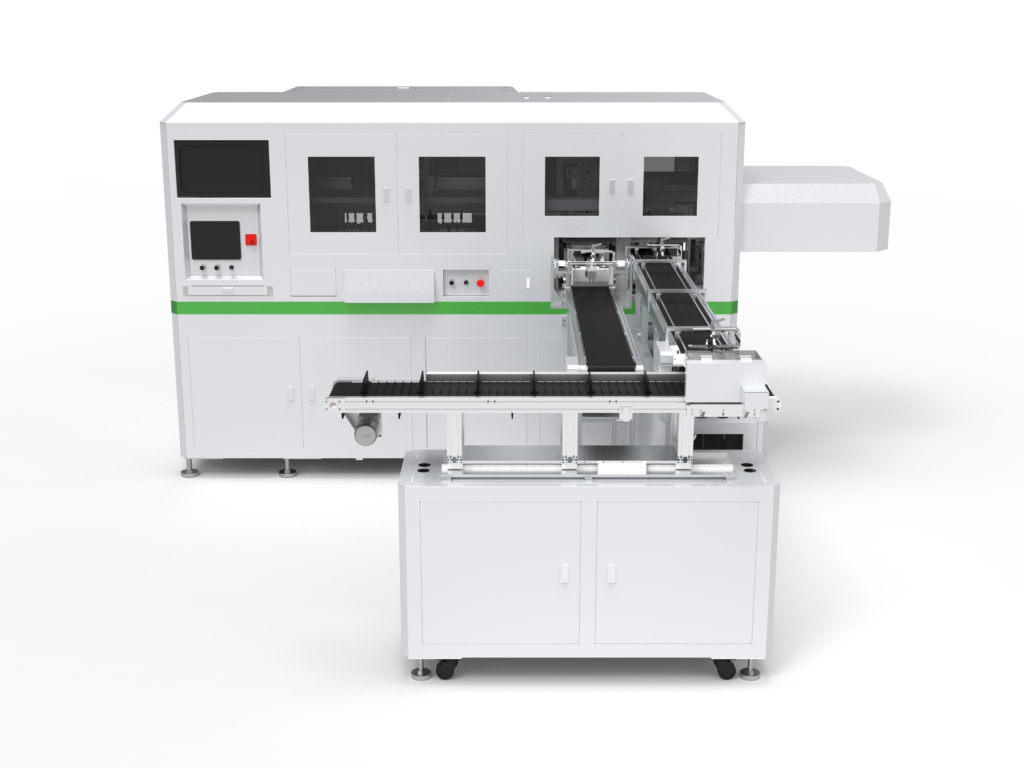
Why should the punching precision of the card cutting machine reach the micron level?
The production of card products such as smart cards, bank cards, game cards and playing cards require extremely strict requirements for the dimensional accuracy and edge quality of finished products. Taking bank cards and SIM cards as an example, the product size must strictly meet the ISO7816 international standard. Any small size deviation may cause the card to not function properly. The modern smart card punching machine uses PLC control program and servo drive system together. High-precision ball screw guide rail realises step feeding, and the feeding accuracy can be controlled within ± 0.05 mm. Some high-end models are equipped with imported ball screw modules and high-sensitivity positioning sensors, which can ensure the positioning deviation less than 0.02 mm during long-term operation. That is, in 10,000 consecutive punching operations, the deviation of the contour position of each card shall not exceed the diameter of two hair threads.
The main reason for the need of micrometre level cutting accuracy is the problem of material deformation caused by the card lamination process. The PVC, PET, PETG and other materials will be deformed to some degree during the lamination process, and it is often difficult to guarantee the cutting accuracy of the edges of large sheet materials. If the card punching machine only uses the edge of the plate to orient the cards, the cards punched out will inevitably have positional deviation. Modern card punching machines are used high-sensitivity photoelectric sensors or CCD visual positioning system to read the positioning marks on the plate material, and realise the bidirectional positioning of X and Y axis so that the punching accuracy is completely unaffected by the cutting accuracy of material edges. In visual alignment system, the industrial camera captures the alignment markers on the materials, and the image processing algorithms compute the coordinate deviation accurately. The UVW alignment platform is aligned to the set position. “Mark to locate” positioning logic enables each card to be punched at the correct locationaccurately even if the plate has lamination deformation. Improving positioning accuracy will directly improve the product qualification rate. When using a high precision punching system, the product qualification rate can reach 99.8%.
Quality of the cutting power is another important factor for micrometre level accuracy. Compared with traditional hydraulic or mechanical gearbox methods, servo motors have the advantages of fast response speed, stable power output, adjustable punching speed, etc. The 7.5 kW high-power servo system allows the punching operation to be finished in a very short time, with the same pressure and stroke height for each punch, which guarantees the uniform cross-sectional quality of each card in mass production. The punching and cutting repetition accuracy of the equipment is 0.02mm, so that the size deviation from the first card to the tens of thousands of cards is always controlled within a very small range. This is especially important for categories like game cards, anime cards, and celebrity cards that require card interchangeability and neat stacking—insufficient accuracy can cause a series of problems, such as uneven card stacking, poor shuffling, and automatic card-issuing machine lag.
How to choose a punch mould with high wear resistance and scratch resistance?
The punch mould is the most important part directly affecting the quality of the card edge. The sharpness, hardness of the mould blade and resistance to wear will directly affect the burrs or smoothness of the card section after punching. BURRS OR SCRATCHES ON THE EDGES OF CARD ARE REGARDED AS QUALITY DEFECTS IN THE PRODUCTION OF HIGH-END CARDS SUCH AS SMART CARDS AND BANK CARDS, AND DIRECTLY LEAD TO PRODUCT SCRAP. The mould blade is made of imported high hardness and wear resistance steel, which can keep sharp in long-term continuous cutting. Industry data show that the service life of precision moulds can reach 2 million times. It needs to be sharpened after punching. Based on an output of about 48000 cards per shift of 8 hours, one mould can be used continuously for more than 40 shifts without having to change the blade.
The card materials PVC, PET, PETG, ABS, etc. have different hardness and toughness characteristics in terms of material adaptability. Lateral stress and wear of the mould during punching of high toughness materials such as PET are much higher than punching PVC materials. When the mould is coated with nano PVD coating, the surface hardness of the mould can be increased by 5 to 10 times and the surface wear can be reduced significantly. The coating hardness can be up to HV2000 or above, and it also has the characteristics of low friction coefficient, which can effectively reduce the resistance of demolding and the risk of scratching the card surface. The ultra-high hardness, close to that of diamond, makes the Ta-C diamond coating especially suitable for punching and shearing under high loads. After coating treatment, the maintenance frequency of moulds can be greatly reduced. This is especially important for equipment targeting the global market. This is because the maintenance cost and cycle of moulds for overseas customers directly affect the customer experience of the equipment.
Lightweight moulds and a rapid mold-changing mechanism are indispensable. Replacing a set of moulds for a traditional card punching machine takes more than 20 minutes. A punching machine with light weight mould structure and quick change device can reduce the mould change time to 2-3 minutes. With this feature, printing factories and business card manufacturers can switch from one order to another very quickly, from bank card to gaming card, from standard card to irregular card, without long debugging downtime. The convenience of mould replacement is directly improved the comprehensive utilisation rate of equipment, and it can produce small batch and multi variety. In addition, a reasonable mould design of the mould structure can ease and facilitate replacement, and also ensure uniformity of positioning accuracy after each installation.
Punching, collecting and automatic packaging of waste materials Complete solution
The modern smart card cutting equipment has developed from a single cutting function to a complete system, which integrates the automatic feeding, visual positioning, servo cutting, automatic card collection and automatic waste discharge. In the integrated production process, large plates of PVC/PET/ABS are fed into the punching station by an automatic feeding mechanism. The high resolution vision system or photoelectric sensor reads the positioning marks, and the PLC control system accurately controls the position and depth of each punching according to the preset plate parameters. After the punching is completed, the finished card and the waste frame are automatically separated and enter their respective collection channels. This process achieves full automation from raw material to finished product cards, only one operator monitors the whole process.
When collecting finished products there are two main methods that are used to suit different production needs. The first method is to collect cards in sequence. The punched cards enter the card receiving slot in the order arranged in the layout. It is applicable to application scenarios that require consistent card serial numbers or printing order. The second method is collection by category, the card sorting unit puts the cards at the same position in the same card slot according to the layout set, which effectively solves the problem of material mixing and is suitable for the production needs of various small-scale mixed layouts. Sorting cards by serial number, it is possible to automatically box 200-400 cards Two collection methods are used interchangeably, whereby one card-punching machine can service large-scale, standardised production as well as personalised, customised small-batch orders.
For waste disposal, the remaining frame waste after punching is automatically stacked and collected by a robot arm. The waste accumulation status is detected by the fully automatic waste collection system and the packaging program is automatically started when the waste reaches a certain quantity. The waste is pressed and tied into shape. It’s all automated. This greatly reduces the labour intensity of manual waste cleaning, while also guaranteeing a clean and orderly production environment. The whole process of punching, cutting, collection of the finished product, and packaging of waste is automated to a certain degree, which determines the overall equipment efficiency (OEE) of the equipment, and the OEE of the fully automatic punching machine can reach more than 85%. For equipment serving the global overseas market, the integrated solution means that customers do not need to configure equipment and operators separately for each process, greatly reducing labour costs and total equipment investment.
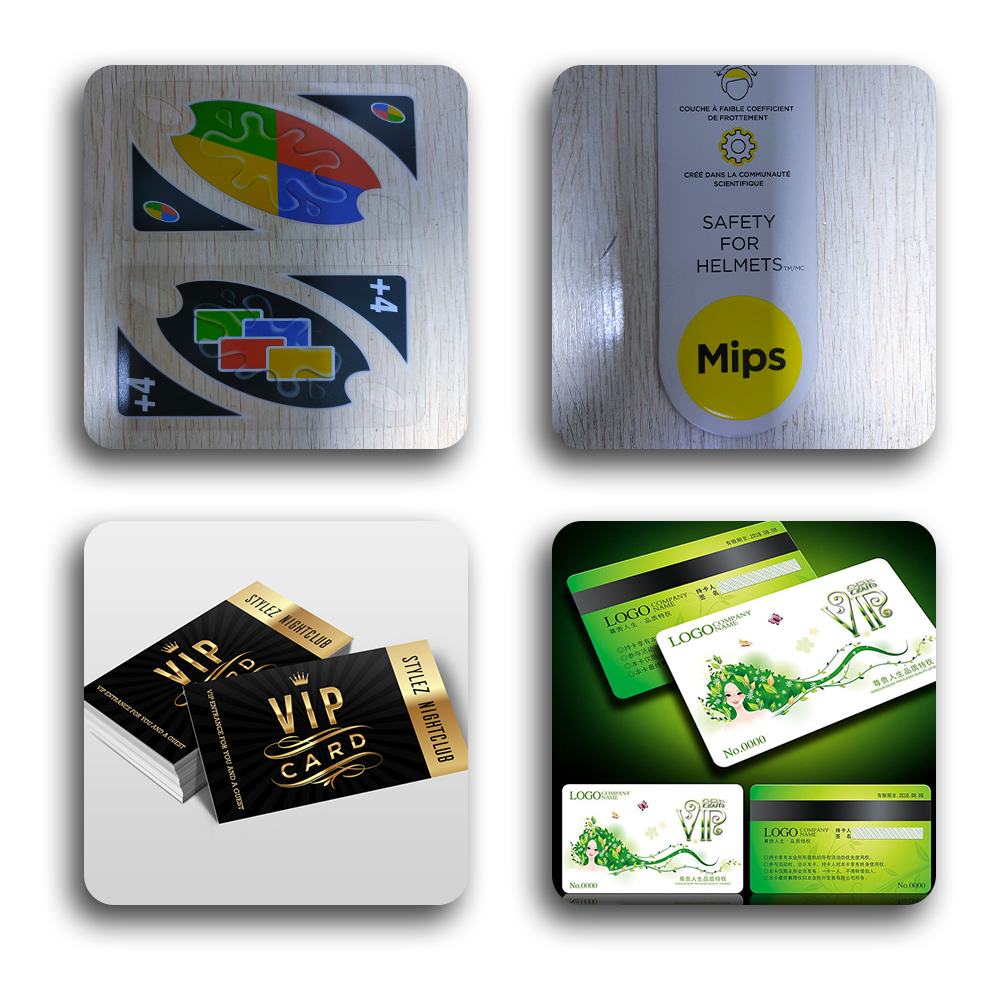
Summing Up
The modern PVC/PET intelligent card punching machine is achieved by the cooperation of the servo drive system and the high-precision ball screw, it can realise the punching accuracy of ± 0.05 mm and the long-term positioning deviation less than 0.02 mm, with the product qualification rate of 99.8%. For the moulds, the imported high hardness wear resistant steel with the nano-PVD coating treatment may improve the surface hardness 5-10 times, and the mould life can be up to 2 million cutting punches. Lightweight moulds and fast switching devices enable mould changes in only 2 to 3 minutes. The integrated solution achieves the entire process automation from automatic feeding, visual positioning, and servo cutting to sequential or classified collection of finished products and automatic packaging of waste materials. The production capacity of a single shift can be up to 48000 sheets/8 hours, and the comprehensive efficiency of the equipment is more than 85%. The whole process requires only one operator. The above technical parameters and performance indicators are the technical basis of modern card punching machines in the fields of precision die-cutting and production automation, and provide a full range of solutions for the card manufacturing industry from precision assurance to efficiency improvement.