Printing Factory Bosses Must Understand ROI Accounting Guidelines for Fully Automatic Punching Machine Production Lines
blog 2026-06-24 20:11:31 41
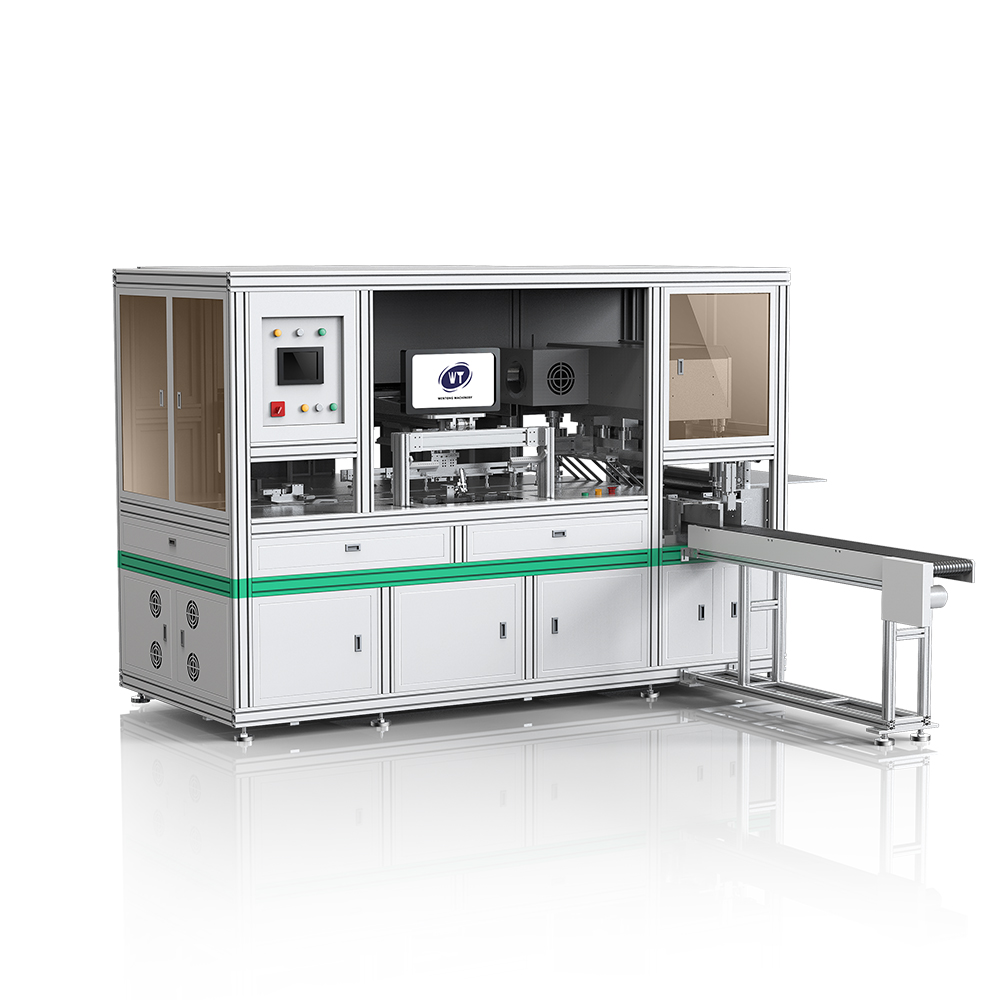
How long does it take to recover the cost of an automatic material receiving and card punching machine?
The first concern of every printing factory owner in view of the ongoing growth of Indian card printing market is the investment return cycle of the equipment. The prepaid card and digital wallet market in India is projected to reach $81.65 billion by 2026 with an annual growth rate of up to 30.3%. The demand for the card and print publishing market has reached $1.7 billion by 2024. In the fast-growing market environment, the feasibility of the printing plant expansion decision is directly decided by how long a high-performance automatic feeding and card punching machine can recover investment.
Taking a fully automatic card punching machine with 7.5 KW servo cutting power and production capacity of 6000 to 20000 cards per hour as an example, assuming that the printing factory works 8 hours a day and 300 working days a year and assuming the production capacity is medium 12000 cards per hour, the annual production capacity is about 28.8 million cards. The fully automatic punching machine reduces the manual operation process of 3 to 4 personnel compared with traditional manual or semi-automatic punching methods. Based on the average monthly salary of printing industry in India, one device can save about 150,000-200,000RMB labor cost every year. The comprehensive annual return of the material saving from reducing the scrap rate from 3%-5% with traditional methods to less than 1% could be RMB250,000-350,000.
The one-time equipment investment is generally about 600,000-1 million RMB (including molds, installation and commissioning). Using the annual return data above, the investment will pay for itself in about 2 to 3 years. If the order saturation is more than 80%, the recycling cycle can be shortened to less than 20 months. For printing factories with orders that are growing every day, an automatic feeding and card-punching machine is not just equipment procurement, but a capital investment with clear returns and manageable cycles.
How to make a high-performance card punch machine compatible for paper, PVC, PET, ABS?
In film production, there are many kinds of materials, from ordinary paper to engineering plastics, and the physical properties of each material are quite different. The paper has the brittle texture, and is easy to burr during punching and cutting. PVC has the flexibility, and has special requirements for mold sharpness and punching speed. PET and ABS have higher hardness, and require larger punching force and more stable mold support. A real high performance punching machine should meet the processing requirements of various materials at three levels, namely mechanical structure, power system and control system.
The device is driven by 7.5KW servo motor for cutting which provides stable and adjustable power. The operator can flexibly adjust the punching speed and downforce through the PLC touch screen for different materials. Paper materials are suitable for high speed and light pressure mode; PVC is suitable for medium speed and medium pressure; PET and ABS require low speed and heavy pressure to ensure neat and burr-free cutting edges. The equipment can cut up to an accuracy of ± 0.03 mm – ± 0.10 mm and the finished product will have no edge burrs. Cutting quality can be guaranteed from a range of paper cards of 0.3mm thin to 0.76mm thick PVC cards.
More significant is the universal design of the mold system . The card punching machine is made of CR12 die steel, and standard cutting size meets international credit card specifications of 85.7 × 54 mm. It also supports custom punching and cutting for different shaped cards. Lightweight wooden molds have a mold replacement time of only 2 to 3 minutes, so printing factories can quickly switch production tasks for different products such as paper tags, PVC smart cards, PET membership cards, and ABS game cards on the same punching machine, truly realizing the flexible production mode of “one machine for multiple uses”.
How can high-efficiency card punching machines be your “trump card” to win cross-border orders?
Cross-border purchase orders usually have the same characteristics, i.e. large quantity, tight delivery time and high quality standard. For Indian printing factories competing for card orders from Europe, America and the Middle East, the biggest competitive obstacle is often not the printing itself but the efficiency and quality control of the punching and cutting processes that follow. For a factory that cannot finish punching and cutting of hundreds of thousands of cards in the agreed time, and ensure that each card has smooth and burr-free edges, it is difficult to win the trust of multinational customers.
The core competitiveness of high-efficiency card punching machines is mainly reflected in the following three aspects. First, the accurate feeding system is cooperation with the layout visual correction positioning, so that the punching position of each first mock examinations is accurate. In punching, each mold uses the positioning method, so the visual system can automatically identify and correct the positional deviation even if the material is slightly deformed in printing or transportation. Such precision control is important for the production of high-value products such as bank cards and StarCards. Any card that deviates from the specified positioning can cause an entire batch of orders to be rejected.
Second, the card punching machine can realize die-cutting without nailing or connecting points, and the finished products can be separated directly. The traditional way of punching is to keep the connection points between the cards, and then manually break them and separate them, which is not only inefficient but also easy to damage the edge. The one-time separation design of the fully automatic card punching machine makes the finished product can directly enter the collection process. It greatly reduces the cycle of the subsequent process.
Third, the finished product collection system has two modes, collection in order and collection by classification. For bank cards, access cards and other products that need to be sorted sequentially, the sequential collection mode can be directly combined with the subsequent packaging line . For game cards, anime cards and other products with multiple mixed varieties, the classification collection mode can automatically sort cards with different patterns into different bins. The collection method’s flexibility means printing factories can easily meet the diverse needs of multinational customers. The efficient card punching machine brings about not only an increase in production capacity, but a qualitative change in order-taking ability.
How to seamlessly integrate a smart AGV with a fully automatic CNC card punching machine?
Competition in today’s printing factories has moved from single-machine efficiency to whole-plant collaborative efficiency. The fully automatic CNC punching machine solves the automation problem of the punching process; but if the material handling still depends on manual labor, then the bottleneck of the whole production line will transfer from “punching speed” to “material flow speed”. The crucial technological route to overcome this bottleneck is the data integration between an intelligent AGV (Automated Guided Vehicle) and a card punching machine.
The data docking between the AGV and the fully automatic CNC punching machine is, in fact, the information connection of the logistics system and the processing system. In the traditional smart factory architecture, AGV communicates with the card punching machine PLC control system in real time through industrial LAN. When the full load quantity preset by the automatic collection bin of the card punching machine is reached, the control system will send a “request for handling” signal to the AGV dispatch platform. Once instructed, the AGV autonomously travels to the assigned workstation to carry out the finished product silo replacement and empty silo replenishment without manual intervention during the process. This process is seamlessly linked to the data exchange between MES (Manufacturing Execution System) and WMS (Warehouse Management System), providing full process data traceability from warehousing of raw materials to the outbound of finished products.
Printing factories gain value from AGV and card-punching machine data integration, which goes beyond just “saving a few movers.” First, it removes the time uncertainties and safety risks associated with manual handling, thereby providing a more stable and controllable pace of production. Second, the docking system can collect the real-time data of the output, yield and equipment status of each card-punching machine, which can provide an accurate decision-making basis for the management. Finally, this intelligent capability itself is a differentiated competitive advantage — if multinational customers visit factories, a fully automatic card punching machine production line with AGV intelligent logistics is much more capable of transmitting “reliable suppliers” signals than several separate devices.

Conclusion:
The above four-dimensional analysis has upgraded the fully automatic card punching machine from “optional equipment” to “required equipment” for Indian printing factories. From an investment return point of view, a recycling cycle of 2 to 3 years is relatively short for printing equipment investment, and the source of return is clear: the combination of labour savings, waste reduction and capacity improvements offers a solid financial model. From the perspective of technical performance, the high-performance card punching machine can be used for paper, PVC, PET, ABS and other materials. Printing factories do not need to configure special equipment for different materials, which can effectively reduce the fixed asset investment. From the perspective of market competitiveness, the advantage of precision and speed brought by high-efficiency rear card punching machines is the core chips for printing factories to win cross-border large orders. The AGV data docking capability gives printing factories room for future intelligent development of the entire factory, and the current investment in card-punching machines is not only for current production needs but also for the planning of intelligent factories in three to five years.
Data does not lie: a fully automatic card punching machine with a production capacity of 12000 cards per hour can produce 28.8 million cards annually, the investment payback period is 2 to 3 years, punching accuracy is ± 0.03 mm, mold changing time is 2 to 3 minutes, and servo power is 7.5 kW. These numbers together point to a conclusion: in the context of the continuous expansion of the Indian card printing market, printing factories that deploy fully automatic punching machine production lines as early as possible will have a significant first mover advantage in market competition in the next three to five years.