How do professional card punchers deal with the asymmetry and collapse of the four corners of anime cards?
blog 2026-06-16 23:14:09 49
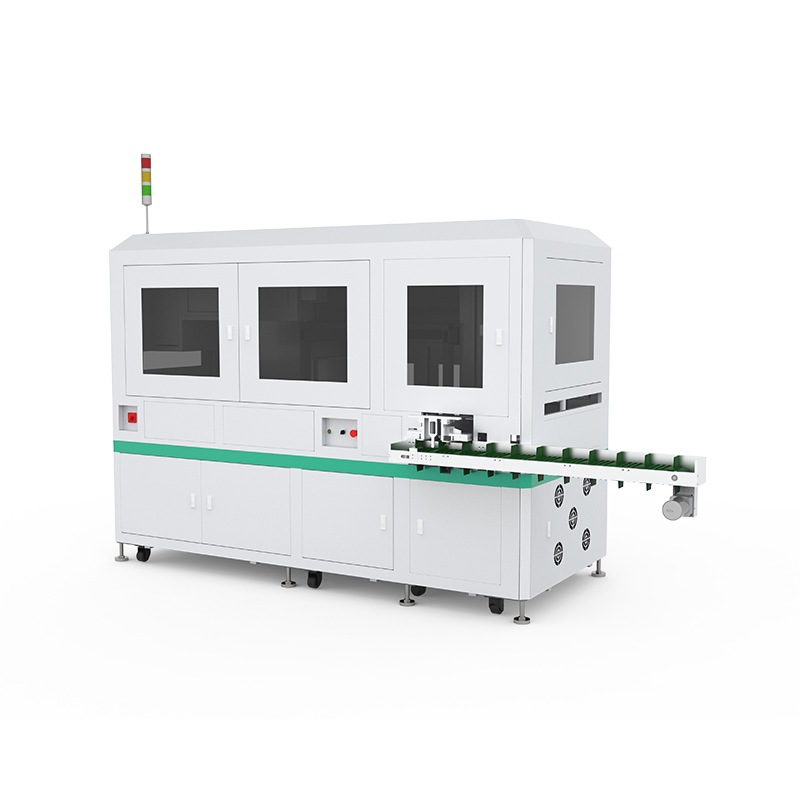
Analysis of common problems of manual card punching machine used in online shopping in cutting thick paper
In the production process of anime card, game card and various collectible card, asymmetry and corner collapse are two core defects that affect the quality of the finished product. The four corner asymmetry refers to the unevenly curved or offset of the four rounded corners of the card, which will directly destroy the visual symmetry and collectible value of the card. Corner collapse refers to the arc-shaped concave deformation of the edges and corners of the card after punching, which causes the edges and corners to lose the expected stiffness and reduces the overall grade of the card. With collectible cards that are heavily dependent on the look of the card surface, these two defects are enough to make the entire batch of products inferior.
The above problems are caused by the mechanical structural limitation of the manual card punching machine. The manual card punching machine uses the manual force of the operator to achieve the cutting action, and the cutting speed and pressure can not be kept uniform. There are small variations in the force process for each card, and this random fluctuation is significantly increased when cutting thick paper. When punching laminated paper or PVC cards with a thickness larger than 0.5mm, the manual punching cannot generate sufficient and homogeneous cutting force, and the material undergoes uneven tensile deformation at the cutting edge, which eventually causes collapse in the rounded area. Also, the accuracy of the mold guidance of the manual punching machine is limited, and the uneven gap between the molds after long-term use exacerbates the problem of asymmetric corners. In the Indian printing market, such manual equipment is still used by many small and medium-sized printing factories to produce small batches of anime card orders, and the yield is often difficult to guarantee. The resulting material waste and customer complaints are the bottleneck restricting the business development.
Methods of Manufacture of 360 degree burr-free rounded corner punching and cutting in Industrial Card Punching Machines with precision molds
The core technology of industrial-level punching machines to solve the above problems is the collaborative work of precision mold design and servo punching systems. Professional punching machine adopts precision male and female molds on the mold level, the mold is made of high-quality mold steel, the blade clearance is controlled in the precision range of 0.008-0.015 mm. The mold gap is extremely small, which will produce a smooth fracture surface of the material in the punching process, and effectively restrain the generation of burrs. Special technology is used to treat the cutting edge of the mold in the rounded area, which uniformly squeezes and shears the material edges and corners during punching, such that the rounded corners are formed in one go with consistent curvature, and the corner collapse is eliminated from the root cause. The mold is light-weighted, and it takes only 2-3 minutes to replace the mold. The operators can finish the mold replacement quickly without special tools, which greatly improves the switching efficiency of multivariety orders.
The industrial card punching machine in power is equipped with a 7.5KW high-power servo motor as the cutting power source. The servo punching system can realize the stable and adjustable punching speed and pressure, so that the force state of each card is completely consistent, fundamentally eliminating the pressure fluctuations caused by the change of the operator’s physical strength in the manual punching. The servo motor driven ball screw feeding system can achieve accurate step feeding, and the positioning accuracy can reach ±0.10 mm. In the blanking process, the CCD vision system reads the printing reference mark in real time, and through the automatic position correction mechanism, it performs high-precision position correction of the X axis and θ axis to ensure the accuracy of the blanking position of each of the first mock exams; even if there is a small deviation in the printing, it can be corrected through visual positioning. The card is punched into its final shape with rounded corners in one go, eliminating the need for any later trimming. The resulting product has smooth edges without any burrs, and the four corners are symmetrical and even. This millimeter-level, or even sub-millimeter-level, precision control directly determines the market competitiveness of the product for collectible and competitive cards.
Gold point of material pressure for punching machines handling different finishes including film coating and matte film
Film coating and matte film treatment are common surface processes in the production of anime cards and game cards, but different surface treatments have completely different requirements for the pressing force during the cutting process. Material pressure is a pressing and fixing function for the material before punching. It prevents the material from warping or shifting at the cutting edge, and ensures accurate punching position and neat cutting . If the pressing force is too low, the material will be displaced and warped a little during punching, which will increase the collapse angle and the burrs on the edges; if the pressing force is too large, the surface of the film will be damaged and the card will be indented, especially for materials with fine surface texture, such as matte film. The indentations may directly affect the appearance of the final product and result in permanent surface damage.
The industrial card punching machine achieves an accurate grasp of the “golden balance point” by a precision pressure control system. The basic principle of stamping processing is that the pressure of the press plate is generally controlled at 1%~3% of the punching force, and the pressure is finely adjusted by elastic polyurethane or precision springs. For laminated cards, the pressing force should be properly increased to ensure that the multi-layer composite material does not have interlayer separation during the punching process and the integrity of the film surface is maintained. For the matte film cards, the pressing force needs to be accurately controlled within the lower limit range to prevent damage to the surface. When the matte film is exposed to light, the fine scratches on the surface will be particularly evident, so precise control of the pressing force is particularly important. 7.5KW servo motor to drive the punching power. Punching speed is adjustable. The optimum punching parameters can be flexibly set for materials with different thickness and surface treatment. Such accurate pressure control enables industrial card punching machines to efficiently handle card orders with different surface treatments such as light film, matte film, hot stamping, UV, etc. on the same machine without worrying about surface damage or edge defects, truly realizing flexible production with multi-process compatibility.
Post printing equipment selection: How to match suitable cutting and punching machines for high-standard game card orders
If printing companies want to enter the Indian and international overseas markets, they should pay attention to three aspects when selecting a suitable cutting and punching machine for high-end gaming card orders: production flexibility, precision indicators, and overall efficiency.
In terms of production flexibility, the current gaming card market is moving towards small batches, multiple varieties and fast delivery. Professional card cut punching machine with step by step precise feeding design, each step of feeding is precisely controlled by servo system to ensure stable feeding of various materials such as paper, film, soft magnetic film, etc. The layout visual correction positioning system can read the printing reference marks by a CCD camera, and correct the punching position of each card in real time. Even though the deviation of the material during the feeding process is slight, the visual system can capture it and tell the servo system to make the position compensation in real time. No nailing or connecting points are required for die cut products and the finished products are directly separated, which eliminates the subsequent manual edge bending process. This can not only reduce the labor cost, but also avoid the accidental damage to the edges of the card due to manual operations. The time for switching and adjusting orders only takes 15 minutes, and the time for changing lightweight molds has been shortened to 2-3 minutes. This fast response ability allows printing factories to efficiently process a variety of small batch orders, such as anime cards, game cards, playing cards, business cards, smart cards, bank cards, celebrity cards, and small packaging boxes, meeting the full range of card and small packaging product needs and maximizing the value of equipment investment.
As for accuracy indicators, the equipment should be equipped with a CCD visual positioning system and a high-precision ball screw feeding module. The punching accuracy should be controlled within ±0.10 mm, so that the edge consistency and dimensional stability of the finished card meet the technical requirements of high-standard gaming cards. For punching power, it is recommended to use servo motors of 7.5KW or more to ensure stable punching ability for a variety of materials like thick paper, laminated paper, film, soft magnetic sheets etc. The equipment also supports sample production mode, which can help customers quickly complete sample production with the equipment before formal mass production, confirm layout position and finished product effect, and effectively avoid quality risks in mass production.
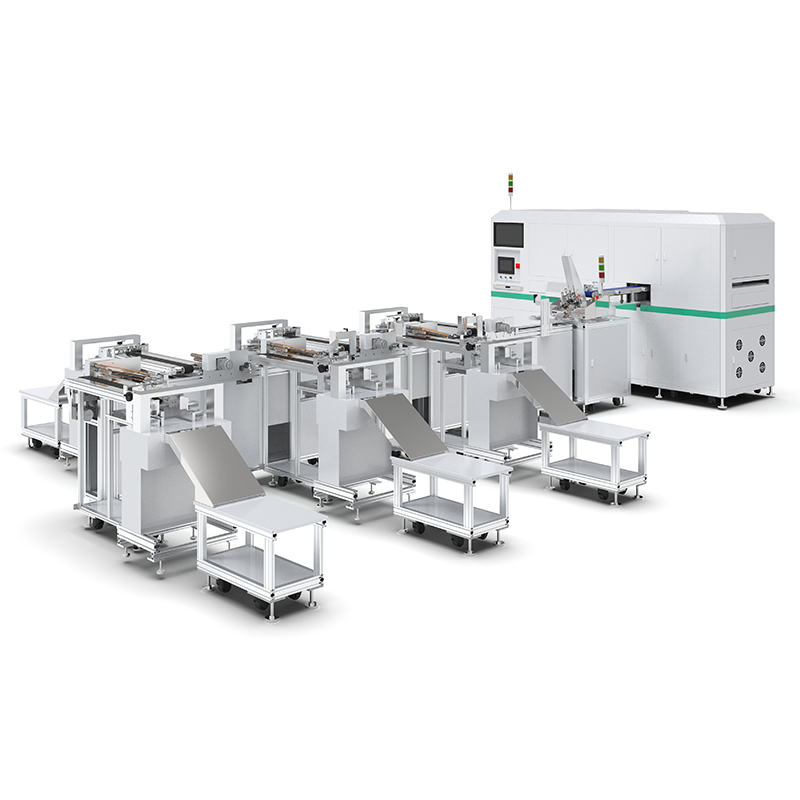
In terms of overall efficiency, the equipment should achieve the entire process automation of precise feeding, automatic collection and waste removal. In addition, the collection of finished products should have two modes: sequential collection and classified collection, so as to adapt to the subsequent packaging needs of different orders. The sequential collection mode is useful for products where it is important to maintain a specific arrangement, such as playing cards and game cards. The classification collection mode can stack cards with different patterns or batches automatically, thus reducing the manual sorting process later on. The equipment also has to provide a complete solution for the interconnectivity of the backend product packaging, to achieve the seamless connection from punching to packaging and to provide the customers a complete solution from a single device to the complete backend production line.
Conclusion:
Data show that the industrial punching machine with CCD visual positioning and servo punching system can achieve punching precision of ± 0.10 mm, while the precision of traditional manual punching machines is generally only ± 0.5 mm to ± 1 mm. Regarding the quality of rounded corners, the precision mold with optimized mold clearance (0.008-0.015mm) can ensure that the rounded corner area is without burr and dents. The yield rate has increased from about 85% of manual equipment to more than 98%, which reduces the scrapped rate by 13 percentage points. The professional card punching machines are able to change molds in 2-3 minutes with respect to mold changing efficiency, and the order switching can be finished in 15 minutes. The traditional equipment often takes 30 minutes to 1 hour to change molds. When replacing the mold frequently, the cumulative time difference is more obvious, so the professional card punching machine can release more advantages in production capacity in small batch and multi-variety order production. As for the material adaptability, the 7.5 kW servo punching system can stably process all kinds of card materials, from 0.3 mm thin paper to 1.0 mm thick PVC, laminated paper, film and soft magnetic film. A single device can meet most of the card post-processing needs of printing factories.
The above data fully demonstrates that for printing companies targeting the Indian and global markets and undertaking high-standard anime and game card orders, investment in professional punching machines with visual correction positioning, step-by-step precise feeding, servo cutting power and fast mould-changing capabilities is a key technological path to improve product quality, shorten delivery cycles and enhance market competitiveness. The equipment with the core features of “short, flat and fast” – short adjustment time, stable and reliable accuracy and quick response to orders – exactly meets the modern printing post-processing production needs of small batches and multiple varieties and builds differentiated technological advantages for enterprises in fierce market competition.