How to make anime cards in small batches with multiple styles? One-stop mold change solution for fully automatic anime card punching machine
blog 2026-06-14 23:53:34 53
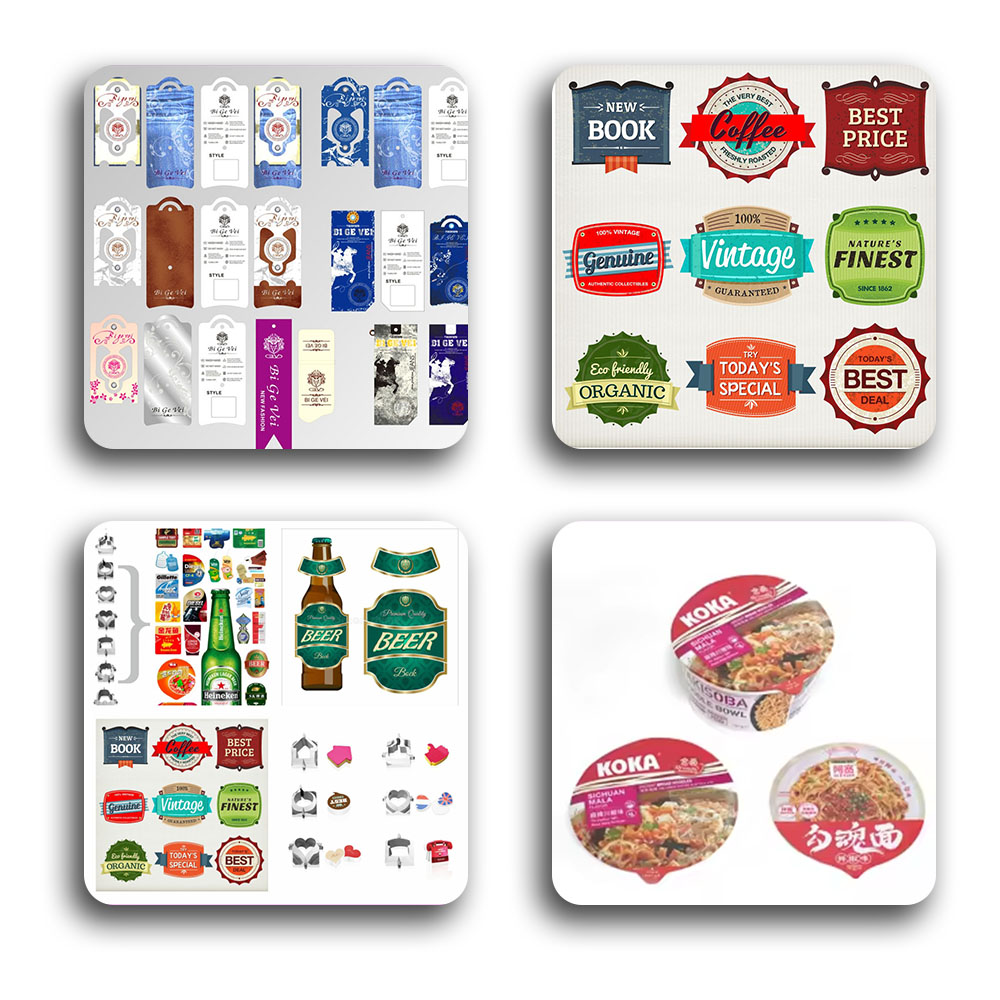
Pain points of “multi-variety, small-batch” production in anime fan merchandise and limited edition card industry
The market for anime fan merchandise is on a strong growth trend. The global market size of anime derivatives has reached around $12 billion by 2025, and is expected to reach nearly $24 billion by 2033, with a compound annual growth rate of around 8.8%. The collectible card market is also booming with worldwide revenues reaching $10.99 billion by 2025. The Indian market is seeing particularly rapid growth in anime derivatives. By 2025, the market for Indian anime derivatives will have reached $256 million and is expected to double to $528 million by 2030, with a compound annual growth rate of over 12%. Under the drive of IP derivatives and collectible cards, the demand for limited edition and customized cards is pushing the transition from traditional mass production to a multivaried, small-batch and short-lead-time card production model. These are business opportunities and production challenges never before seen in B2B printing companies.
In the production mode of ” multivariety, small batch “, the card size and shape types often change, and it is difficult for the traditional punching equipment to adapt . Each change of type takes tens of minutes or even hours of mold replacement and machine adjustment time. The comprehensive utilization of the equipment is low, which has a serious influence on the production efficiency. In the printing industry, practitioners often report that equipment adjustment, mold replacement, and material replacement consume a large amount of production time, making it difficult for equipment to respond to urgent insertion orders in a timely manner. Besides, the risk of large inventory backlog is also faced by the printing companies. The companies are often compelled to increase the production of one batch to dilute the cost of mold replacement but the finished product backlog is caused by the changes of market demand. In the production mode of multiple varieties and small batches, printing enterprises need to have the ability of rapid adjustment of production lines, and the equipment must be able to complete changeover and parameter switching in a few minutes to meet the production needs of different orders. Enterprises without this ability will gradually lose customer stickiness in market competition.
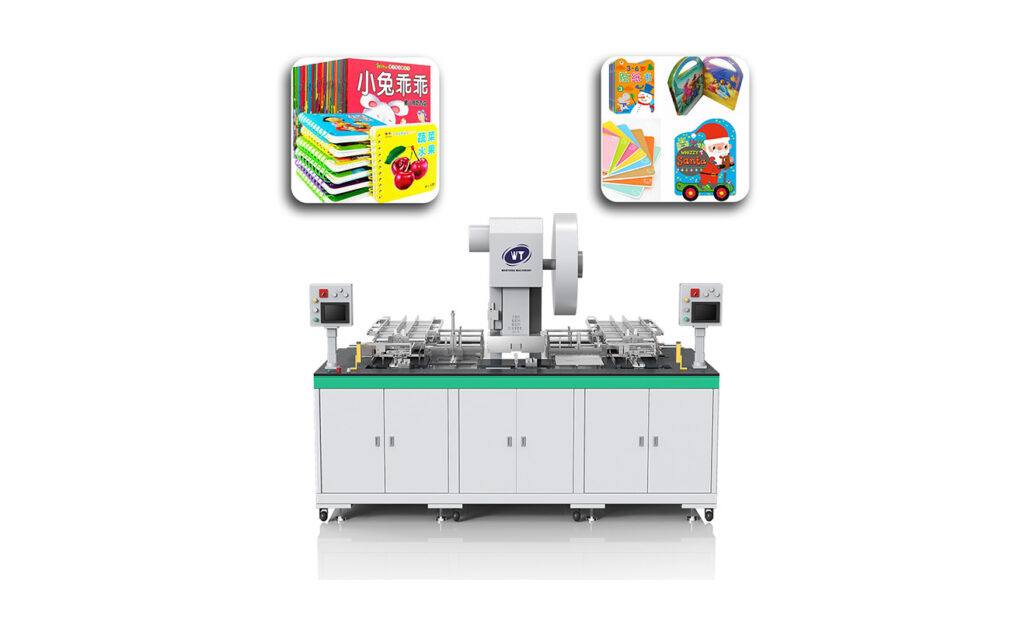
Modern fully automatic punching and cutting machines have appeared in response to the special needs in the field of card production. Punching machines are used for the production and manufacturing of different kinds of cards, like smart cards, business cards, game cards, playing cards, anime cards, bank cards, star cards, etc. High-performance punching machine needs precise feeding and automatic collection function, but also needs quick mold change and adjustment machine, so as to calmly deal with the flexible production needs of the anime card and limited edition card market.
Is it cumbersome to replace the traditional punching machine molds? Design of Quick Change Fixture for Modern Fully Automatic Punching Machine
The mold changing on a conventional punch machine usually needs a set of tedious steps such as unloading the mold, disassembling and reassembling the mold, adjusting the position and re-testing. A switch for a mold set can often take 30 minutes or even an hour. For small batch order production lines, which need to be changed over often, this translates into a large amount of non-productive downtime and a large drop in Overall Equipment Efficiency (OEE). The traditional punching machines not only require manual labor for each type change, but also require multiple trial punching to calibrate the position. This increases material waste and production uncertainty, seriously restricting the profitability of small and medium orders.
Modern fully automatic punching machines and their modular and fast changing fixture concepts in the mold design have completely changed this situation. Standardized mold interfaces and quick locking mechanisms simplify mold changing from complex disassembly and adjustment to a few quick steps. The mold changing time is reduced from tens of minutes of tradition to 2-3 minutes, and the mold changing efficiency is improved by more than 90%. This means B2B printing companies can now forget about long mold-changing times when producing small batches of anime card orders and easily switch between different styles of cards quickly, with true “short, flat, fast” flexible production.
The key is the integrated design of lightweight molds and quick-change fixtures, which is conducive to improving the convenience of mold replacement. Modern punching machine mold positioning mechanism, through the standard components such as positioning baffle, positioning pin, fixing bolt, etc. to achieve the fast and accurate positioning of the mold without repeated debugging, and can be easily operated by ordinary technicians. In the meantime, the power system of punching machine has been optimized and upgraded. The punching pressure can be adjusted. The 7.5KW high-power servo motor is used for punching, the power is stable and sufficient, and the punching needs of materials with different thicknesses from 0.2mm to 1.2mm can be adapted. In the context of changeover and product sampling, the comprehensive design of this modular and quick-change fixture greatly increases the efficiency of equipment and enables printing factories to easily adapt to small-batch customized orders.
How to realize one-key adjustment of card punching size in digital control system
When adjusting the card size, the traditional punching equipment needs to manually adjust the feeding step distance and punching position parameters. The adjustment process is cumbersome and it is difficult to guarantee accuracy. The entire batch of products has to be scrapped even if the smallest mistake is made. The modern fully automatic punching machines are based on PLC programmable controllers and servo drive technology, and can realize digital one-click adjustment of punching dimensions. The control system can automatically calculate the feeding step distance and punching action timing by inputting the required card layout size and punching position parameters on the touch screen human-machine interface, and no mechanical modification is needed to complete the size switching. This allows B2B printing companies to switch from the “mechanical tuning mode” to the “parameter switching mode” for anime card orders of different sizes, reducing the tuning time from the traditional 30 minutes or more to less than 15 minutes.
The accurate feeding system of the punching machine is the core to guarantee the dimensional accuracy and punching quality. Modern punching machines adopt the high-precision ball screws and linear guides driven by servo motors, and the feeding accuracy can be controlled within ± 0.05 mm. The punching machine’s finished product position accuracy can reach ±0.1 mm, which, combined with high-sensitivity photoelectric sensors or CCD visual recognition devices for positioning mark reading, fully meets the card industry’s strict requirements for card edge quality and hole position accuracy.
The visual correction and positioning technology of CCD layout are important methods of improving the cutting accuracy. Traditional punching equipment relies on the physical position of the gauge, which is easy to cause the positional deviation of the finished product if the material is slightly deformed or displaced in the process of transportation. By using the high resolution CCD camera, the positioning mark on the material is collected in real time, the control system calculates the offset in real time according to the image information and sends the correction command to the servo drive system to ensure that each of the first mock examination punchings is carried out in the correct position. This closed-loop control mechanism of “real-time feedback dynamic correction” ensures that the punching machine is not affected by the accuracy of material edge cutting and material deformation during punching, greatly reducing the defect rate and creating stable production revenue for printing enterprises.
The real value of flexible production lines in reducing inventory risks for B2B printing companies
B2B printing companies are under more inventory pressure as the market becomes more personalized and customized. In the traditional mass production, enterprises need to produce a large amount of inventory in advance to dilute the cost of each item, but the result is often the accumulation of finished goods due to the fluctuation of order demand or the updates of products. The flexible production line has solved this dilemma completely. Equipping with punching machines with fast changeover and flexible production capabilities makes the enterprises to achieve the “on-demand production” mode. The production can be started after receiving the orders and they can be delivered in a very short period of time. This basically removes the risk of inventory backlog and greatly improves the inventory turnover rate of printing enterprises and greatly reduces the warehouse cost and the pressure of capital occupation.
Material adaptability and finished product receiving process also reflect the flexible production lines. Modern punching machines can adapt to a great variety of materials such as different types of paper, PVC, ABS, PET, soft magnetic sheets, mixed materials, which cover all main stream types of card material on the market. The technical advantage of the die-cutting machine is that it can cut products without the need for nail holes and connecting points at the same time. In the traditional die-cutting technology, the connecting points are used to prevent the plate from scattering during the punching process, but manual polishing and removal are required afterwards, which not only increases the labor intensity, but also generates dust and affects the working environment. After implementing the seamless punching process, each quality inspector can save about 2 hours of continuous polishing time per day, without the harm of paper dust to employee health and saving the cost of gloves, sandpaper and other consumables. More importantly, the punched finished products are burr-free, and the edges are smooth and neat, which can eliminate the secondary trimming process and save a lot of labor and time costs for printing companies.
During the material feeding process, the flexible punching machine has two ways to collect the finished products: sequential collection and classified collection. Collection in order is suitable for subsequent packaging process that requires to maintain the order of card arrangement such as box packaging for batch serialization of cards. Collect by category is applicable for situations where several styles of cards are set and produced at the same time. Different position cards can be collected separately into corresponding card slots, without manual sorting by workers. This not only saves labor cost but also has much higher accuracy rate compared to manual operation. It is worth mentioning that the punching machine can also be connected to the backend product packaging overall solution, achieving the full process automation from punching to receiving and packaging, and further improving the automation level and operational efficiency of the entire production line.
Conclusion:
The global anime derivative market is growing at an estimated compound annual growth rate of about 8.8% and is projected to reach $24 billion by 2033. Meanwhile, the Indian collectibles market is growing at a compound annual growth rate of 10.5% and is projected to hit $25.1 billion by 2033 with trading cards being the fastest-growing category. Market trend requires B2B printing enterprises to be able to respond quickly to personalized order demands for multiple varieties and small batches, and to replace traditional rigid mass production with flexible production models.
The rapid mold change solution of the fully automatic card punching machine provides a strong technical support for the transformation of this industry. By adopting modular quick-change fixture design, the order switching and mold-changing time is reduced from 30 minutes for traditional equipment to 2-3 minutes and the mold-changing efficiency is improved by up to 90%. The preparation time for production batch has been decreased by more than 90%. The digital control system realizes one-click adjustment of card punching size and the machine adjustment time is controlled within 15 minutes. At the same time the servo feeding accuracy can reach ±0.05mm, and the CCD visual correction positioning makes sure that the finished product position accuracy can reach ±0.1mm, meeting the high precision requirement of the animation card production. The seamless cutting process saves quality inspectors 2 hours of continuous polishing time per person per day. The 7.5KW high-power servo motor provides stable punching power, and the punched products are free of burrs, with smooth edges, and do not need secondary trimming. The flexible allocation of two collection modes, i.e., sequential collection and classified collection, further reduces the labor sorting cost of the printing enterprises.
The flexible production line solution has helped B2B printing enterprises to improve their inventory turnover rate by more than 40%, increase overall equipment efficiency (OEE) by more than 30%, reduce their defect rate to below 1% (the best in the industry), and produce 50 to 100 small batch orders in a single batch. From the research and development of fully automatic punching machines in Shenzhen to the practical application in serving the global printing industry, this fast and efficient mold changing punching technology lays a good technical foundation for the anime card printing enterprises in the Indian market to achieve stable profitability in small batch orders.