Adjustment and troubleshooting of the feeding mechanism of the multi-function anime card punching machine
blog 2026-06-12 20:51:33 16
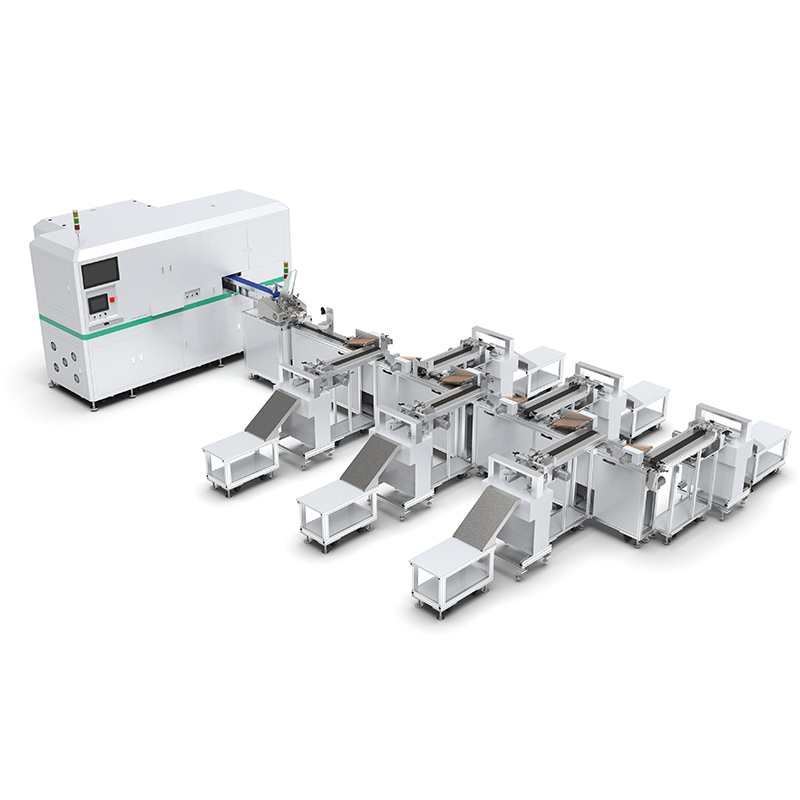
1.Solution of double sheet feeding problem caused by electrostatic adsorption after double side coating of copperplate paper
They are fed together and stuck into the punch at the same time, which causes double sheet-feeding failure. This phenomenon is especially serious in the dry autumn and winter seasons, which affects the normal operation of the punching machine. From the working principle, when static electricity is generated between paper sheets, due to the repulsion of same-sex charges, the paper sheets that should be tightly stacked are prone to edge warping and mutual attraction, which may cause paper feeding jamming or double feeding.
The key to solve this problem is the proper calibration of paper feeding mechanism. First of all, it is proposed to install an ion air nozzle or static elimination rod at the feeding position of the punching machine, which can generate a positive and negative ion airflow to neutralize the static electricity on the surface of paper. That’s the basic solution Actual production experience shows that installing an electrostatic elimination rod 10 cm above the paper stack can reduce the double sheet feeding occurrence rate by more than 80%. At the same time, the pressure of the press wheel of the paper feeding separation mechanism should be adjusted properly, and the gap between the dual paper feeding limit plates should be checked for excessive tightness, which can further reduce the adhesion of the paper. This can be alleviated by increasing the air humidity in the workshop (controlled at 50%-60%) or hanging the paper for humidity control, for paper already affected by severe static.
2.Deviation of the card punching machine: how to fine-tune the position block, so that the patterns on both sides are not eccentric
Deviation of the material pushing is one of the main reasons for the inaccurate alignment (i.e. eccentricity) of the front and back pattern in the mass production of double-sided printed anime cards and game cards using card punching machines. The material pushing is usually biased due to the improper adjustment of the positioning block or the uneven tightness of the pressure wheel of the feeding mechanism. If the positioning block does not align with the punching center of the mold when the printed pattern cardboard is fed into the punching station, the pattern of the finished card will have a large deviation. Such deviation is particularly fatal in such products as poker and star cards where the centering of the patterns is of a high importance.
The key to solve this problem is the fine-tuning of the positioning block of the hedge card machine. When punching, the cardboard to be punched should be manually inserted into the worktable of the punching machine, and it is necessary to check that the positioning blocks on both sides of the pushing device are in equidistant contact with the edge of the cardboard. If the cardboard is found to be biased to one side, the fixing screw of the positioning block should be loosened, the block adjusted to keep the cardboard in the middle while pushing, and the fixing bolt tightened again. The adjustment effect is verified by carrying out a complete trial punching operation on 10 to 20 test materials. In automatic centre-positioning devices of card punching machines, synchronous adjustment on both sides can be achieved by driving the push-block with an electric telescopic rod, which is more precise and efficient than manual adjustment. It is also necessary to check whether the width of the blocking device for the material in the unwinding section and the guide wheel in the leveling section of the feeding machine have been adjusted to the appropriate level to prevent deviation caused by uneven compression force of the pressing device.
3.Tool wear warning messages in the mass production of normal playing cards and anime cards
Tool wear is the key factor to affect the product quality and equipment stability in the mass production of ordinary playing cards and anime cards by punching machines. When the punching knife is in a high-load working state for a long time, the cutting edge will gradually become dull, the cutting force will increase and the cutting temperature will increase. This will affect the smoothness of the cutting edge of the card and may also cause too rapid wear of the tool material. The tool wear of the punching machine is generally manifested in the form of burrs on the cutting edge of the card, increased dimensional deviation, and even incomplete punching or adhesion in serious cases. Under normal working conditions and with standard copperplate paper card materials, a high-quality punching tool has a theoretical lifespan of about 800,000 to 1 million punching cuts.
It is recommended that enterprises build a tool life management system to implement tool wear warning efficiently. The system of a CNC punching machine is generally equipped with a tool life calculation function, which takes the number of punching times as the unit of life statistics. The operator can enter the theoretical life value of the tool into the system interface and set the warning limit value (such as 70% or 80% of the theoretical life). When the punch and cut times reach the warning threshold, the system will automatically send a prompt message to remind the operator to prepare for the tool replacement or grinding maintenance to avoid production losses caused by sudden shutdown. Enterprises that mass produce ordinary playing cards and anime cards should check the sharpness of the cutting edge of the tool before starting up every day and do a systematic tool condition assessment once a week. At the same time the maintenance records will greatly increase the life of the mold through regular maintenance.
4.Tips for effective production scheduling and waste cleaning for B2B micro-buyers
The production efficiency of punching machine and the convenience of waste cleaning are directly related to the profitability of small batch orders for B2B micro buyers. The punching machine has fully taken this requirement into account in its design, and the step-by-step precise feeding system makes it possible to change and switch between different orders in only 15 minutes, and mould change takes only 2-3 minutes, which makes it very suitable for small-batch and multivariety production modes. For production scheduling, it is recommended to arrange the order according to the similarity of the finished product sizes of the orders, and prioritize the centralized production of card orders with the same or similar specifications to reduce the frequency of machine adjustment and mold replacement. The punching machine does not require nail holes and connecting points, which greatly shortens the sampling cycle for customers who need to make samples. Generally, 10 to 20 samples can be provided within 1-2 days.
Cleaning of waste is an important but frequently ignored step in the post-production process of card making and has an impact on production efficiency. The die-cutting machine can realize automatic waste cleaning after die cutting, and there are two ways of collecting finished products. One is to collect in order, which is suitable for orders that need to maintain the original sequence of cards. Another method is to collect by classification, which is suitable for separating and processing waste materials of different categories. At the end of the day’s production, it is recommended to use compressed air to clean the die-cutting platform of the die-cutting machine, especially to remove paper scraps, glue stains and other residues, so as not to accumulate and affect the punching accuracy the next day. Learning these efficient production scheduling and waste cleaning techniques can greatly lower scrap rates, improve equipment utilization and thus gain greater profit margins in small scale order production for B2B micro buyers.
Final Thoughts
The actual production data statistics in 2024-2026 show that after reasonable adjustment of the paper feeding mechanism and positioning block, the double paper feeding failure rate of the punching machine can be reduced from more than 5% to within 1%, and the defect rate of pattern alignment eccentricity can be controlled below 0.3%. The establishment of a tool life management mechanism can extend the tool replacement cycle of the punching machine by 20%-30%, and reduce the cost of tool wear by about 15%. Through the production mode of centralized scheduling and daily cleaning of waste, B2B micro buyers can improve the comprehensive utilization rate of equipment by more than 25%, shorten the average switching time of small batch orders from 45 minutes to 15 minutes, and reduce the mold changing time from 8-10 minutes to 2-3 minutes. The Indian printing and packaging market is growing at a CAGR of 5.37% (market size of $4.5 billion in 2023, projected to reach $6.6 billion by 2030). The use of punching machines with visual correction positioning systems and step-by-step precision feeding technology will allow companies to effectively improve product quality and production efficiency in the production of cards and packaging boxes, and develop long-term competitiveness.