How does the CCD intelligent software in the smart card punching machine calculate and correct printing deformation in real time?
blog 2026-05-27 20:20:30 11
In the post-processing of card products such as smart cards, bank cards, game cards, and playing cards, precision determines the quality of the finished product. A beautifully printed card, if the graphics and text are off-centre by even 0.1 millimetres after die-cutting, may become scrap. The key to making the cutting path of the smart card punching machine accurately fall on the actual printed card that may have undergone deformation lies in the coordination between the CCD (Charge Coupled Device) vision system and intelligent algorithms. This article will break down the technical principles of the “electronic eye” in the smart card punching process from an industry perspective, helping readers to gain a deeper understanding of its operating mechanism from an engineering practice perspective.
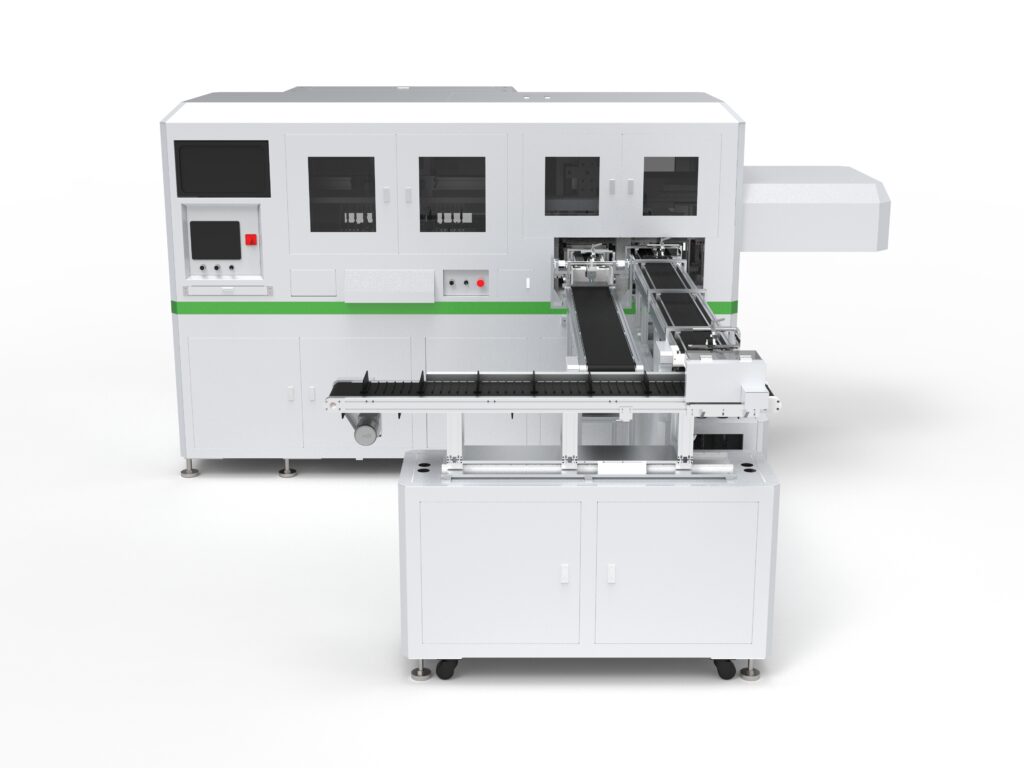
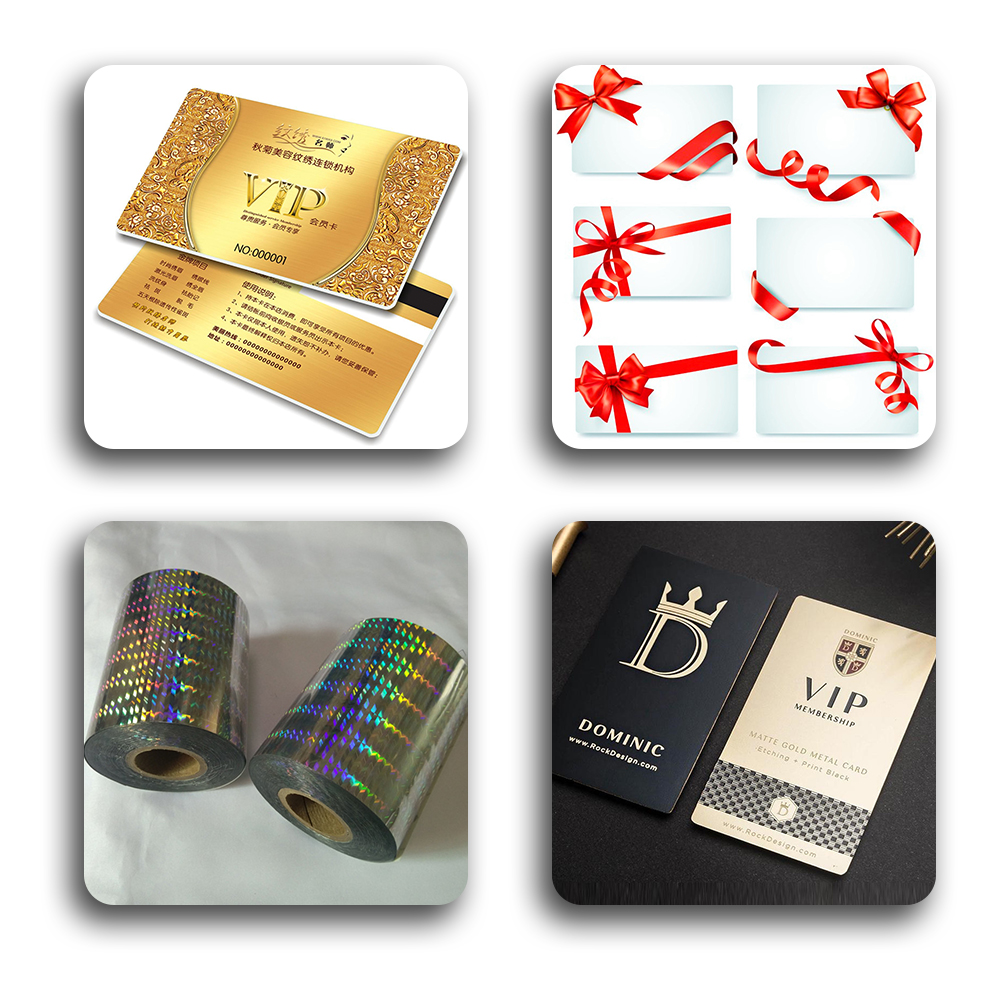
The equipment of the smart card punching machine is widely used in the production of cards such as cards, smart cards, business cards, game cards, playing cards, anime cards, bank cards, star cards, etc. It can achieve precise feeding, automatic collection, and waste removal, with core features such as layout visual correction and positioning, step-by-step precise feeding for each step, and die-cutting products that do not require nailing or connecting points, which can meet the fast switching needs of small batch orders. This article will analyse the core technology system from three dimensions: the mechanism of printing and laminating deformation, anti-interference design for target extraction, and real-time communication closed-loop within 50 milliseconds from the perspective of technology popularisation.
The overall shrinkage and stretching of printed materials after lamination: the objective physical cause of “card graphic eccentricity”
In the production process of smart cards, lamination is a key process – multi-layer panel materials are fused together under high temperature and high pressure. However, this process also introduces tricky issues: PVC, PET, PC and other card substrates undergo molecular chain rearrangement when subjected to heat, resulting in uneven shrinkage and stretching of the materials after cooling. The heating shrinkage rate usually reaches 0.5% to 0.7% under high-temperature lamination at 150°C. This seemingly small proportion is significantly enlarged on the printed cards, resulting in an “eccentric” deviation of the printed graphics and text relative to the outer contour of the card. A more complex situation is that the shrinkage direction of different parts of the laminated material is often inconsistent – the areas near the edges may be subject to stronger stress constraints, while the deformation trend in the central area is more free. The difference in thermal expansion coefficients between layers of different materials can also cause warping or twisting effects, making the surface of the card no longer an ideal plane. When these superimposed deformations are presented on the final product, it is a quality issue where the graphics and text cannot be strictly centred or even tilted and misaligned. The superposition of these deviations results in the pattern on the printed product being in an “unknown” position and form relative to the physical coordinate system of the device, which traditional positioning methods are powerless against.
It is in this context that the CCD vision system installed in the smart card punching machine has been upgraded from “point positioning” to “surface positioning”, fundamentally changing the positioning logic. The core idea is to capture the preset mark points (positioning targets) on the card printing surface; use machine vision algorithms to calculate the precise translation, rotation angle, and even non-uniform scaling coefficient of the entire card plane in two-dimensional space; and construct an affine transformation matrix from the design coordinate system to the actual card coordinate system so as to dynamically match the deformed printing pattern with the cutting path. For example, when lamination causes the card to shrink more in the longitudinal direction, the visual system can detect changes in the longitudinal distance between the mark points and make corresponding compression adjustments to the cutting path accordingly. The 7.5 KW servo power system of the smart card punching machine, combined with this affine transformation algorithm, can achieve sub-pixel level accuracy in positioning, ensuring accurate positioning of the finished product graphics and text after punching, excellent card edge quality, and no burrs, meeting the strict requirements for product consistency in the field of smart card production.
Mark Point Recognition: Interference and Anti-interference Design of Light and Shadow on Industrial Camera Algorithms
In industrial environments, the complex and varied lighting conditions are the main external factors that affect the accuracy of CCD visual positioning – environmental light fluctuations in the workshop, high light reflections on material surfaces, shadow occlusion, and glare phenomena may all interfere with the camera’s effective capture of the target. In principle, industrial cameras locate marks by analysing the contrast between mark points and the background on the greyscale image. However, when bright spots cause local overexposure in the marked point area or shadows result in insufficient boundary contrast, recognition algorithms may experience feature point loss, edge “drift”, or even false detection. Especially after the film coating or coating process on the surface of the card, the high reflectivity further exacerbates this difficulty. This optical interference not only leads to the failure of feature point extraction but also may cause serious positioning deviation, directly causing the overall deviation of the cutting path of the smart card punching machine. For devices such as smart card punching machines that require quick connection between camera capture and servo action, any uncontrollable light fluctuations from the outside may directly translate into the eccentricity of the graphics and text of the finished card or the unevenness of the cutting edge.
In response to the aforementioned interference, the smart card punching machine has designed multiple anti-interference measures at both the hardware and algorithm levels. On the hardware side, the device adopts a high-brightness closed-loop control light source combined with polarisation filtering technology – by installing a polariser at the front end of the lens and combining it with specific wavelength illumination, it effectively filters out the strong specular reflection light generated by the card coating surface, while maintaining high-contrast imaging between the mark point and the surrounding printed pattern. On the algorithm side, the software has a built-in dynamic threshold adjustment mechanism that can automatically adjust the binary segmentation parameters based on the real-time greyscale histogram of the captured image, shielding false edges caused by local shadows or light spots. In addition, the system adopts an improved Hough transform and least squares fitting filtering strategy in the target extraction algorithm, iteratively removing coarse measurement points caused by stray light interference, thus still being able to lock the true centre of the mark point under complex lighting conditions. The synergistic effect of these anti-interference designs ensures that the smart card punching machine can still stably grasp and locate the target in the changing workshop environment, providing an accurate data basis for rapid real-time alignment in the future and creating a reliable visual premise for the equipment to quickly change orders – completing the adjustment and switching of new orders within 15 minutes.
Rapid alignment within 50 milliseconds: a real-time communication mechanism between the motion controller of the smart card cutting machine and the camera
After achieving accurate position deviation detection, the next key step is whether the smart card punching machine can convert this deviation data into actual cutting actions in a very short time window. The punching power of the smart card punching machine is a 7.5KW servo motor, and the correction amount calculated visually must be transmitted to the servo drive without delay through a real-time communication network. In traditional solutions, there is often significant communication uncertainty in the path of camera photography, image transmission to the industrial computer, CPU completing image processing algorithms, and then sending corrected motion instructions to the controller, resulting in system response lag. To solve this bottleneck, modern smart card punching machines adopt a distributed clock synchronisation mechanism based on the EtherCAT real-time industrial Ethernet bus. EtherCAT has deterministic low-latency communication capability, which can accurately align tasks of multiple nodes such as camera triggering, image exposure, data exchange, and servo drive control with the same common clock.
In the actual workflow, the smart card punching machine completes a “shooting calculation execution” loop at a high speed of 50 milliseconds: when the target card is transferred to the predetermined workstation by the stepper feeding system, the motion controller sends a high-speed trigger signal through the EtherCAT network, and the camera accurately captures the card image at the designated position and immediately transmits the captured feature point positions to the visual processing unit through high-speed data exchange in the core. After the sub-pixel level affine transformation algorithm calculates the offset, the servo drive system immediately performs corrective actions to complete precise punching. The total delay from image acquisition to action execution in the entire process is strictly controlled within 50 milliseconds, and thanks to EtherCAT’s distributed clock technology, the error between the camera trigger time and the actual exposure time is compressed to below microseconds. The smart card punching machine relies on its millisecond-level high-speed closed-loop capability to control the maximum error of card image and text eccentricity within the sub-millimetre level, ensuring that the position accuracy and card edge quality of the finished product are always within a stable range during high-speed continuous production.
conclusion
Based on the above technical analysis, the technical path of the intelligent card-punching machine in laminated printing deformation correction and precision punching can be summarised as a three-level closed-loop system of “perception calculation execution”. At the perceptual level, the device overcomes the interference of complex working conditions, such as high reflectivity of card film and environmental light fluctuations, on mark point recognition through multispectral industrial cameras and anti-interference optical design; At the computational level, CCD vision software uses an affine transformation algorithm to solve the translation, rotation, and non-uniform scaling errors of the card in a two-dimensional plane in real time and converts sub-pixel level deviation data into corrected cutting paths. At the execution level, the real-time communication mechanism based on the EtherCAT bus transmits the correction amount to the servo control system at a closed-loop speed of 50 milliseconds, driving 7.5 kW punching power to complete precise cutting. Actual test data shows that on a 0.2 mm thick card substrate, the die-cutting equipment with an integrated visual positioning system can stabilise the punching accuracy within ± 0.03 mm, and the processing scrap rate of irregular cards can be reduced from 5% in traditional processes to below 0.8%. The smart card punching machine also supports segmented precise feeding and flexible processing of die-cutting products without nailing and connecting points. The mould change time only takes 2-3 minutes, and the order switching only takes 15 minutes to complete the machine adjustment. The finished products can be automatically collected in order or classification and can be connected to the backend packaging equipment to form a complete solution. With this fast and efficient technology system, smart card punching machines have become the core post-processing equipment in application scenarios such as smart card manufacturing, customised shaped cards, and small batch sampling in the printing industry.