How does a PVC card punching machine improve the production capacity of game cards in bulk?
blog 2026-02-26 00:04:18 15
In the past few years, the gaming card market around the world has been growing. People really want to collect cards, transaction cards (TCG), and cards with different themes. As a new printing and packaging center, India’s printing companies have received a large number of game card orders from Europe, the United States, and local markets. How to quickly and accurately complete large-scale production is now a major issue in improving the competitiveness of enterprises. The performance of the PVC card punching machine is very important because it connects printing and finished products. It directly affects the quantity and quality of production. This article will discuss how modern PVC card punching machines can help printing companies make their work more flexible so that they can handle card orders of various sizes and types. This will give Indian factories an advantage in the global card supply chain.
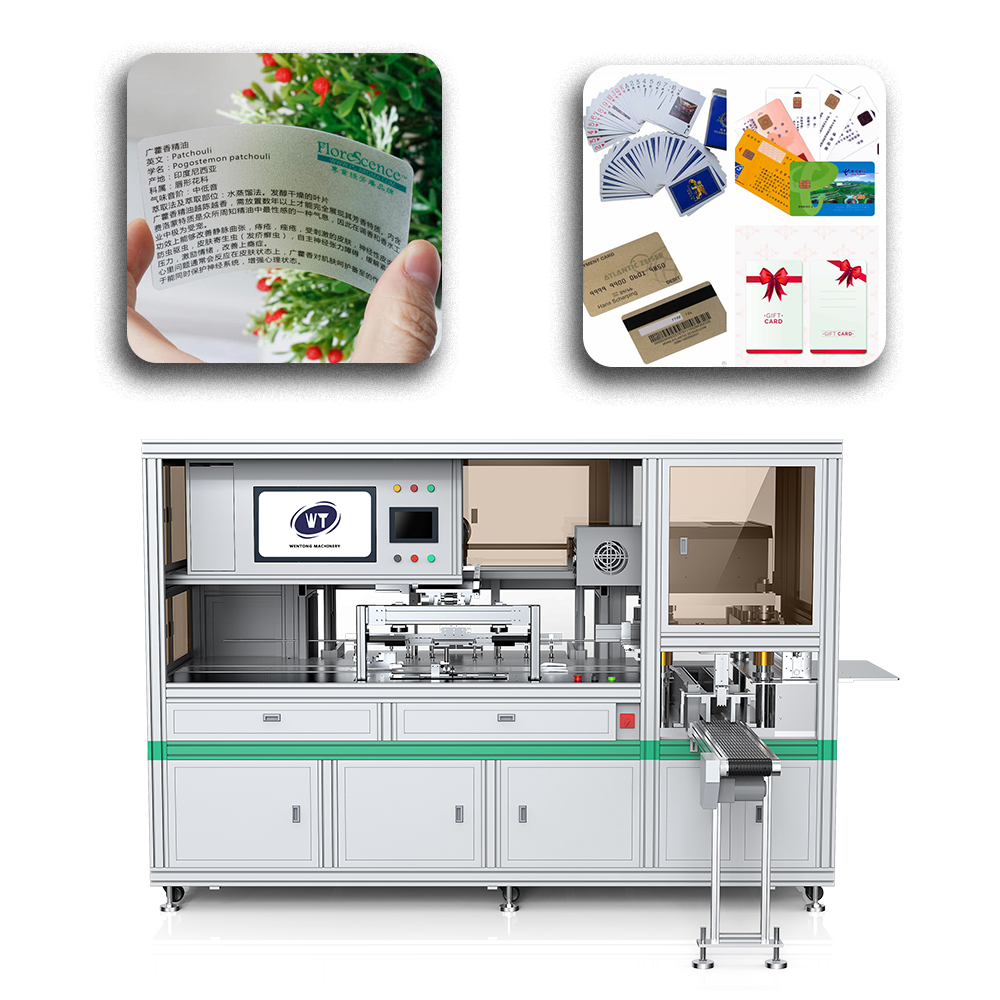
Collaborative work of game card printing and punching
Printing and punching are two common methods for making game cards. Before the printed PVC sheet can be stamped, it must go through steps such as handling, stacking, and secondary positioning. It is normal for the yield to decrease by 3% to 5% during this process, as changes in temperature and humidity can cause material size drift, scratches during processing, and errors accumulated in secondary positioning. The built-in process design of the PVC card punching machine makes it easy to print and punch simultaneously. The large-capacity automatic paper feeding system at the front of the machine can directly take out large printed paper from the printing workshop. There is no need to manually sort and move the paper, thus completely avoiding the accuracy loss that occurs when moving the paper.
The main part of integrated design is a system that combines visual correction and positioning. High-resolution industrial cameras capture real-time horizontal lines or pattern features on printed paper as it enters the feeding track of the PVC card punching machine. Within 50 milliseconds, it calculates the positional deviation of the material (X/Y axis offset and angular rotation). The servo-driven calibration platform ensures that every piece of material entering the die-cutting station is in optimal alignment with the mold by immediately making changes as the material moves. This skill is very suitable for the hot and humid weather in India. When the temperature exceeds 30°C for 4 hours, the size of PVC film can change by 0.15% to 0.3%. Visual correction compensates for the previous lack of accuracy in printing. On the back of the device is an intelligent collection system that supports two modes: collection to maintain the original arrangement of cards for easy sampling and classification collection, which uses image recognition to automatically classify different patterns into different material slots to prepare for packaging. The integrated design has reduced the number of workers on the entire production line by more than half, saving a lot of labor.
How to use the PVC clock in the machine to make more game cards every day
The cutting speed not only affects the growth of daily production but also the wasted time. The step-by-step precise feeding technology on the PVC card punching machine is a new feature that will help achieve this goal. Using traditional full board punching machines, materials can be moved in one go. By gradually feeding, the machine moves the material in small steps and stamps one or more card units at a time. The size of the game card tells the device control system how many feeding steps there should be, and a 7.5 kW servo motor moves the material to the correct position, accurate to within ± 0.10 mm. The number of punches per unit time actually increases because the distance between each feed step is much shorter than the stroke required to punch a complete sheet. For example, this machine can drill 60 to 80 holes per minute and cut 4 to 6 cards at a time. The standard size of playing cards is 63 mm × 88 mm. The theoretical daily production (20 hours) can reach over 70000 cards, far exceeding what traditional semi-automatic equipment can achieve (20000 to 30000 cards).
The significant decrease in mold changing time is another important factor in efficiency. There are many different types of orders and products in the Indian market, so the equipment has a lightweight mold interface. The accompanying wooden die-cutting board weighs only one-fifth of the metal mold, so one person can carry it. You can replace the quick locking mechanism within 2-3 minutes without the need for any tools. The order parameter storage function allows operators to retrieve old data and automatically change the distance between feeding steps, stamping pressure, and collection mode. Switching all orders takes less than 15 minutes. This means that the time required to prepare about 5000 small batch orders has decreased from over 30% for traditional equipment to less than 5%. This indeed makes production “short, flat, and fast,” which means that companies can now accept small batch custom orders that they used to reject because changing molds was too expensive.
Key points of punching and cutting technology for rounded and irregular game cards
With the growth of the collectible card market, cards with rounded corners and unusual shapes are becoming increasingly popular, making them more valuable. But now, cutting accuracy is more important. The “nail-free mouth and connection point” process is the most important technological advancement of PVC card punching machines. When you drill holes, there are usually small holes at the edges of the product that allow waste to flow out. This means you have to trim the product by hand again. This is not very user-friendly and can easily produce burrs. The nail-free technology generates small time differences during the cutting process by carefully measuring the differences in blade height. This can maintain the integrity of the waste frame while completely separating the edges of the card. Use the dynamic pressure curve provided by the 7.5 kW servo cutting power system to prevent the blade from tearing the material. When the blade comes into contact with the material, it should have sufficient penetration, and when it is almost completely cut, it should slow down. Experiments have shown that the burrs on the edges of cards cut using this technology can be kept below 0.05 mm, far better than the industry standard of 0.15 mm. This means that “one-time molding” is possible.
The self-control ability of the visual system in a closed loop can affect the accuracy of irregular stamping. The material may move slightly during stamping or cutting due to different forces on the irregular card. The layout visual correction technology in PVC card punching machines checks the image features of the area again before each punching. It compares them with the standard template, finds the offset, and slightly moves the feed mechanism to compensate for the offset. This keeps the accuracy of edge and pattern alignment within ± 0.10 mm. The visual system closely monitors the pattern and four rounded corners to ensure that everything is symmetrical and consistent. The materials used for manufacturing equipment are also very flexible, so they can handle many different things, such as PVC, paper cards, and soft magnetic sheets. There are already parameter libraries with different physical properties, so operators only need to select the type of material. The system selects the optimal process parameters on its own.
Key indicators for selecting card punching machines in the gaming card industry
Indian printing companies need to establish a scientific technical evaluation system when purchasing PVC card punching machines, with a focus on these four main indicators:
Firstly, the ability to adapt to different environments and the accuracy of positioning. The visual correction system should be able to automatically and dynamically track objects, with a material width deviation of ± 5 mm and an angle deviation of ± 3 degrees. The time required for response correction should not exceed 0.1 seconds. The feeding mechanism must be able to handle pressure. This means that it can automatically change the roll pressure according to the thickness of the material (0.2 mm to 1.0 mm) to prevent thin materials from wrinkling and thick materials from sliding.
Secondly, the degree of fit of the mold and the speed of replacement. Wooden templates should be used in conjunction with machines because they are inexpensive, can be made in just 1-2 days, and are suitable for small batch orders that require frequent replacement of boards. The mechanical structure requires a quick locking mechanism that can keep the mold in place without any tools. The software should also be able to remember order parameters so that you can change orders with just one click. You should be able to switch between steps in 20 minutes or less.
Thirdly, the mechanism for waste disposal and collection of finished products. Efficient equipment should have a built-in system for automatically removing waste. The system can roll or cut the waste rack on its own, preventing it from accumulating and stopping the machine’s operation. There are two methods to collect finished products: sequential collection for sampling, classification collection for automatic sorting, and layout using image recognition. When creating a game card with multiple images in a version, the classification and collection functions can reduce the number of people classified by half and save a lot of labor costs.
Fourthly, the stability of the power system over time. The 7.5 kW servo direct drive system is better than traditional flywheel equipment because it does not lose energy or cause vibration, has controllable stamping depth and accuracy, and saves more than 40% of energy. The servo system can still maintain accuracy after two to three years of use. This means that the device has a longer lifespan and lower overall operating costs. Most of the time, good suppliers will provide you with a 2-year warranty and 24-hour remote technical support for the entire machine to ensure its long-term normal operation.
Conclusion
The modern PVC card punching machine is now a complete card production unit that can accurately position, feed, and collect cards. If you are an Indian printing company that wants to make game cards, you should look for machines that can do precise step-by-step feeding (step pitch accuracy ± 0.10 mm), automatic visual correction (response time < 0.1 seconds), and quick mold changing (mold changing takes 2-3 minutes, order switching takes 15 minutes) and other things. This can reduce the preparation time for small batch order production by more than 70%. This device can play 60 to 80 games per minute, which means it can play 80000 to 100000 standard-sized game cards per day. This is based on a standard production day of 20 hours and a stable output of a 7.5 kW servo power supply system. The edge burr rate is less than 0.3%, and the finished product yield is greater than 99.2%. If this machine works 300 days a year and earns 500 rupees for every 10000 cards processed, its annual output value may exceed 12 million rupees. It usually takes 12 to 18 months to recover funds from investments. This upgrade not only allows Indian printing companies to do more work but also enables them to handle high-end game card orders from other countries. This gives them a unique advantage over their competitors in the global card supply chain.