Avoiding pitfalls in the post-printing process: accurate pressure control and material rebound solution for a fully automatic metal card punching and cutting machine
blog 2026-07-05 21:01:29 13
Punching is the key link of the post-printing process of card products, and the quality of the finished product is determined by punching. Bank cards, smart cards, game cards, playing cards, anime cards, celebrity cards… The end product form and dimensional accuracy are dependent on the quality of the punching process. However, in actual production, the pressure control difficulty caused by material differences, the inherent rebound characteristics of metal materials, and the rapid wear of molds are the three core pain points plaguing many printing companies and card manufacturers.
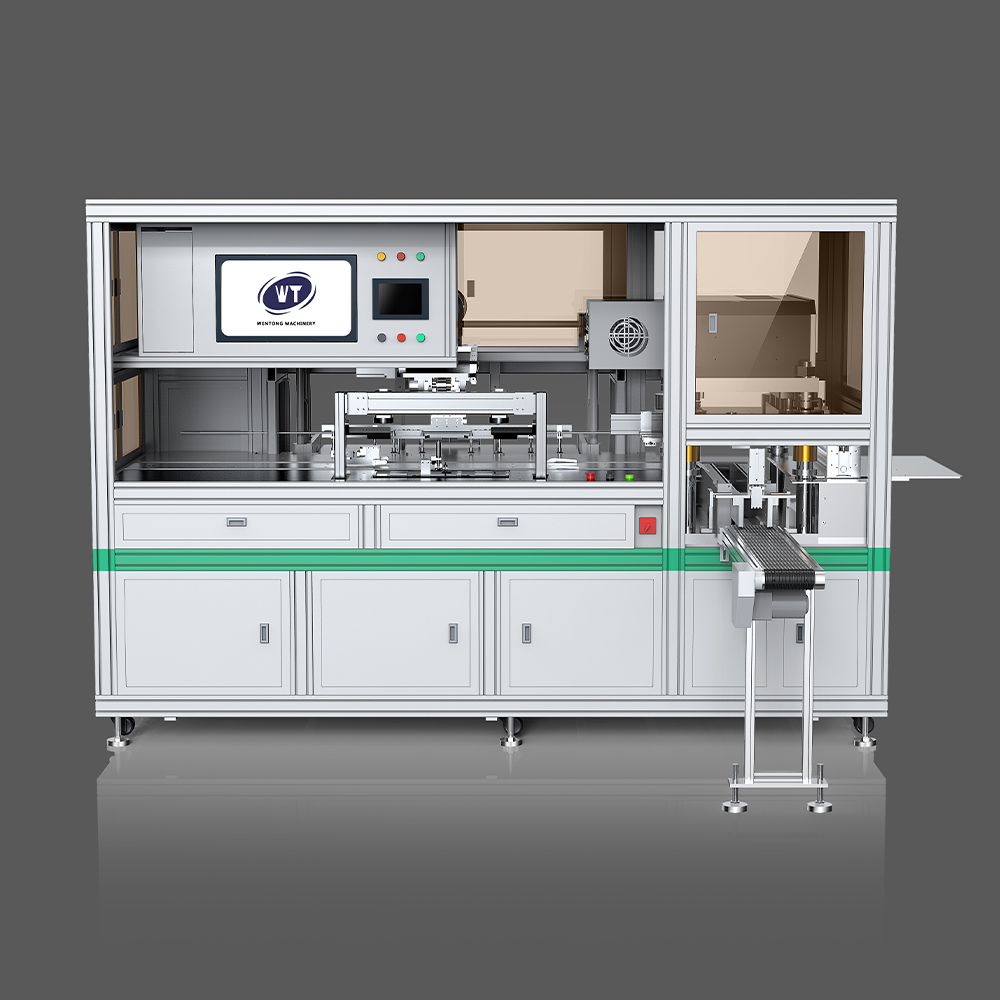
1. Material drives process How much difference in punch pressure do we see between stainless steel bank cards and aluminum anime cards?
The choice of material for the metal card directly affects the setting of punching process parameters. The physical properties of stainless steel bank cards and aluminum anime cards are very different, so the logic of punching pressure setting is also completely different.
The shear strength of stainless steel materials (for example, 304 stainless steel) is relatively high, usually between 350-500 MPa. That is, when punching stainless steel bank cards, the punching machine must have greater cutting force to complete the separation of materials. According to the calculation formula of the punching force P=L×t×τ×1.3 (L is the cutting circumference, t is the material thickness and τ is the shear strength), the punching pressure of stainless steel cards is generally 2-3 times that of aluminum materials with the same thickness. In addition, the bending stainless steel 304 has a relatively large rebound amount, leading to difficulty in controlling the forming accuracy. In actual production, for 0.5 mm thick stainless steel cards, the punching gap setting must be more cautious. The surface roughness of the cutting surface of the punched part must be controlled within 3.2 μ μm, which puts forward extremely high requirements for the pressure stability and mold accuracy of the equipment.
The story with aluminum anime cards is totally different. The shear strength of aluminum is far below that of stainless steel and so is the punching force, but aluminum material is softer and more sensitive to the control of pressing force. Studies have shown that the pressure should be 1-3% of the punching force, which is too small to suppress material warping and increase the collapse angle; Excessive pressure can damage the surface of materials, especially for soft aluminum materials. Therefore, when punching aluminum animation cards, the metal card punching machine needs to employ a more precise pressure adjustment strategy, which means lowering the main punching pressure and accurately controlling the pressure of the pressing plate to prevent surface indentation. Furthermore, the cutting speed of the equipment needs to be adjusted dynamically according to the material, as the speed of the aluminum alloy sheets needs to be reduced during high-speed stamping to reduce the risk of cracking.
For manufacturers who produce stainless steel and aluminum cards simultaneously, a good metal card punching machine should be able to quickly switch pressure parameters. The recent fully automatic metal card punching machine is usually designed with 7.5KW servo power system. The punching pressure for different materials can be set digitally and switched quickly by means of the accurate torque control of the servo motor, so that the cards with different materials can be punched well without changing the equipment.
2.Extending the service life of core assets: Daily maintenance and heat treatment of steel card punching tools
Molds are the core assets of metal card punching machines, and their service life has a direct impact on production efficiency and product costs. Statistics show that mold failure accidents caused by improper heat treatment account for more than 40%. Therefore, the scientific maintenance of molds and the reasonable selection of heat treatment processes are the keys to prolong the service life of molds.
Based on heat treatment technology, the matrix strengthening heat treatment is proved to be effective to improve the service life of precision stamping molds. Research shows that for Cr12Mo1V1 cold work die steel with matrix strengthening heat treatment, impact toughness increased 22%, bending strength increased by 12% and overall die service life increased by 30% compared with traditional heat treatment processes. The data show that it is possible to significantly increase the service life of the mold without increasing the costs of mold raw materials by optimizing only the heat treatment process. For large volume, high frequency punching operations, such as card production, a 30% increase in life translates directly to significant economic benefits.
The daily maintenance should also not be ignored, the correct use and maintenance of the molds. Specific measures include keeping the mold clean and lubricated properly. Avoid misfeeding and double feeding. Strictly control the depth of convex mold entering the concave mold. If the cutting edge of the mold is worn, it should be ground in time. – The grinding amount should be controlled at 0.03-0.05 mm each time, and repeated grinding should be carried out until the punch is sharp. The maximum grinding amount generally does not exceed 0.1-0.3 mm. The life of the mold is influenced by early or late grinding, and the grinding time should be decided by measuring the quality of the punching surface rather than by experience.
The mold life is also affected by the installation and debugging of molds. The metal card punching machine adopts a lightweight wooden mold, and the mold change time is only 2-3 minutes, which not only improves the production efficiency, but also reduces the risk of damage caused by improper operation during mold loading and unloading. Quick mold changing capability combined with a scientific maintenance system can maximize the value of molds.
3.Common problems of the metal card punching machine
Why do the edges of the punched cards have obvious burrs, to the point that they affect stacking and subsequent packaging? What is the way to fix it?
Burr is the most common quality defect in the punching process, which is mainly caused by three reasons: ① The mold edge is worn out after long-term use, so the gap between the convex and concave molds exceeds the reasonable range (the unilateral gap of 0.5mm thick metal cards should be controlled at 5% to 8% of the material thickness); ② The punching pressure is insufficient or the pressure distribution is uneven, resulting in the tearing of the material instead of neat cutting; ③ The installation of the mold is not neutral, and the shearing is biased. The solution is to sharpen the blade regularly (recommended after 50000 cuts). Check the mold blade status and grind it if it is worn, the grinding amount is ~0.03~0.05 mm each time; use the layout visual correction positioning system of the metal card cutting machine to ensure the accurate feeding position and calibrate the verticality and concentricity of the mold installation. The height of punching burrs should be strictly controlled within 0.05 mm in the precision card production. If it is more than this value, the machine has to be stopped for adjustment.
How to solve the problem of material rebound when the size of the punched metal card is different from the design value of the mold, especially when the bending rebound makes the flatness not meet the standard?
Answer: The dimensional deviation is mainly due to the elastic recovery (rebound) of metal materials after punching and cutting separation. The process parameters that influence Rebound are punching speed, pressing force, punching sequence and pressing stress. For high strength materials like stainless steel, the rebound can be 10% to 20% of the material thickness which has to be compensated for by the process compensation. Common solutions are: ① Mold compensation method: The pre-bending angle or negative gap is reserved in the design of the convex mold to compensate for the rebound amount in advance; ② Process compensation method: Multi-step shaping process is adopted, such as rough cutting and then fine cutting by step-by-step feeding strategy; ③ Adjust cutting speed of metal card punching machine (appropriately reducing the speed can reduce dynamic rebound) and pressing force (increasing the pressing force can suppress the warping of the material). At the same time, the servo power system of the equipment can accurately control the punching stroke and the step-by-step precise feeding function, so that the cumulative error of multiple punchings is less than ±0.05 mm.
During the production process, there may be an occasional shift in the punching position, leading to the final product pattern being off-center or having uneven cut edges. What phase is the problem?
In general, the feeding position is inaccurate due to three factors: reduction in the mechanical accuracy of the feeding mechanism (like wear of the roller or loss of the stepping motor), misreading of the sensor due to warping or uneven thickness of the material, and calibration failure of the equipment positioning sensor. This problem is effectively solved by the layout visual correction positioning system of the metal card punching machine. The system is to take the real-time photo on the positioning marks (such as crosshairs or positioning holes) on the material, calculate the offset through the image algorithm, and automatically adjust the feeding compensation value to ensure that the positional accuracy of each punching can reach ±0.05 mm. Meanwhile the step-by-step feeding structure can realize the independent control of the feeding length of each step and has no cumulative error in the large-size products (like game cards, star cards). The visual lens needs to be cleaned every shift and the feeding step accuracy needs to be checked every week, which can greatly reduce the risk of positioning deviation for daily maintenance.
Sometimes the mould suffers from blade breakage or fracture which results not only in huge losses in production but expensive replacement costs. How to prevent the abnormal damage to the molds effectively?
Abnormal damage to the mold is often caused by improper operation. The main reasons are wrong feeding of double materials (two materials overlapping causing a sudden increase in load during punching), foreign objects inside the mold (such as waste chips or screws) and too much punching pressure setting exceeding the allowable stress of the mold. During the whole production process, preventive measures are needed: Before starting work, check the cleanliness of the mold working area, and ensure that the material is fed individually; Set the punching pressure strictly in accordance with the material thickness and the material comparison process card, and prohibit overpressure operation strictly. Regularly check guide mechanism (guidepost and guide sleeve) and spring, and replace worn parts in time. It should be noted that the metal card punching machine equips the overload protection function in the 7.5 KW servo power system. When the punching resistance increases abnormally (over the set value), the system will automatically stop and alarm within 0.1 second, effectively preventing serious damage to the mold. Moreover, recording the number of punching and cutting times per shift and pre-emptive replacement or grinding when the mold life is approaching (e.g. 150000 times) can reduce the probability of accidental failure by more than 70%.
In mass production, the collection of the finished cards is in disorder and the counting is inaccurate, affecting the efficiency of subsequent packaging. Is there a better way to gather and manage data?
Answer: The standardization of finished product collection has a direct impact on the overall rhythm of the production line. According to the actual needs, the metal card punching machine has two collection modes: ① Sequential collection-the mode is suitable for the continuous large-scale production of a single variety, and the finished products are stacked in sequence to directly enter the packaging machine; ② Collecting by Classification-the mode is suitable for the production of multiple cards in the same batch (such as anime cards of different patterns or smart cards of different codes), the equipment automatically distributes various finished products to the corresponding silos through the sorting mechanisms to achieve the classified collection. Both modes can be equipped with a counting function with a counting accuracy of 99.9%. Meanwhile, the device can be connected with the backend product packaging overall solution, achieving the full process automation from punching, collection and counting to packaging, greatly reducing the manual intervention and the risk of confusion.
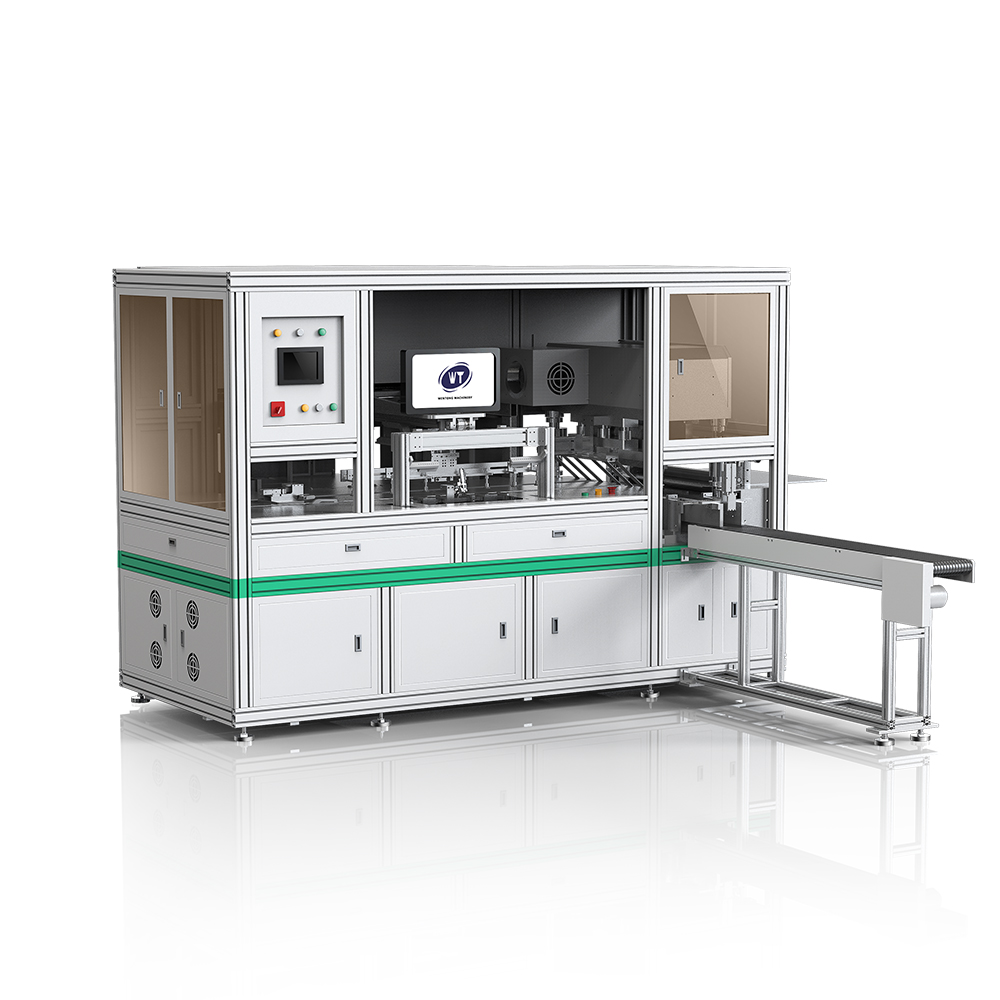
Summary
The quality of the metal cards cutting is based on the integrated application of three core elements: precise control of pressure, scientific management of molds, and rapid reaction to failures.
In terms of pressure control, the punching pressure difference between stainless steel bank cards and aluminum cartoon cards can reach 2-3 times (calculated based on the difference in shear strength between 350-500 MPa and aluminum’s about 80-150 MPa), so metal card punching machines need to have adjustable pressure output capacity and fast parameter switching ability. The technical basis for achieving this goal is the precise torque control of the servo power system.
Precision stamping mold matrix strengthening heat treatment can increase 30% service life. Scientific daily maintenance (including regular cleaning and lubrication, timely grinding, standardized installation, etc.) can reduce the probability of mold accidental failure by more than 40%. A good metal card punching machine with a fast mold change design of 2-3 minutes can realize the maximum utilization efficiency of the mold.
The layout visual correction positioning system solves the problem of feeding accuracy, the step-by-step precise feeding solves the problem of cumulative error in large-sized products, and the two collection methods of finished products meet the needs of different production scenarios. It is good for preventing common problems.
In short, the choice of metal card punching machine with servo power drive, visual correction positioning, fast mold changing and flexible collection functions, scientific process parameter setting and mold maintenance system is an effective way to realize high-quality metal card punching in the post-printing process. Facing the global market, for equipment manufacturers in Shenzhen, China, the key to winning the trust of overseas customers is the ability to convert these technological advantages into tangible production data (for example, punching accuracy ± 0.05 mm, mold change time 2-3 minutes, mold life improvement 30%, etc.)