The crucial influence of the clearance between the punching dies of the card punching machine on the quality of the incision
blog 2026-06-25 23:36:52 16
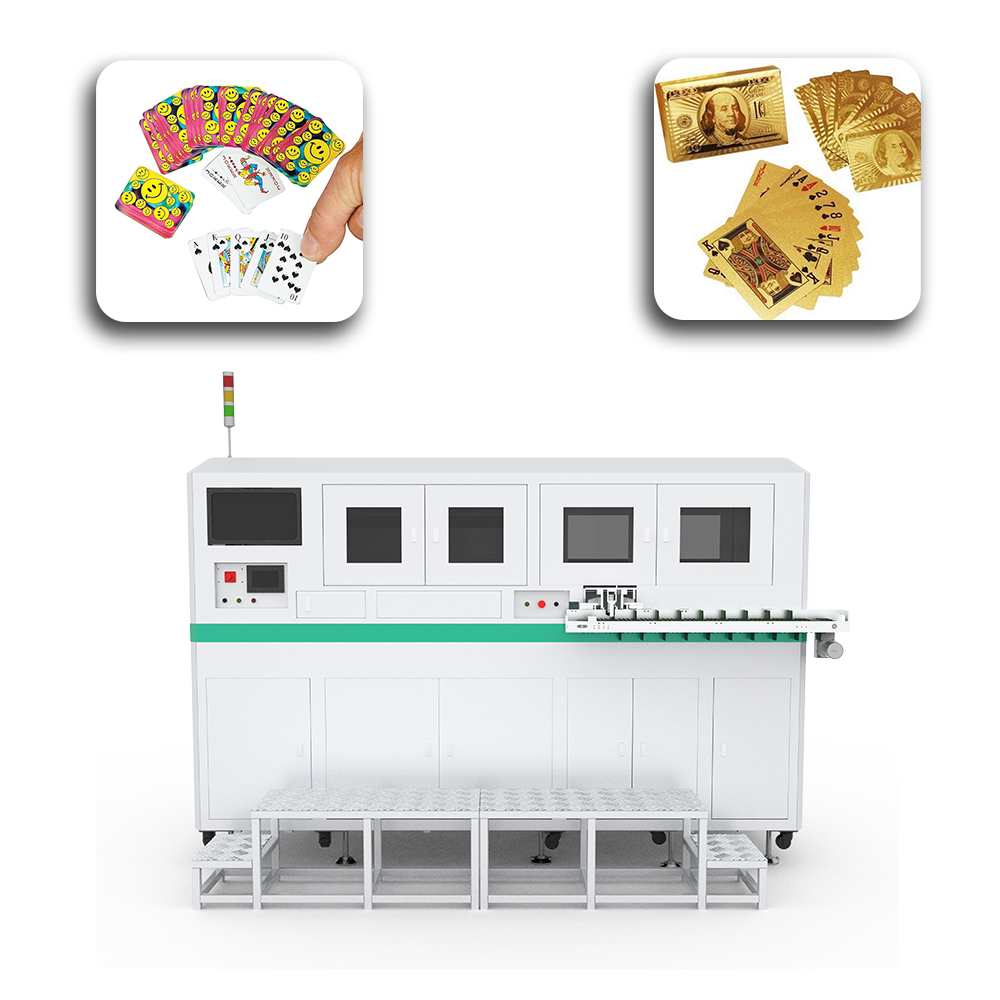
Card punching machine is the main equipment in the field of card production. It is widely used in die-cutting and processing of various card products, such as smart cards, business cards, game cards, playing cards, anime cards, bank cards, Star Cards, etc. The distance between the convex cutting edge and concave cutting edge of the die is defined as the die gap in the punching process, which has a decisive influence on the cross-sectional quality, dimensional accuracy and even the life of the die for the punched parts . Punching gap is influenced by many factors, such as sheet metal properties, sheet metal thickness, punching method and mold structure. The single-sided gap is usually taken as 10-15% of the sheet thickness. If the gap value is too large or too small, it can cause different defects in the cut section. When the gap is too large, the material is easy to tear, cracks will appear on the side slightly away from the cutting edge, and the burrs will be large, thick and difficult to remove. If the gap is too small, there will be a torn surface in the middle of the product end face, bright bands on both ends, and the quality of the cross section is also not ideal. The upper and lower cracks can overlap with each other when the gap value is reasonable to obtain a flat section with a large bright band, small collapse angle, and burrs.
In real production the problems encountered by the card punching machines are much more than the gap setting itself. The cumulative impact of material stretching in the printing process, mechanical abrasion of equipment after prolonged use, and frequent switching between different orders will affect the final cutting quality. A good punching machine should not only have the ability to precisely control the mold gap, but also form a complete precision guarantee chain in the power system, positioning system and daily maintenance system. This article will analyze in depth from three dimensions: servo drive technology, visual focus calibration system, equipment daily maintenance, how to realize precise control of the gap between the punching dies of modern card punching machines, so that the cutting quality of each card can reach the industry standards.
How is it that servo-driven card-punching equipment is more accurate than all-mechanical equipment?
The traditional mechanical card punching machine takes the crankshaft transmission as the core, and the mechanical parts such as crankshaft, connecting rod and slider are used to realize the motion conversion. The structure is simple and inexpensive, but the accuracy is severely limited by mechanical clearances, component wear and resonance. The traditional crankshaft die-cutting machine has a slider stroke error of ±0.1mm caused by the wear of connecting rod after long-term operation. It is also likely to further reduce the accuracy of repeated positioning due to mechanical resonance. More importantly, the crankshaft transmission uses open-loop control, which cannot correct the speed fluctuation caused by load change in time and tends to “overshoot” or “undershoot” during high speed cutting. This uncertainty in accuracy is directly reflected in the cut section of the card, the gap fluctuates instantaneously due to mechanical vibration, leading to burrs, rough sections and even dimensional deviations in some cards in the same batch of products.
This problem is solved by the servo-driven card punching machine at its core. Servo punch press is powered by servo motor and completely abandons the traditional structure of flywheel and clutch. It adopts digital control system to accurately control the motion trajectory of slider. It is equipped with a high-precision closed-loop control system that can provide real-time feedback on position and velocity information, thereby forming a nested control of the current loop, the velocity loop, and the position loop. For the specific data, the position accuracy of the servo punch can reach ± 0.01 mm, which is 10 times of the traditional equipment. The pressure closed-loop fluctuation is less than 1%. The repeated positioning accuracy can reach ± ±0.005 mm. This means that the servo drive can control the fluctuation of the die clearance within a very small range during the punching process, so that the cutting section of each card is in the ideal clearance state. The modern card punching machine is driven by a 7.5KW servo motor with stable power and low noise, and the punching speed can be flexibly adjusted according to the thickness of different card materials. In practice, the scrap rate of servo-driven card punching machines can be reduced by 80% compared with traditional mechanical equipment. For card factories that produce in bulk, this directly translates into significant cost savings and quality improvement.
The nemesis of stretch deformation in printing: a heavy duty punch with autofocus calibration system
Materials for printing inevitably undergo a certain degree of tensile deformation after printing and lamination. In the case of card making, if this deformation is not compensated for effectively, it will directly cause deviation in punching position. Even if the die gap is set accurately, deviation in punching position will still make waste products. Traditional card punching machines use mechanical positioning or simple electric eye marking. But these ways of positioning are frequently insufficient in the case of non-uniformly deformed material.
The heavy-duty card punch machine with visual calibration system provides an accurate solution to this problem. This kind of equipment adopts CCD visual alignment system. It captures real-time images of targets or positioning marks on materials through high resolution industrial camera. The visual recognition controller analyze and compare the images, automatic calculation of the material deformation and drive the UVW three-axis linkage platform position compensation in X, Y and θ directions. Based on the visual system’s current coordinate value feedback, the UVW platform automatically moves the punching area to the preset position. The precision of this closed-loop visual alignment system can be up to ±0.02 mm or even better. In practice, visual calibration systems are well able to take into account the deformation of the materials during the lamination processes when producing cards. Even if large sheets of material are stretched in a non-uniform way, the equipment is still able to ensure the exact punching position of each card.
The benefit of such visual calibration systems is particularly clear for customers from the printing industry. The problem of register deviation has long plagued the industry for the transportation of printed material in roll or sheet form due to variations in tension, temperature and humidity. The card-punching machine with visual calibration function can automatically detect the target deviation position and correct it in real time without manual intervention. In this way, not only the scrap rate caused by poor alignment is greatly reduced, but also the efficiency of order switching of multiple varieties and small batches is improved, and the operator does not need to repeatedly adjust the positioning parameters manually, and the equipment can complete the calibration automatically, and the order switching time can be reduced to less than 15 minutes. It is a feature of great practical value to printing factories which frequently need to handle different specifications of cards and print patterns.
Equipment checklist: Can daily maintenance extend the service life of tungsten steel molds for punching machines by 30%?
The stability of the die gap is not only related to the accuracy of the equipment itself, but also closely related to the daily maintenance of the mold. Tungsten steel (hard alloy) has high hardness and wear resistance, so tungsten steel molds are widely used in card punching. But the lifespan of even the best tungsten steel molds can be greatly reduced if not properly maintained on a daily basis. The direct impact of the gap between the molds on the quality of the stamped parts and the life of the molds. If the gap is too large or too small, it will cause problems such as burrs, jamming, and even damaging the molds in serious cases. Reasonable daily inspection and maintenance can extend the service life of tungsten steel molds by over 30%.
A scientific equipment checklist should be four tiered: daily, weekly, monthly and quarterly. Daily inspection mainly includes: cleaning the surface of the mold of debris and waste residue, checking whether there is abnormal burr on the cut card section (which is a direct signal to determine whether the gap has changed), and confirming whether the lubrication system is working properly. Basic inspection should be done once a week to clean the debris on the surface of the mold, and check if the fasteners of the mold are loose. At the same time check for signs of wear or breakage on the cutting edge of the mold. Once a month: Complete maintenance with deep cleaning and lubrication of the mold cavity and core and checking the guide parts for abnormal wear. A deep maintenance is carried out every quarter, which includes a detailed inspection and repair of the main parts of the mold, including grinding of the cutting edge. With continued use, the edge of the mold will gradually become duller. Regular grinding can restore the sharpness of the cutting edge and the upper and lower cracks can be precisely overlapped in punching. After grinding, the surface of the cutting edge should be demagnetized, otherwise residual magnetization can easily cause material blockage problems.
In addition to routine maintenance, enterprises that use molds should keep detailed records of the use of molds, including the time of use, punching frequency, maintenance status, damaged parts, etc. With this data, it is possible to accurately predict the mold change cycle, eliminating the unplanned downtime caused by sudden mold damage . For tungsten steel molds, when the number of punching times reaches 80% to 90% of the designed life, the replacement molds should be prepared in advance to ensure the continuity of production. In actual use, a standardized daily inspection and maintenance system can extend the service life of the mold, and also ensure that the gap between the punching dies is always maintained within a reasonable range which is the basic guarantee for ensuring the stable quality of the card cutting.
Summary
The main factor which defines the quality of the card cutting edge is the gap between the punching dies of the card punching machine. Its reasonable value directly influences the smoothness of the cross section, the controllability of the burr, and the accuracy of the size. The three major technological means in modern card punching machines guarantee the stability and controllability of the die gap. Firstly, the 7.5 kW servo drive system improves the position accuracy to ± 0.01 mm and the repeated positioning accuracy to ± 0.005 mm, which controls the fluctuation of the die gap at the micrometer level and reduces the scrap rate by 80% compared with traditional mechanical equipment. Secondly, the CCD visual calibration system can automatically compensate the positional deviation caused by the stretching deformation of the printing material, positioning accuracy ±0.02 mm, which guarantees the precise punching position of each card. Thirdly, the service life of tungsten steel molds can be prolonged by more than 30% by means of daily, weekly, monthly and quarterly hierarchical inspection and maintenance systems, which can fundamentally guarantee the long-term stability of the die gap.
Card punching machines are indispensable to separate printed large sheets into finished cards such as smart cards, bank cards, game cards, playing cards and anime cards. For customers in the printing industry, a punch press with a servo drive, visual calibration and a standardized maintenance system translates to lower scrap rates, faster efficiency when changing orders and a longer service life for the equipment. With these core technologies, this Chinese card punching machine manufacturer is moving from Shenzhen to the global market, providing reliable technical support for global card production enterprises.