The ultimate solution to improve the punching quality of smart card punching machines
blog 2026-06-08 19:29:05 11
In the global printing and manufacturing field, smart cards, bank cards, game cards, playing cards, star cards, and high-end anime card products that have been continuously rising among young consumers in recent years have increasingly high requirements for die-cutting and punching accuracy. The electronic smart card device market in India is undergoing a profound transformation from traditional manufacturing to precision and automated processing. For printing enterprises, how to stably control the punching position and contour quality of each card product in multi-sheet printing processing is directly related to production efficiency and customer satisfaction. This article will focus on the application of visual alignment technology in smart card cutting machines, systematically elaborating on the key factors that affect cutting accuracy and how intelligent solutions can fundamentally improve the die-cutting quality of card products.
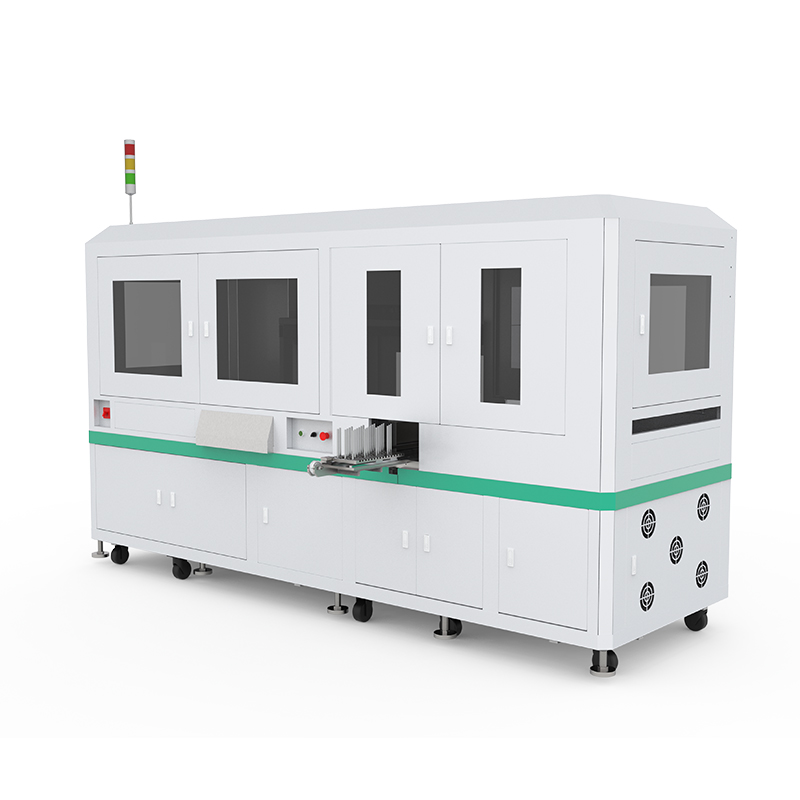
The negative impact of printing, stretching, and cutting errors on the accuracy of card punching in the later stage
In the die-cutting process of card products, stretching, deformation, and cutting errors in the printing process are the most common and difficult-to-eliminate precision interference factors. When the printing-surface paper is processed by offset printing or multi-color overprinting, the paper fibers will undergo varying degrees of stretching and deformation in different temperature and humidity environments. This physical change at the material level directly leads to the deviation of the actual position and theoretical position of the printed pattern in the layout. More complicated is that the stretching degree of each sheet of paper is often not the same when printing multiple sheets, which makes it almost impossible to guarantee the matching accuracy between the printed pattern on each card and the punching contour in the subsequent die-cutting process if only relying on traditional mechanical positioning or paper edge positioning.
In addition, the error of the cutting process itself will further amplify the positioning deviation of the later punching. During the cutting process of printed materials, due to wear of the cutting blade, uneven stacking thickness of the paper, or inconsistent mechanical positioning benchmarks, the actual size and edge perpendicularity of a single printed product may differ from the design values by millimeters or even several millimeters. When such printed products with dimensional deviations enter traditional die-cutting machines, the matching relationship between the punching mold and the printed pattern will be disrupted, and the punching position on the finished card often deviates overall, deviates at an angle, or even causes the pattern to be cut and damaged. For products such as anime cards with precise character outlines and decorative holes, this loss of accuracy is often irreversible. To solve this problem at its root, it is necessary to adopt feature-based intelligent positioning methods during the die-cutting process, rather than relying on benchmarks such as printed product edges or feeding directions that are prone to cumulative errors.
The CCD camera captures the marked points in real time and feeds them back to the fine-tuning mechanism.
The core principle of visual alignment technology is to use a CCD industrial camera to image and analyze the preset positioning marks on the printing surface in real time and compare them with the reference positions stored inside the device to generate the current position deviation value. After that, the control system drives the fine-tuning actuator to make precise corrections. Specifically, CCD cameras work in conjunction with high-resolution industrial lenses and specialized light sources to capture high-speed images of positioning features (such as cross marks, circular holes, text symbols, or exclusive graphics) on the marking material before each printed product enters the die-cutting station. After the image data is analyzed by the processor, the system can accurately identify the comprehensive offset of the material in the X-axis, Y-axis, and rotation angle directions.
After obtaining the deviation data, the high-precision alignment platform (usually an XYθ θ four-axis structure) on the smart card punching machine will perform millisecond-level response fine-tuning movement to adjust the material to be punched to the reference position completely aligned with the mold and then perform the punching action. This closed-loop control mechanism effectively solves the positioning problem caused by printing stretching, deformation, or cutting size errors, making the smart card punching machine no longer rely on traditional benchmarks such as the original edge or mechanical positioning pin of the printed product but directly perform “what you see is what you get” alignment based on the feature points of the printing surface itself. For printing companies that produce various specifications of products such as business cards, smart cards, bank cards, etc., this visual-based intelligent positioning method greatly reduces the dependence on operator experience, making high-precision die-cutting more controllable and standardized.
Application Example of Visual Alignment Anime Card Punching Machine in Multi-Sheet Printing Processing
The practical value of the visual-alignment-type intelligent card-punching machine in multi-sheet printing post-processing scenarios is mainly reflected in its real-time compensation ability for misalignment deviation between sheets. Taking the production of four or six sheet anime cards as an example, multiple independent patterns are distributed in different areas of a single printed material, and each pattern is surrounded by exclusive punching positions. Under traditional die-cutting methods, even if the overprinting accuracy in the printing process reaches a high level, the slight stretching or deviation of the material during the die-cutting and feeding process will still cause displacement between the pattern of one of the sheets and the mold, ultimately resulting in a deviation of the punching positions of all the cards on that sheet. The intelligent card punching machine equipped with a visual alignment system can perform independent or comprehensive alignment based on the positioning marks on a single or multiple sheets before each punching, ensuring that the punching contour of each sheet always maintains the best matching relationship with its printed pattern.
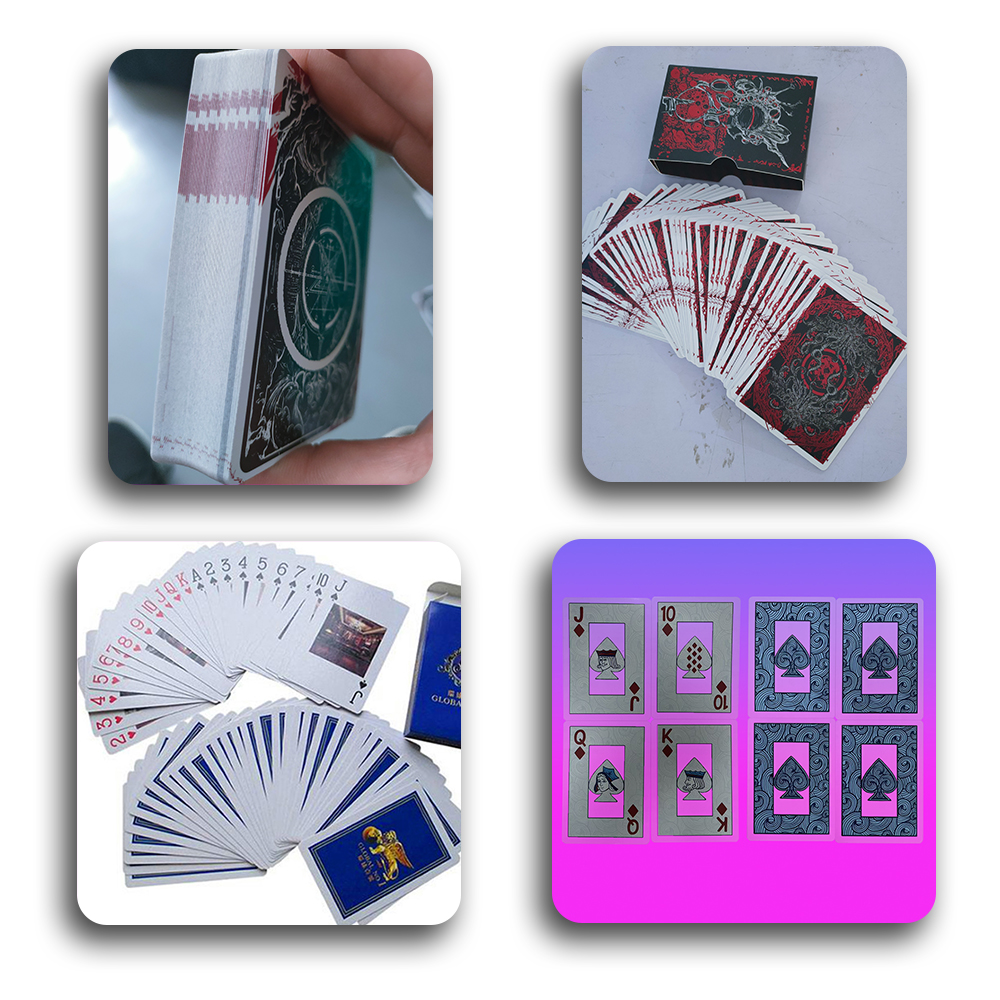
In terms of punching quality, the 7.5KW servo punching power system of the smart card punching machine, combined with the CCD vision system, ensures that the edges of the finished product are free of burrs and the card edges are smooth and flat. This is particularly important for high-end anime cards that require high visual and tactile effects. In addition, the advantages of this type of equipment in order switching significantly enhance the flexibility of multi-sheet production. Between orders with different layout and hole positions, operators can complete mold replacement and parameter adjustment within 15 minutes. The mold replacement time for lightweight wooden molds is shorter, only 2 to 3 minutes, greatly reducing the time cost for printing companies to frequently switch small batch orders. The equipment is widely used for die-cutting and punching of card products such as cards, smart cards, business cards, game cards, playing cards, anime cards, bank cards, star cards, etc. At the same time, it can achieve fully automated operation of precise feeding, automatic collection, and waste removal, adapting to the processing needs of various materials such as paper, film, and soft magnetic sheets.
The actual effect of intelligent visual inspection on reducing customer complaint rate in the B2B manufacturing industry.
From the perspective of actual operation in B2B manufacturing, the integrated visual inspection and alignment system installed on the smart card punching machine has a direct and quantifiable effect on reducing customer complaint rates. In the traditional die-cutting process, the problem of punching deviation caused by printing stretching, cutting errors, or changes in material properties can usually only be discovered after the finished product completes batch punching and manual sampling. Once a systematic deviation occurs, it often means that the entire batch of products is scrapped, which not only causes direct material losses but also may trigger customer claims and trust crises due to delivery delays. The visual alignment-type equipment uses real-time deviation calculation and feedback compensation from CCD cameras before punching, which elevates accuracy control from “post inspection” to “prevention” and fundamentally reduces the occurrence of deviation products. According to industry practice data, after adopting the CCD visual alignment die-cutting system, the scrap rate of die-cutting caused by misalignment can be reduced by about 60%, and the first pass rate of finished products generally increases to over 98%. In some application scenarios where positioning accuracy is required to reach ± 0.05 mm to ± 0.1 mm, the introduction of visual positioning systems has reduced customer complaints related to positioning accuracy by more than 70%.
For overseas customers, especially printing companies in emerging markets such as India, reducing customer complaint rates also means consolidating the company’s brand image and establishing long-term cooperative relationships. The smart card punching machine supports two modes of finished product collection: sequential collection and classified collection and can be connected to the backend packaging overall solution to help customers build a closed-loop management system from die-cutting to finished product shipment. The deep integration of intelligent manufacturing and visual inspection technology is driving the transformation of B2B printing manufacturing from traditional experience-driven to data-driven modern production, providing a more forward-looking and reliable technological solution for global post-press processing enterprises.
Conclusion
From the systematic analysis of the impact of printing, stretching, and cutting errors on die-cutting accuracy to the closed-loop control mechanism of CCD camera real-time alignment feedback, to the practical application performance of visual alignment-type intelligent card punching machines in multi-sheet printing processing, and finally to the quantifiable effect of intelligent detection on reducing the B2B customer complaint rate, visual alignment-based die-cutting technology has become the core path to improve the punching quality of card products. The global market size of fully automatic business card printing machines has reached approximately 868 million yuan in 2024 and is expected to expand to approximately 1.18 billion yuan by 2031 at a compound annual growth rate of 4.4%. In this growing trend, smart card punching and cutting equipment with high-precision visual alignment and flexible fast order-changing capabilities are becoming a key direction for investment and upgrading in printing manufacturing enterprises. For printing enterprises that produce diversified card products such as smart cards, anime cards, bank cards, business cards, playing cards, and star cards, the intelligent visual alignment punching solution not only solves the long-standing accuracy pain points in traditional die-cutting but also provides clear technical support and commercial value in improving production efficiency, reducing material waste, and enhancing customer satisfaction.