High-precision intelligent card punching machine: full analysis of high-precision manufacturing of multi-layer laminated cards from PVC to PETG
blog 2026-05-24 20:32:38 18
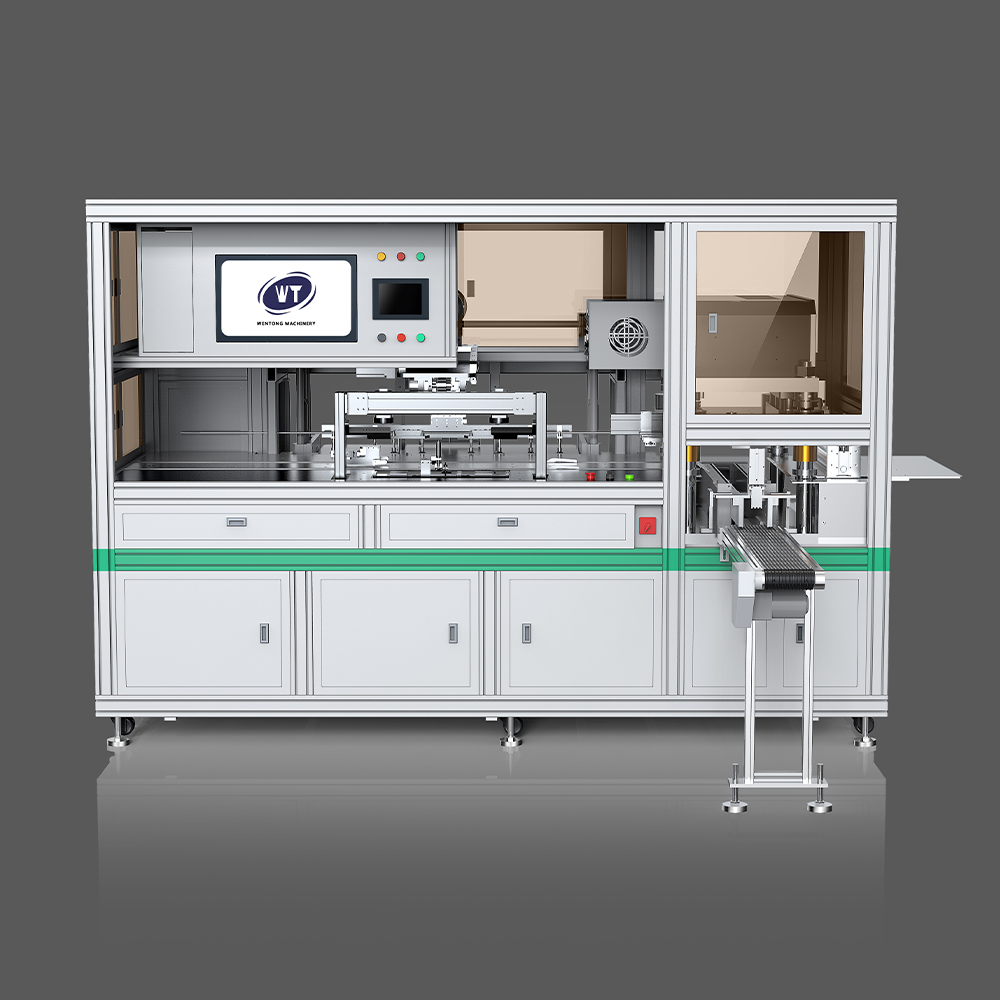
In the field of smart card manufacturing, punching is one of the key processes that determine the quality of the final product. A large laminated cardboard needs to be accurately separated into single small cards that meet international standards using a smart card punching machine. The size tolerance and processing accuracy requirements for high-security cards such as bank cards, ID cards, social security cards, and transportation cards used in daily life are extremely strict—the core mission of smart card punching machines is to continuously and stably achieve this accuracy goal in high-speed production.
The laminated large card materials are diverse, commonly including PVC, PETG, ABS, and PC, as well as paper cards and PVC/ABS mixed materials. The physical properties of different materials impose differentiated requirements on the punching process: PVC has good toughness but is sensitive to high temperatures, PETG is transparent and environmentally friendly but causes significant mold wear during punching, and mixed materials require more stable feeding control. The high-precision intelligent card punching machine intervenes from the feeding stage, smoothly feeding the large laminated card plates into the equipment through an automatic feeding system and entering the subsequent precise punching process.
Step-by-step precise feeding: Accurately feed the laminated cardboard into the punching area.
Smart card punching machines generally adopt a step-by-step precise feeding design, with a feeding accuracy of up to 0.01mm per step. This control accuracy means that when punching an 8-row or multi-row cardboard, the equipment can control the punching position of each small card within a micrometer-level deviation. Step feeding is intermittently driven by a servo system to feed the card base into the punching device at a set step distance. Compared with traditional continuous feeding methods, the biggest advantage of step-by-step feeding is that position detection and compensation can be performed at each step. When there is a slight deviation in the step distance due to material deformation or environmental factors, the system can adjust the next feed rate in real time to ensure the consistency of the entire board of cards.
Visual correction of layout: compensating for the punching deviation caused by laminated deformation
The lamination process itself can cause slight uneven expansion or contraction of PVC or PETG substrates due to uneven distribution of temperature and pressure. If this deformation is not compensated and directly enters the punching process, the finished card will have edge deviation, and in severe cases, it may even be unable to pass through the ATM card reader. The layout visual correction system is the core technology to solve this problem.
The visual correction system captures the reference marks on the large cardboard in real time through a high-resolution camera and dynamically calibrates the position of the board before punching. The three-axis servo correction control system can adjust the punching position in real time based on visual inspection results, achieving zero-deviation punching. The key to this technology lies in the word “real-time”—visual inspection, signal processing, and servo adjustment are all completed within milliseconds, and the fully closed-loop control process from detection to correction ensures the positional accuracy of each punched finished product. For large card bodies with significant laminated deformation, the punching equipment using visual correction technology can reduce the defect rate by more than 30% to 50% compared to traditional mechanical positioning punching machines.
Cutting without connecting points and overlapping edges: cutting off excess structures to improve separation yield
In the traditional card punching process, in order to keep the finished small card connected to the large frame for easy collection after punching, it is often necessary to design “nail holes” or “connection points” around the card—that is, to retain several subtle connection points between the small card and the frame. Although these connection points are convenient for receiving materials, they bring additional trouble to the subsequent separation process: end customers need extra manpower or equipment to break the cards off the frame, and the edges of the cards may be damaged during the breaking process.
The high-precision intelligent card punching machine adopts seamless and edge-free punching technology, which completely separates small cards from large substrates during punching, directly obtaining finished cards with smooth edges and no excess residue. The advantage of this process is not only that it eliminates a subsequent step, but more importantly, it completely eliminates quality issues such as edge burrs, uneven cuts, and even card bending and deformation that may occur during the process of point separation. For demanding financial smart cards, this technology directly improves the factory qualification rate of finished products.
Antistatic and chip protection: safety mechanism during the smart card punching process
Sensitivity analysis of smart cards to ESD
The chips embedded in smart cards are mostly manufactured using complementary metal oxide semiconductor (CMOS) technology, which is sensitive to electrostatic discharge electrodes. During the process of card punching and punching, the repeated contact and separation between equipment components and card materials will continuously generate static charges. The potential of this static electricity can reach thousands or even tens of thousands of volts. Once released through the chip pins, it can easily cause overheating and burning of the PN junction inside the chip, melting of metal interconnects, or breakdown of the oxide layer.
ESD can cause damage to chips in two forms: hard damage and soft damage. Hard damage can cause the chip to fail on the spot, manifested as the card being unable to read or write after punching or abnormal electrical performance; even more concealed is the soft damage—the chip has not been scrapped on the spot, but there are already trace defects inside, which may suddenly fail at some point during actual use. For the issuing institutions of banks, the latter may mean that the card malfunctions only after being issued to the user, resulting in serious economic and reputational losses.
ESD protection measures in a smart card punching machine
In high-precision smart card punching machines, ESD protection runs through every link from feeding to punching. The positioning device, guide rail, and feeding sliding parts cannot be directly made of materials such as nylon that are prone to static electricity. All components in the equipment that may come into contact with the card material should preferably be made of dissipative materials or treated with anti-static coatings. The feeding mechanism, cutting platform, and finished product collection device all require reliable grounding to ensure a safe discharge path for electrostatic charges, rather than discharging through sensitive chips.
For processes that require punching holes on the card (such as escape holes, positioning holes, etc.), the equipment uses technologies such as plasma anti-static or ion air rods to eliminate the accumulated static charges on the surface of the card before punching. Strict control of static electricity is particularly necessary for the punching of hollow holes in materials such as PETG—these holes are usually located adjacent to the chip area, and once an ESD event occurs, the threat to the chip is most direct.
The Value of ESD Protection in Practice
By deploying ESD protection solutions on production equipment, the defect rate caused by chip failure after card flushing can be reduced from over 1.5% to within 0.5%. For card printing companies that produce hundreds of thousands of cards daily, this difference means avoiding significant economic losses. In the field of financial smart card manufacturing, the industry generally requires that the card failure rate be controlled below 0.3%, and comprehensive ESD protection is one of the prerequisites to achieve this goal.
How can one reduce the scrap rate and improve the factory qualification rate through high-energy cutting power?
Technical advantages of 7.5kW servo cutting power system
Cutting force is one of the most direct factors affecting cutting quality. The hydraulic system used in traditional smart card punching machines can meet the requirements in terms of strength, but there are shortcomings in the flexibility of punching speed control, precision of punching stroke, and noise control. High-precision smart card punching machines typically use a 7.5kW servo motor as the punching power source.
The core advantages of the servo punching system are reflected in three aspects: firstly, the punching speed can be linearly adjusted according to the thickness of different materials—PVC is softer and can be punched at a lower speed to ensure smooth edges, while PETG is harder and requires an appropriate increase in punching speed and mold impact force; Secondly, the servo system can set different speed curves at different stages of the cutting stroke, achieving an optimized process of “fast forward, slow touch, fast rewind,” ensuring both efficiency and protection of the mold. Thirdly, the noise of servo cutting is much lower than that of hydraulic cutting, and the equipment maintenance cost is lower during long-term operation.
Based on a 7.5kW servo cutting power configuration, the punching speed can reach 9000 to 15000 small cards per hour (depending on the layout size). In the case of good mold condition, it takes two million consecutive punching cuts to sharpen the blade, and the long-term stable operation ability of the equipment has been fully verified by production practice.
Efficiency design of finished product collection and waste removal
The collection of finished products and waste disposal after punching are two important links that affect overall efficiency. The high-precision smart card punching machine provides two methods for collecting finished products based on the application scenarios of end customers: sequential collection and classified collection. Collect cards in order that are suitable for stacking the punched cards in the punching order, facilitating subsequent personalized or card-issuing processes; Collecting by category is suitable for scenarios where cards from different layout positions need to be classified and stored during multi-layout punching. The two modes can be flexibly switched according to the layout and customer needs, minimizing the manual card sorting workload in the subsequent process.
In terms of waste removal, the smart card punching machine is equipped with an automatic waste stacking and collection system. The frame waste generated by punching is automatically sent out by the waste conveyor belt to keep the punching area clean and avoid waste accumulation interfering with the feeding and positioning accuracy.
For customers with small batch order production needs, the smart card punching machine also has two practical features: sampling ability and fast order-changing ability. The design of the lightweight wooden mold allows the entire mold replacement process to be completed in just 2 to 3 minutes. The switch to a new order can be completed within 15 minutes of tool-change adjustment, and the order-switching time can be compressed to within 15 minutes. Whether it is providing samples for overseas customers for review or undertaking small-batch and multi-variety customized card orders, this feature significantly reduces the time cost of order switching, allowing business card manufacturers to have stronger flexibility and response speed in market competition.
Burrless cutting and finished product quality
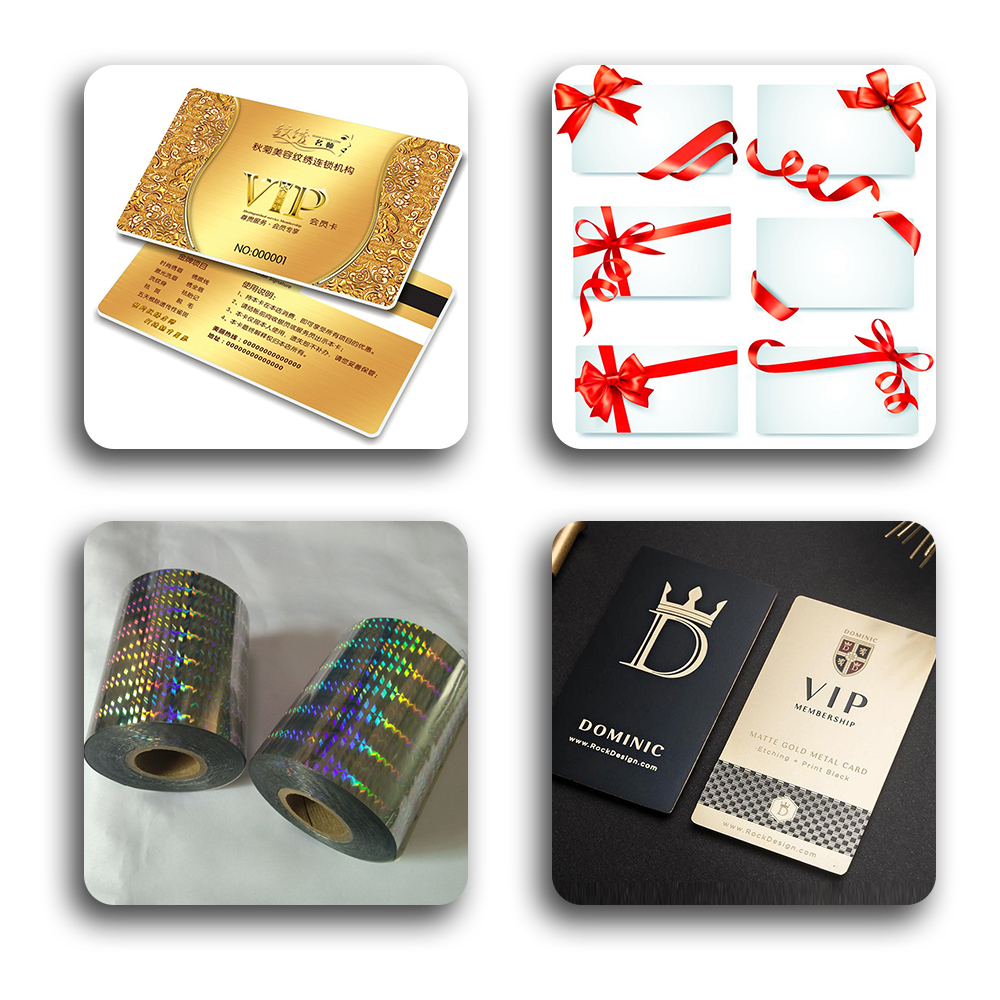
The precision of finished product position and the quality of card edge are two of the core competitiveness of intelligent card punching machines. The intelligent card punching machine using precision molds can ensure smooth and burr-free edges of the finished product. The finished product without burrs directly enters the back-end packaging process without the need for secondary trimming treatment. At the same time, the smart card punching machine can seamlessly connect printing and back-end packaging equipment, forming an integrated production line solution from printing to finished product packaging, further reducing the potential impact of cross-process handling and intermediate turnover on finished product quality.
conclusion
The core technological competitiveness of high-precision intelligent card punching machines comes from the synergistic effect of four dimensions: Visual correction of the layout controls the punching accuracy within ± 0.05 mm, adapting to the deformation compensation needs of multi-material laminated cards such as PVC, PETG, ABS, etc. The step-by-step precise feeding mechanism achieves a feed accuracy of 0.01 mm per step, fundamentally eliminating batch waste caused by feeding errors. The seamless and edge-free punching process completely eliminates the subsequent separation process, and the one-time punching without burrs on the edges improves the subsequent packaging efficiency by more than 30%; the 7.5 kW servo cutting power, combined with a comprehensive ESD protection system (grounding measures and plasma anti-static device), controls the defect rate caused by ESD damage to the chip within 0.5%.
According to the production practice in the global smart card punching field, the intelligent card punching machine using the above technology system can achieve a comprehensive product qualification rate of 99.8%. In the business card printing industry, for every 1% increase in the finished product qualification rate, a production line that produces 100000 cards per day can reduce approximately 30000 pieces of scrap losses per month. For India, which is promoting financial inclusion and digitalization and has become the third largest smart card consumer market in Asia, choosing high-precision smart card punching machines with the above core technological features is a prerequisite for reducing single-card manufacturing costs and enhancing the overall competitiveness of production lines, as the market expands with a compound annual growth rate of over 7%.