How does a smart card punching machine punch cards of different materials?
blog 2026-05-21 00:19:15 11
Adjustment skills of smart card punching machine in processing PET, PVC and coated paper
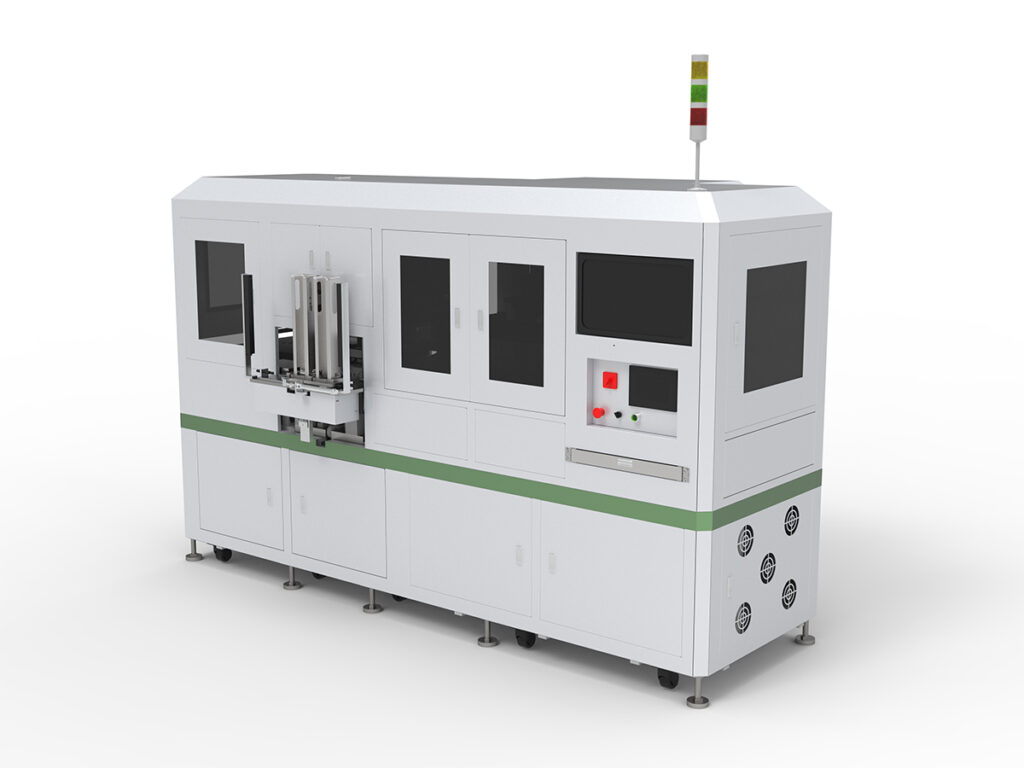
There are significant differences in hardness, ductility, and thermal sensitivity between PET, PVC, and coated paper. PET cards have high hardness (Shore hardness about D75), and require wear-resistant cutting edges and concentrated punching force during die-cutting; PVC is relatively soft (with a Shore hardness of about A65~A75), and it is prone to producing burrs during die-cutting; The surface of coated paper has a coating, and the fiber structure is tight. When die-cutting, a sharp blade is required to avoid coating tearing. The smart card punching machine matches material characteristics by replacing molds with different hardness and blade angles: when processing PVC or PET with a thickness of 0.3mm or more, it is recommended to use hardware molds, and the lifespan of the metal punch can reach more than 2 million times; When processing coated paper or regular business card paper, a wooden laser knife mold (blade angle 52 °) can be used, and the mold change time only takes 2-3 minutes.
The tuning parameters also need to be adjusted in a targeted manner. For hard plastic cards, a 7.5KW servo motor with punching power can provide stable high torque output. It is recommended to set the punching speed to 60-80 times/minute to avoid blade breakage caused by excessive speed. For coated paper, the punching speed can be increased to 120-150 times/minute, while reducing the punching stroke margin (recommended to be set to 0.2mm) to protect the blade. The smart card punching machine adopts a step-by-step precise feeding method, combined with a high-resolution camera visual correction positioning system. When the material is changed, simply select the preset material formula on the operation interface, and the equipment can automatically adjust the feeding step distance and punching pressure, greatly reducing manual machine adjustment time.
It is worth noting that the demand for die-cutting of mixed materials (such as PET composite paper) is gradually increasing in overseas markets. At this point, the strategy of “slow cutting with a hard knife and layered punching” needs to be adopted: the first punching penetrates the PET layer, and the second punching only cuts through the paper layer. The step-by-step feeding structure of the smart card punching machine allows for different punching depths to be set in the same production sequence, coupled with a 7.5KW servo power to achieve two consecutive actions, effectively avoiding material delamination or edge burrs. Through the above tool selection and parameter adjustment, the same equipment can complete the order switching from hard PVC to high-end paper within 15 minutes.
How to solve the problem of sticking and deformation when punching plastic cards?
Plastic cards sticking to the blade during die-cutting are usually caused by two reasons: one is that the material softens due to heat and physically adheres to the blade wall (commonly seen in PVC, with a softening point of about 80 ℃); The second reason is that electrostatic adsorption causes small debris to adhere to the blade. Experimental data shows that when the cutting speed exceeds 100 times per minute, the blade temperature can rise to 55-65 ℃. At this time, the friction coefficient of ordinary PVC increases from 0.3 to over 0.7, and the probability of sticking to the blade increases by four times. The smart card punching machine solves this problem by integrating anti-static layer and fluorine release coating on the blade spring pad: the spring pad is placed on both sides of the cutting line, pushing the material away from the blade at the moment of punching, and the fluorine coating controls the peeling force below 10N/m. Even if the cutting speed of 0.2mm film reaches 130 times/minute, the sticking rate of the blade is less than 0.3%.
For the problem of sticking caused by static electricity, the smart card punching machine is equipped with ion fans (air volume of 120CFM, ion balance of ≤± 15V) as standard in the feeding channel and receiving area, which can eliminate static electricity on the material surface up to 20kV. In addition, the equipment adopts an anti-static rubber tabletop (surface resistance of 10 ⁶ -10 ⁹ Ω), combined with an automatic waste removal system, and uses negative pressure suction to timely discharge small waste from the die-cutting area, avoiding waste rebounding or sticking to the edge of the finished product card. Actual production data shows that in dry workshops with relative humidity below 40% (such as winter in northern India), after installing anti-static systems, the scrap rate of PVC cards caused by electrostatic knife sticking decreased from 4.2% to less than 0.5%.
The deformation problem of cards is mainly caused by uneven distribution of punching forces or internal stress release of materials. The visual correction and positioning system of the smart card punching machine can recognize large cards with laminated deformation (deformation amount ≤ 2mm), and adjust the die-cutting position through servo motors to maintain the complete contour of the finished card. At the same time, the step-by-step feeding structure avoids the cumulative errors caused by stretching in traditional drum punching: the feeding accuracy of each step is ± 0.1mm, and the finished product card after punching has no nail holes or connection points, and the card edge is flat and free of burrs. For hard cards with a thickness of 0.8mm or more, it is recommended to use a two-step process of “pre pressing+punching” – first use low pressure (about 30% punching force) to press out the marks, release the internal stress of the material, and then complete full thickness punching. This method can reduce the deformation of the card by more than 70%.
How can printing factories achieve flexible switching of multiple orders through a smart card punching machine
Printing factories in India and Southeast Asia generally face challenges of small order quantities and frequent material changes: they may produce 5000 bank cards (PVC material) in one morning, followed by 2000 anime cards (coated paper), and 3000 playing cards (high-end paper) in the afternoon. Traditional punching equipment requires 1-2 hours to change molds, resulting in a high idle rate of the equipment. The smart card punching machine compresses the order switching time to within 15 minutes through a modular mold system and a fast machine adjustment process. The specific operations include: releasing the quick clamp of the wooden lightweight mold (taking 30 seconds), replacing the entire laser knife mold (2-3 minutes), calling the pre stored formula on the touch screen (1 minute), and finally visually correcting and verifying it with test waste (about 10 minutes).
The core advantage of a mixed material production line lies in “no distinction of materials, unified accuracy”. Whether the material is hard PVC (thickness 0.3-0.8mm) or flexible coated paper (0.15-0.3mm), the layout visual correction and positioning system of the smart card punching machine can stably achieve a punching accuracy of ± 0.1mm. For complex cards that require multiple punch cuts (such as alien game cards and star cards with rounded corners), the equipment adopts a step-by-step precise feeding method: the first punch cuts the shape, the second punch cuts the positioning hole, and the finished product position accuracy is controlled within 0.05mm, without the need for nail holes and connecting points. The card edge quality can be directly used for finished product packaging. This feature is particularly crucial for printing factories to undertake high-end orders such as bank cards and transportation cards.
In addition, the finished product collection system of the smart card punching machine provides two flexible modes: sequential collection (suitable for small batch sampling, stacking cards in production order for easy traceability) and classified collection (suitable for large batch orders, automatically classifying cards at the same position on the same page through card slots to reduce manual sorting time). The device can also be connected to the backend product packaging overall solution, such as directly docking with automatic box packing machines or heat shrink packaging machines, to achieve a fully automatic production line from punching to finished product packaging. Taking a card printing factory in Pune, India as an example, after introducing this equipment, the daily order switching frequency increased from 2 to 6 times, the overall equipment efficiency (OEE) increased from 54% to 82%, and the total cost of mold replacement decreased by 35%.
conclusion
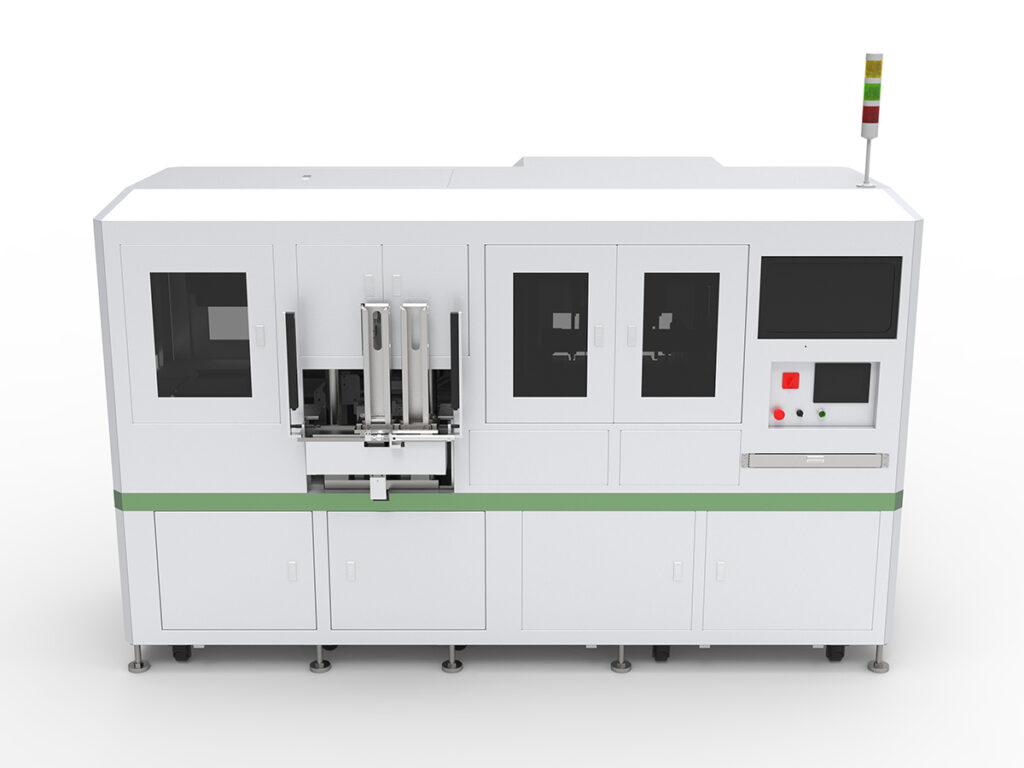
Through systematic testing and actual production data statistics of three core materials (PET/PVC/coated paper), the technical indicators of the intelligent card punching machine in card production are as follows: for hard plastics (Shore hardness ≥ D70), a hardware mold with a hardness of 59HRC is selected, the punching speed is 60-80 times/minute, and the mold life is over 2 million times; For PVC, the use of integrated anti-static layer blade spring pads reduces the adhesion rate to below 0.3%, and with the help of ion fans, the static waste rate can be reduced from 4.2% to 0.5%; For coated paper, the punching speed can reach 150 times/minute, and the finished product has a burr free edge rate of 99.7%. In terms of flexible production, the time for changing wooden molds is 2-3 minutes, and the complete order switching takes about 15 minutes. The visual correction positioning accuracy is ± 0.1mm, and the maximum material layout that can be processed is 305 × 460mm. The equipment supports two card receiving methods: sequential or classified, and can be connected to the back-end packaging equipment. The above data are based on the measured results of 7.5KW servo power, step-by-step precise feeding, and waste automatic cleaning system. These conclusions indicate that a fully equipped smart card punching machine can fully meet the flexible switching needs of printing factories on mixed material production lines for multiple orders, especially suitable for overseas card production markets such as India with small batches, multiple varieties, and multiple materials.