Choosing the Right Smart Card Punching Machine for You?
blog 2026-05-19 18:32:47 8
The production of various card products like bank cards, SIM cards, game cards, Poker cards, Anime cards, star cards etc. in the modern card production cannot be separated from the precise execution of Punching and Cutting processes. The selection of the smart card punching machine as the core equipment of the smart card production line directly affects the production efficiency, product quality and long-term profitability of the enterprise. This device is widely used in the business of card, smart card, business card, game card, playing card, anime card, bank card, star card and other cards. It can achieve accurate feeding, automatic collection and waste discharge, and is also applicable to die-cutting processing of paper, film, soft magnetic film and other materials. In this article, we will discuss three dimensions: capacity demand assessment, hidden cost analysis and return on investment calculation to provide technical selection references for card manufacturers in India market.
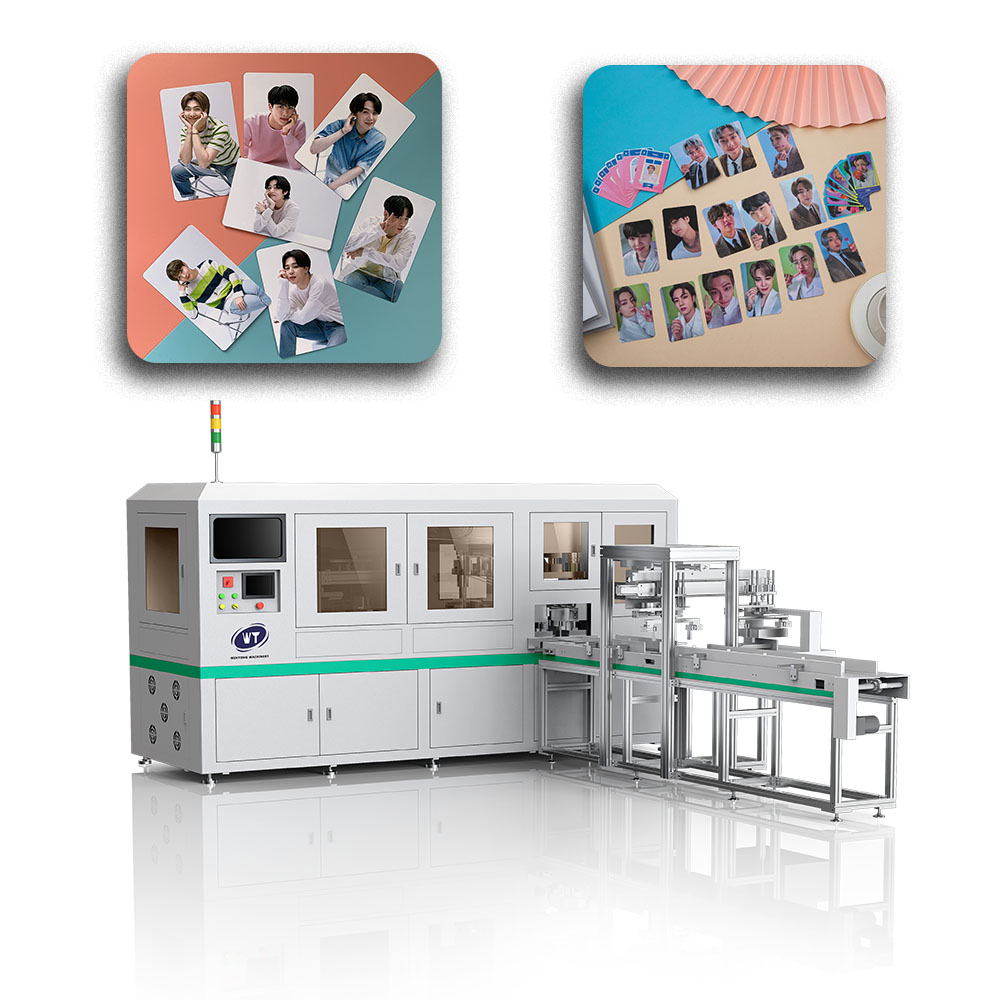
Technical benchmarking of manual, semi-automatic and fully automatic intelligent card punching machines to determine your production capacity requirements.
The selection of smart card punching machines is primarily based on the production capacity. It is suitable for small scale or temporary production of manual card punching machine. Cutting life is over 100000 times Cutting thickness is ≤0.76mm Accuracy ±0.03mm. Manual models are generally equipped with widened bases, and cast handles and built-in positioning windows are electroplated to prevent deviation. It is suitable for the production of small batch products such as cards, business cards, PVC cards, etc. However, the manual equipment depends on manual operation to complete positioning and feeding, and the output of a single operation is limited, which cannot meet the turnover requirements of medium and high batch orders.
Semi-automatic card punch machine offers a compromise between speed and manual control. The equipment is PLC controlled and has automatic feeding, sensor positioning and hydraulic punching. An average machine model can produce 8,000 to 12,000 sheets per hour. The semi-automatic intelligent card punching machine can be operated by one person only, and the punching quality is stable with servo or hydraulic up and down control, and the punching accuracy is ±0.05mm to ±0.10mm. This configuration is suitable for medium batch production occasions, especially for printing enterprises with frequent order changes, greatly reducing manual burden, and securing product quality.
The fully automatic intelligent card punching machine is developed for high frequency and large scale production demand. The high-end full automatic model adopts PLC+CCD visual alignment and servo motor drag control architecture, integrating automatic feeding, CCD visual positioning, servo punching, automatic card collection and automatic waste collection. Depending on the layout configuration, the cutting speed can be 12000-30000 sheets/hr. The overall equipment effectiveness (OEE) can be up to 85%. The fully automatic equipment is equipped with high-sensitivity positioning sensors and imported high-precision ball screw modules, and the positioning deviation is less than 0.02mm in long-term operation. The modular design allows for quick mould changes, which can be reduced to less than 10 minutes, while traditional equipment usually takes more than 30 minutes. The full automation of configuration can be used to maximise the production capacity and to reduce the unit production costs for card factories working in one 8 hours shift and producing more than 30000 cards per day.
Hidden costs analysis What maintenance investments should you be aware of when buying punching equipment, aside from the total cost of the equipment?
Smart card punching machine procurement decision, the total price of equipment is only a part of explicit cost. A complete picture of the total cost of ownership requires detailed analysis of the following hidden costs.
Cost of wear and replacement of moulds is one of the most important hidden investments in punching equipments. The wear of the mould is strongly dependent on the hardness, thickness and frequency of stamping of the material being processed and the mould is in direct contact with the card material. In the manufacturing production process, the cost of mould maintenance generally accounts for 15% to 25% of the company’s cost. The survey reveals that 62% of the companies shorten the mould life by more than 30% because of improper maintenance methods. The mould must be checked regularly, every 3 to 6 months, and replaced in time when obvious wear is found. The mould of smart card punching machine is made by precision machining technology, single cutting life over 100,000 times. But there will be heavy mould replacement costs in long-term high frequency operation. Moreover, the cutting power settings will also affect the cost of energy consumption. The 7.5KW servo drive can realise good energy efficiency performance while guaranteeing cutting force, but for other types of cutting power such as hydraulic systems, energy consumption and maintenance cost should be taken into consideration.
Mould change and shutdown should not be ignored in terms of loss of efficiency. For example, a company changes the mould 10 times a month, each time 3 hours, the hourly production capacity value is 2000 yuan, then the monthly loss of production capacity caused by mould change can reach 60,000 yuan, not to mention other costs such as rework and maintenance. The adjustment time of the smart card traditional punching machine in the replacement of spare parts often takes up 30%~40% of the overall working hours. In contrast, the equipment with fast mould changing function uses a light mould design, which can shorten the mould changing time to 2 to 3 minutes, and the die-cutting products don’t need nail holes and connection points. The complete order switching can be completed in just 15 minutes which considerably minimises the loss of down time.
Implicit costs are also important, including maintenance and training of the operators. The equipment availability can be improved to over 98% and the failure rates and downtime can be effectively reduced by implementing a preventive maintenance program and regularly cleaning moulds, lubricating guide rails and inspecting sensors. The operator should be trained in equipment debugging, mould maintenance and parameter optimisation and this should be factored into the long term cost. A comprehensive cost analysis of the smart card punching machines should consider purchase, maintenance, moulds, labour, energy, factory space and training in order to properly evaluate the cost of ownership of the equipment in general.
How to Calculate Return of Investment (ROI) of Equipment The Increased Cutting Speed in Real Profit Converted
When calculating the investment return rate of smart card punching machine, it is necessary to convert the performance index of the equipment into measurable economic benefits. The simple formula for calculating ROI is net income divided by total cost of ownership multiplied by 100. The total investment can be balanced with the cumulative benefits of capacity improvement, labour cost saving and reduced defect rate to reach the net profit stage of the smart card punching machine. The depreciation period of general equipment is 5-10 years, and the ROI of high-value investment is 1-2 years.
The real working data shows that the mainstream full automatic intelligent card punching machine can achieve the production speed of 6000 to 12000 sheets per hour, and some high-end models can achieve the maximum production capacity of 15000 to 30000 sheets per hour by optimising the mould and the servo system. For example, consider a certain communication equipment manufacturer. It manufactures 4FF specification SIM cards by fully automatic SIM card punching machine.The single shift (8 hours) output is 48000 cards.The defect rate is less than 0.2%. The direct benefits of increasing the production capacity can be calculated quantitatively by multiplying the increase in the unit time output by the product unit price and the number of annual production days. Another smart card factory has introduced high-speed punching equipment to achieve 24 hours of continuous production, with an annual output of more than 100 million cards and comprehensive equipment efficiency up to 90%. The fully automatic equipment has dual cartridge card collection system that automatically switches when the cartridges are full. It is combined with two modes of collecting the finished products in order or classification. This increases not only the output efficiency, but also optimises the subsequent packaging process.
The cost savings also have a solid basis in clear calculation. The installation of a preventive maintenance plan can improve equipment availability to greater than 98%. The optimised process parameters can increase the production efficiency by 15 to 20 percent. The application of the visual positioning correction system greatly reduces the defect rate of the deformation of materials. The CCD visual alignment die-cutting machine is equipped with a high magnification camera, which can achieve real-time online accurate grasping and recognition control, and the punching accuracy of incoming products can be controlled within ±0.2mm. The UVW three-axis linkage platform is equipped with two sets of CCD visual alignment, which can provide the alignment system with real-time feedback of the current coordinate values, so that the UVW platform can automatically adjust to the specified position. The great improvement in punching accuracy leads to a great improvement in material utilisation and an effective compression of rework cost.
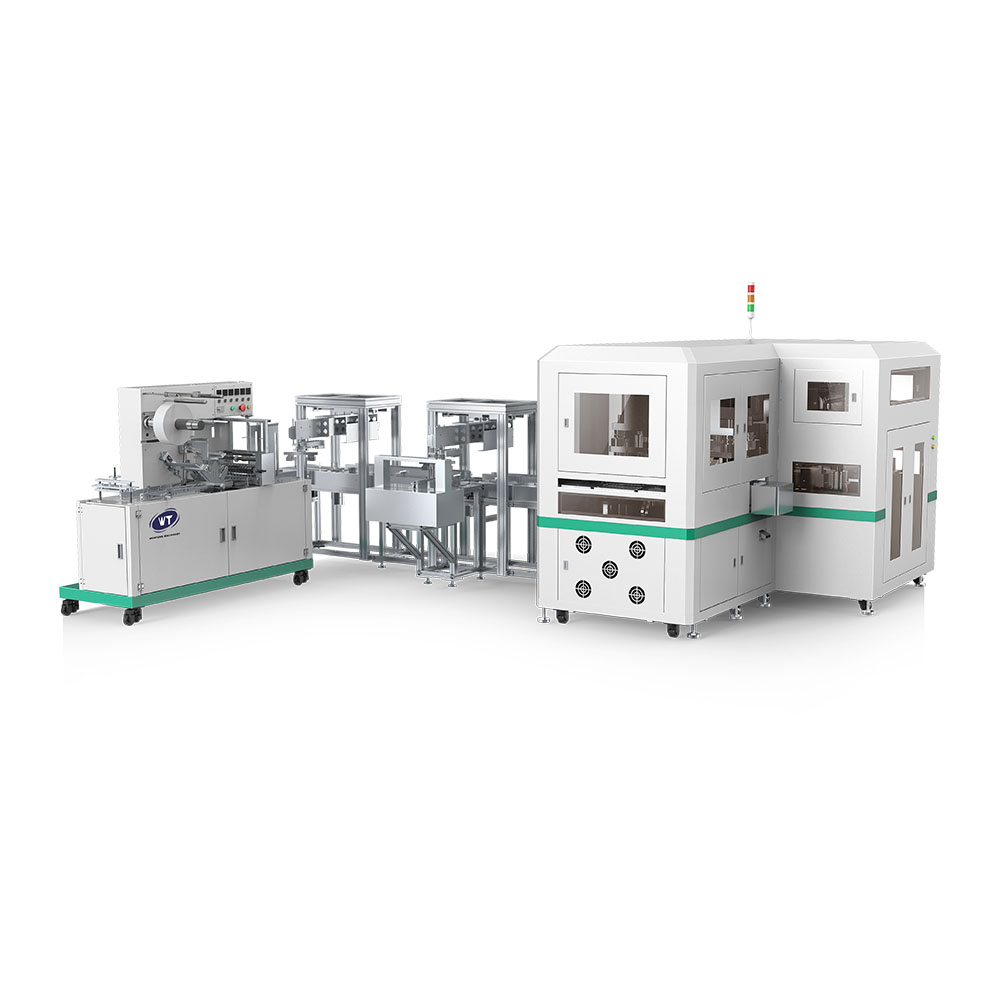
For the fully automatic intelligent card punching machine, its investment payback period can be generally controlled within 1-2 years, which is based on three main aspects, including the growth of capacity, reduction of manual cost and decrease of defect rate. For the printing manufacturers, whose core business is to produce banks, social security cards and large-scale game cards, fully automatic configuration will bring obvious long-term comprehensive benefits. In the production scenario of card printing factories, business card processors and other multi variety small batch orders, the semi-automatic or multi-functional smart card punching machine with fast mould change functions (15 minute order switching, 2-3 minute mould change) can achieve better cost recovery performance with higher order switching flexibility. The final choice should be made based on the daily production targets, order structure, product accuracy needs and available budget. From the three groups of manual, semi-automatic and fully automatic solutions, the most appropriate technical way for production needs should be chosen.