Three technical indicators that determine the cutting accuracy of smart card punching machines
blog 2026-05-17 22:45:21 11
In the production process of card products such as smart cards, bank cards, and game cards, the smart card punching machine is the core equipment that determines the quality of the finished product. Whether the edge of the card is smooth and flat, and whether the size is precise and in place, directly affects the aesthetics and user experience of the end product. For printing companies pursuing high-standard business card printing quality, understanding the technical principles of punching and cutting accuracy is the foundation for selecting suitable equipment and optimizing production processes. This article will analyze the key technical indicators that determine the punching accuracy of smart card punching machines from three dimensions: the collaborative work of the servo drive and photoelectric positioning system, the scientific maintenance of punching molds, and the integration capability of intelligent production lines.
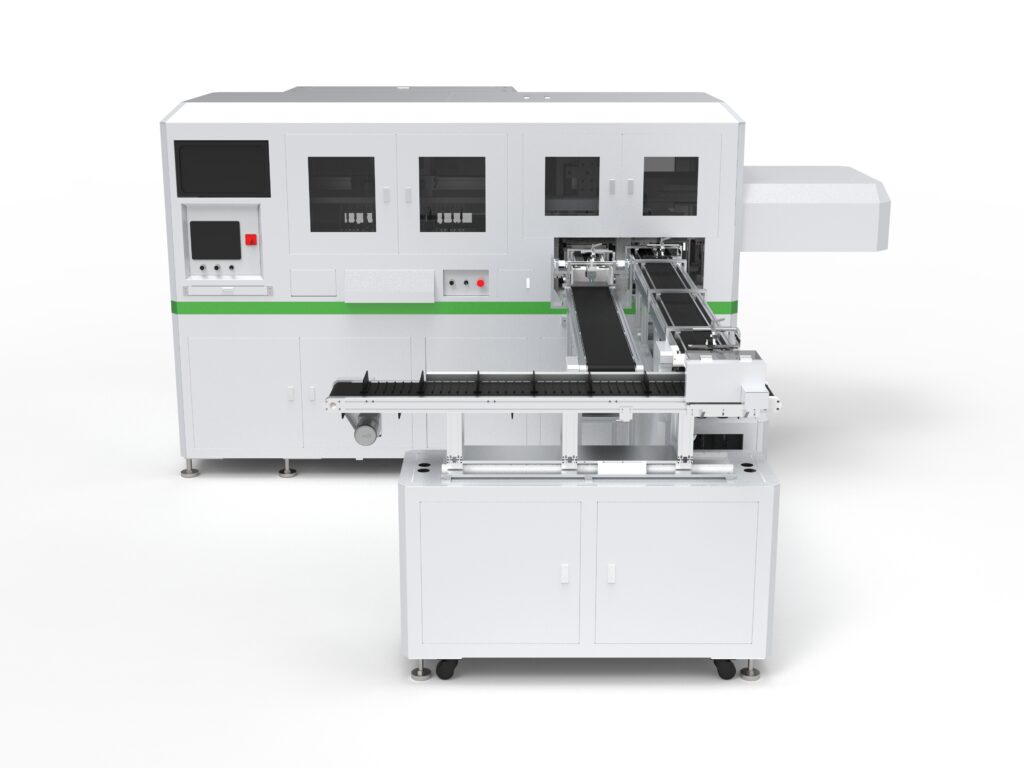
Precise Cooperation between Servo Drive and Optoelectronic Positioning System in Smart Cards Punching Machine
The servo drive system is the power core of the intelligent card punching machine. Unlike traditional mechanical transmission methods, servo drive adopts a closed-loop control structure and is equipped with high-resolution encoders, which can provide real-time feedback on position and velocity information, forming a nested control of a current loop, velocity loop, and position loop. In card die-cutting applications, servo drives can achieve micrometer-level positioning accuracy—the repeated positioning accuracy of a certain type of servo die-cutting machine can reach 0.001 mm, and the punching depth error is controlled within ± 0.005 mm. For smart card punching machines, this level of accuracy means that each card can meet the ISO7816 international standard size requirements, and the edge neatness meets the quality expectations of high-end printed products.
The photoelectric positioning system is the “eye” of the smart card punching machine. In the process of step-by-step precise feeding, CCD image sensors or photoelectric eyes track the positioning marks (MARK points) on the incoming materials in real time, record the deviation displacement of the feeding through the visual detection system, and feed back the numerical value to the control system. Taking typical high-precision die-cutting equipment as an example, the die-cutting accuracy can reach ± 0.1 mm after adopting the three light electric eye tracking and positioning technologies. When the photoelectric positioning and servo drive work together, the visual system sends the deviation value to the PLC, which determines the correction distance for the next feeding through calculation and then drives the servo motor to operate at the corresponding angle in pulse form. This real-time closed-loop process of “detection, calculation, correction” effectively eliminates the error caused by material deviation and equipment thermal deformation and ensures that the punching position of each of the first mock examinations is consistent during mass production.
How to extend the service life of punching molds through scientific maintenance and keep the edges free of burrs
The punching die is a component in the intelligent card punching machine that directly acts on the material, and its state directly determines whether there are burrs on the edge of the card. In production practice, the lifespan of molds is influenced by multiple factors, such as design and manufacturing, assembly quality, usage conditions, and maintenance. Industry data shows that the lifespan of high-quality PC molds can reach over 500000 times, the lifespan of sharpening edges can reach 2 million times, and the product qualification rate can reach 99.8%. But if not maintained properly, the burrs will increase with the increase of punching times. Once the technical requirements are exceeded, the mold will need to be repaired or replaced, and the production cost will also increase.
The key to scientific maintenance lies in regular sharpening and proper usage standards. In terms of avoiding pilling during die-cutting, straight-line knives have more advantages than horizontal-line knives. From the perspective of service life, short-bladed knives are more durable than high-bladed knives. Enterprises should choose the appropriate blade type based on the material characteristics when producing cards made of different materials such as smart cards, business cards, and anime cards. In addition, the convenience of mold changing operations directly affects the service life of molds and workshop efficiency. Modern smart card punching machines commonly adopt a fast mold changing design, and the mold changing time for lightweight wooden molds can be controlled within 2 to 3 minutes. This design allows the equipment to handle small batch orders and fast order switching with ease. Keeping the mold clean, regularly checking the wear of the cutting edge, and setting the punching pressure reasonably are the basic operations to extend the life of the mold and maintain the edge of the card without burrs. The return on standardized maintenance is also considerable—if the lifespan of all molds is increased by 10%, product costs can be reduced by more than 1%.
Intelligent production line integration: automation connection between drilling equipment and the preceding and succeeding processes
No matter how good the performance of a single smart card punching machine is, if it cannot be smoothly coordinated with the front and rear processes, its efficiency will be greatly reduced. The core indicators of the integration capability of intelligent production lines are reflected in three levels: precise feeding, automatic collection, and waste removal.
Accurate feeding is the starting point of punching accuracy. The smart card punching machine adopts a step-by-step precise feeding mechanism, and the position of each feeding step is jointly controlled by a servo system and photoelectric positioning to ensure that the material enters the punching station at the accurate position. Automatic collection is the guarantee of the output end. There are two ways to collect finished products: collecting in order is suitable for mass production on assembly lines, and stacking cards in order is convenient for subsequent packaging. Collecting by category is aimed at small batch orders of multiple varieties, and the equipment can automatically identify and classify finished products into different material boxes based on preset conditions. The removal of waste materials cannot be ignored either. In fully automatic operation, the waste generated by punching is promptly cleaned by the automatic waste discharge system to avoid the accumulation of waste and its impact on subsequent punching accuracy. A certain patented technology clearly records that after cutting the waste during the punching process, the waste will automatically detach from the lower mold due to gravity, thereby achieving automatic cleaning of the waste.
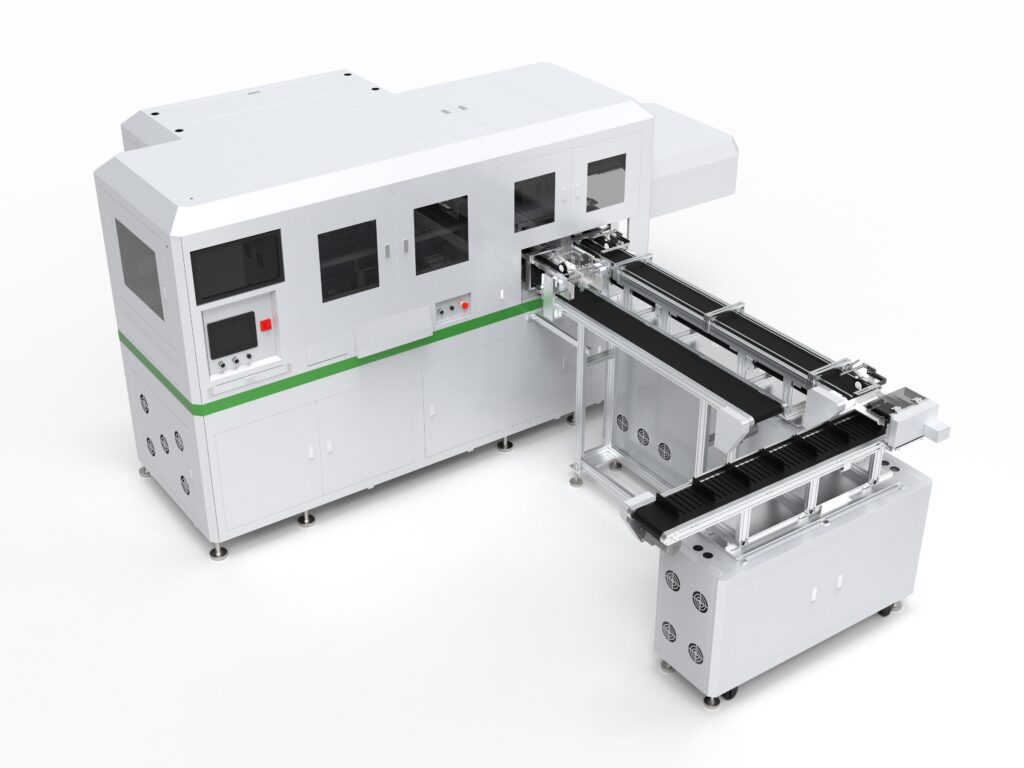
For printing companies, another core value of intelligent production lines is the ability to quickly change molds and switch orders. The smart card punching machine can complete die-cutting without nailing or connecting points, and switching and adjusting orders only takes about 15 minutes. These characteristics make the equipment extremely suitable for flexible production modes such as small batch orders, sample production, and multi-variety mixed line processing. In the overall solution of connecting backend product packaging, the equipment can seamlessly integrate with automatic packaging machines to form an integrated production line from punching to finished product packaging. According to industry data, the maximum production capacity of automated production line equipment can reach 22000 cards per hour (based on 3 × 10 pages). For card printing enterprises with efficiency as their core competitiveness, this set of data intuitively illustrates the actual benefits of intelligent integration.
Conclusion
Based on the above three technical indicators, the core value of the intelligent card punching machine in high-precision card production has been fully reflected. In terms of driving and positioning, servo drive achieves micrometer-level positioning accuracy (repeated positioning accuracy of 0.001 mm and punching depth error within ± 0.005 mm), combined with the photoelectric positioning system’s ± 0.1 mm die-cutting accuracy, forming a comprehensive accuracy guarantee. In terms of mold maintenance, through standardized maintenance and rapid mold replacement design, the mold life can reach 2 million sharpening times, with a product qualification rate of 99.8% and no burrs on the edges. In terms of production line integration, through precise feeding, automatic collection, waste removal, and rapid mold-changing mechanisms, the equipment can support 15-minute order switching, with a maximum production capacity of 22000 cards per hour, and can complete die-cutting without nailing or connecting points.
These three technical indicators together form the performance foundation of the smart card punching machine. For printing enterprises that focus on high-quality card production, understanding and paying attention to these indicators is an important prerequisite for ensuring the long-term efficient and stable operation of the production line.