How does the smart card punching machine determine the yield rate of chip bank cards?
blog 2026-05-15 19:55:20 12
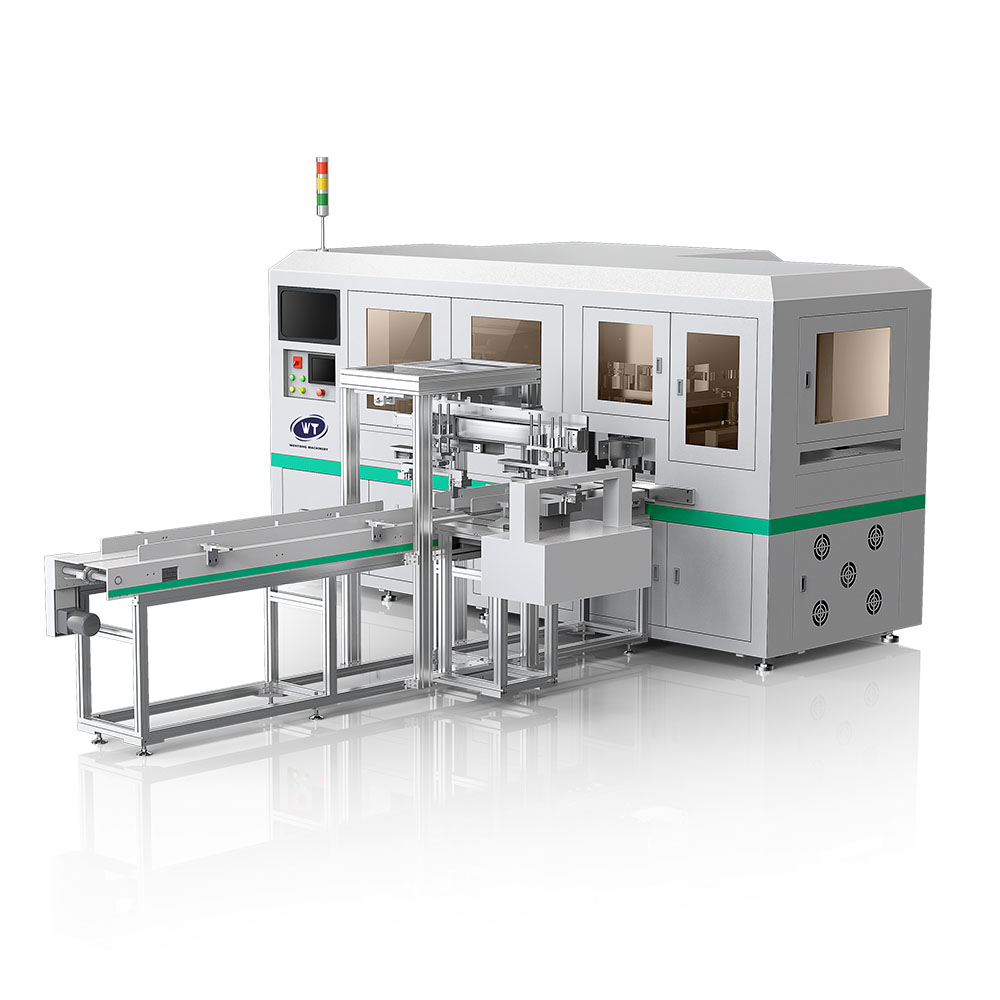
What is the precision standard for smart card punching from SIM card to financial IC card?
The core difference between smart card punching machines in the production of SIM cards and financial IC cards lies not in the punching principle itself, but in the requirement of accuracy level. As a communication identity recognition carrier, SIM cards also require precise punching processes, but financial IC cards directly carry the security of users’ funds, which puts forward more stringent standards for the physical size, edge quality, and integrity of the chip area of the card. The ISO/IEC 7810 standard developed by the International Organization for Standardization specifies the physical characteristics of identification cards, while ISO/IEC 7816 provides detailed definitions of the location and functional parameters of contact smart card chips. Any dimensional deviation generated during the punching process may result in card sticking or poor contact when inserting the card into ATM or POS terminals.
In actual production, high-precision molds are required for punching the card blank, and the blade inclination angle is usually controlled within the range of 15 ° to 20 ° to ensure smooth edges and no burrs. The dimensional tolerance must be strictly controlled within ± 0.1mm. Taking the fully automatic punching process for SIM card production as an example, the equipment needs to complete the complete steps of card loading, double sheet detection, multi station punching, OCR detection, and finished product card receiving in sequence. In addition to the equally strict requirements for punching accuracy, the production of financial IC cards also adds special considerations for chip avoidance and embedded structure protection. A high-performance smart card punching machine must be able to flexibly switch between the production needs of these two types of products – it can meet the high-speed mass production of SIM cards and the demanding requirements of precision and reliability for financial IC cards, which is precisely reflected in the device’s step-by-step feeding accuracy and visual positioning capability.
How can the smart card punching machine achieve secondary visual positioning in the production of high anti-counterfeiting bank cards?
Secondary visual positioning is a key technical threshold for smart card punching machines in the production of high anti-counterfeiting bank cards. When the laminated large PVC, PET or paper plates are fed into the punching equipment, the materials themselves may deform to a certain extent due to temperature and pressure changes. Traditional mechanical positioning or color code sensors often have difficulty meeting the positioning accuracy requirements in this situation. In contrast, visual positioning systems based on CCD cameras can obtain the position and orientation information of incoming products, and accurately match them with preset cutting lines through image processing algorithms. The advantage of this positioning method is that it can not only simultaneously align the X-axis and Y-axis directions, but also effectively filter out the interference of material deformation or edge cutting errors on positioning accuracy. The Mark point positioning repeatability can reach ± 0.02mm.
In actual production, the secondary visual positioning of smart card punching machines usually adopts a working mechanism of “pre inspection+feedback”. The sheet metal first undergoes a positioning recognition on the feeding platform, and the camera collects real-time position information of the printed pattern or preset positioning mark. The control system compares the collected data with the expected position of the punching mold and completes the initial calibration. Subsequently, before the punching station, the equipment undergoes a secondary positioning confirmation to ensure that each punch falls on the preset accurate position. This dual positioning mechanism significantly reduces the proportion of defective cards caused by material lamination deformation. In the production of high security products such as bank cards, the vision system can also detect the accurate position of the chip area, automatically avoid the chip area during the punching process, and prevent chip damage caused by punching offset. A mature visual alignment system can stably control the cutting accuracy of the entire machine within ± 0.1mm, which is a crucial guarantee for the size and chip position tolerances required by the ISO standard for bank cards.
How to avoid chip delamination and damage during punching by optimizing the punching process?
The delamination and damage of chip cards during the punching process is one of the core technical challenges faced by the business card manufacturing industry. Smart cards are composed of multiple layers of materials. When these material layers are subjected to punching stress, if the punching force distribution is improper or the punching gap is unreasonable, interlayer peeling will occur at the interface of each material layer, causing delamination of the card body and even structural damage to the chip area. From the perspective of the mechanical principles of stamping forming, the stamping process goes through three stages in sequence: elastic deformation, plastic deformation, and fracture separation. The stress distribution in each stage directly affects the quality of the final cross-section. In order to obtain a smooth section without burrs and delamination after punching, modern smart card punching machines generally use precision punching technology, which sets a very small punching gap to minimize the collapse angle, reduce burrs, and narrow the fracture zone range, thereby obtaining the maximum area of bright strip.
The precise control of the power system also plays a key role in avoiding delamination and damage. The 7.5KW servo drive system, combined with imported high-precision ball screw modules, can dynamically adjust the punching speed and pressure curve according to the material thickness (usually 0.2mm to 1.2mm) and hardness characteristics. Unlike the rigid impact method of traditional mechanical punching machines, the servo system can accurately control the force output at different stages of the punching stroke, cutting in at a gentle speed when the blade contacts the material, and providing stable cutting force when the section separates, thereby minimizing the shear stress between different material layers. In addition, step-by-step feeding is also an effective means to alleviate the problem of layering. By decomposing the punching process of large sheet metal into multiple steps, each step only completes punching in a specific area. Compared to one-time overall punching, it can significantly reduce the transmission range of impact stress generated by a single punching between material layers. Cooperate with the chip avoidance structure on the punching die to further avoid unnecessary mechanical stress on the chip during the punching process. In actual production, after adopting the above optimized process, the card delamination and chip damage rate caused by punching can be significantly reduced from the industry’s conventional level to below one in ten thousand.
Avoiding pitfalls in B2B procurement: 3 technical indicators to pay attention to when choosing high security level business card printing equipment
For business card manufacturers targeting international markets such as India, choosing a high security intelligent card punching machine that meets their production needs requires a focus on the following three core technical indicators.
The first indicator is visual positioning accuracy. As mentioned earlier, in the production of high security bank cards, secondary visual positioning is the core link to ensure the qualification rate of finished products. When purchasing, attention should be paid to the camera resolution, positioning algorithm, and overall alignment repeatability of the equipment vision system. The combination of high-resolution industrial cameras and mature image processing algorithms can achieve a Mark point positioning repeatability accuracy of ± 0.02mm, while effectively dealing with non ideal working conditions such as material deformation. Smart card punching equipment with OCR visual recognition function has obvious advantages in stability and accuracy, with a production capacity of over 20000 cards per hour.
The second indicator is the punching power and mold management system. The power system determines the adaptability of the equipment to different material thicknesses and hardness. Equipped with a 7.5KW high-power servo motor and high-precision ball screw guide rail, it can ensure stable output of cutting force and accurately control cutting depth and speed. In terms of mold management, attention should be paid to two core parameters: mold replacement efficiency and mold lifespan. The modular design of the smart card punching machine adopts lightweight wooden molds, which can shorten the mold changing time to 2 to 3 minutes, far lower than the traditional equipment’s more than 30 minutes. The material and processing accuracy of the mold blade also directly affect its service life – the dimensional accuracy of high-quality etching blade molds can be maintained at ± 0.03mm, and the flatness of the blade edge is controlled at around ± 0.01mm.
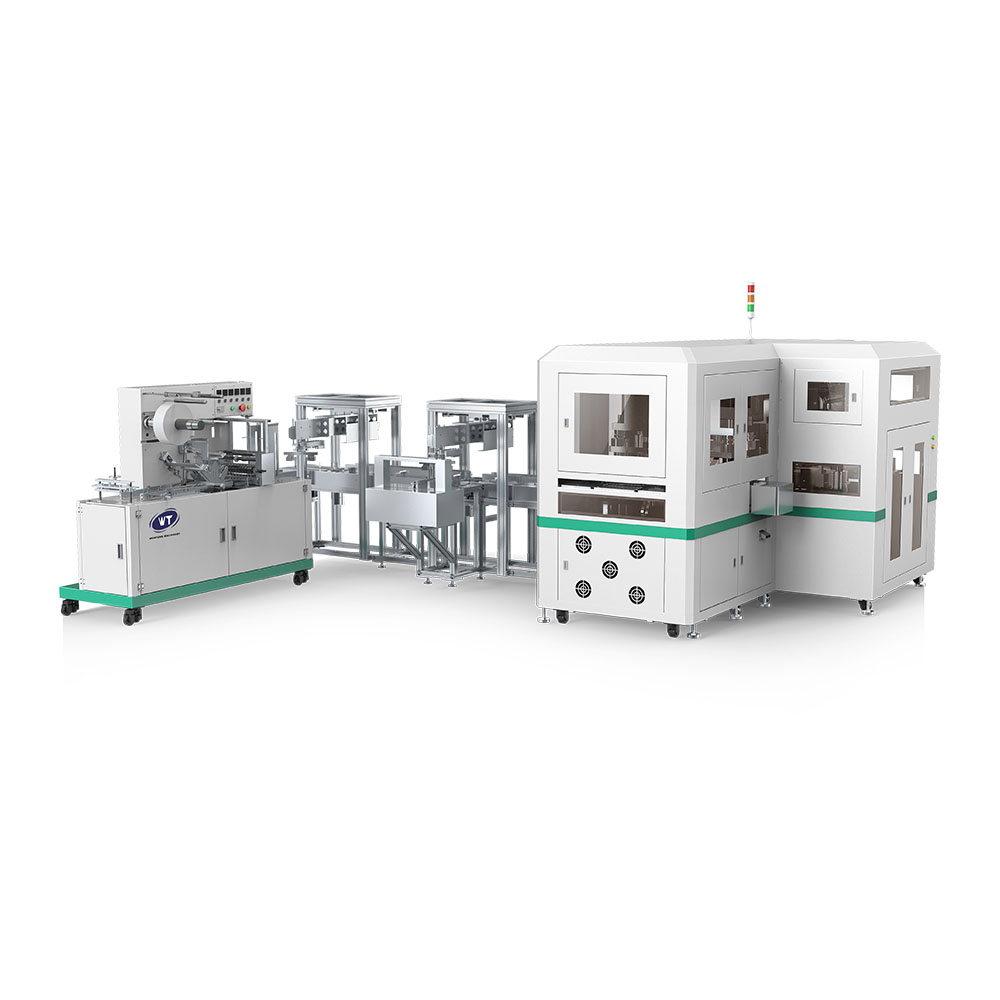
The third indicator is the ability to collect and connect finished products. High end smart card punching machines typically offer two methods for collecting finished products: sequential collection facilitates direct connection between subsequent packaging processes, while classified collection is suitable for refined production management that sorts by defect level or production batch. The equipment should also have the ability to connect to the backend product packaging overall solution, directly connecting the punched cards to the packaging, testing or packaging assembly line, reducing human intervention and potential damage risks in the transfer process. For the printing industry and card production enterprises, the ability to quickly change orders cannot be ignored – controlling the machine adjustment time within 15 minutes can greatly improve the production flexibility and overall equipment efficiency of small batch and multi variety orders.
Conclusion
Based on the above technical analysis, the impact of smart card punching machines on the yield rate of chip bank cards can be verified through specific data. Based on the dimensional tolerance of ± 0.1mm required by ISO 7816 standard, under the conditions of secondary visual positioning and precision punching process optimization, the punching accuracy of the equipment can be stably controlled within ± 0.1mm, and the defect rate can be reduced to within 3%. With mature comprehensive process management, the overall yield rate of smart card production can reach over 92%. Based on an annual production scale of 20 million bank cards, a 3% defect rate corresponds to 600000 scrapped cards. Assuming a comprehensive cost of $2 per card, the annual direct economic loss caused by defects in the punching process is estimated to be as high as $1.2 million. This means that every one percentage point increase in the yield rate in the three core indicators of visual positioning accuracy, punching power stability, and mold management efficiency can be converted into cost savings of hundreds of thousands of dollars. The Indian financial market is at a critical stage of rapid migration towards EMV payment technology, and the demand for smart card production continues to grow. For business card printing enterprises, choosing a high-performance intelligent card punching machine that can achieve precise feeding, automatic collection, and waste removal is not only the key to ensuring card yield, but also the core strategic choice to establish quality control advantages in fierce market competition.