How does the smart card punching machine ensure financial grade processing accuracy?
blog 2026-05-14 19:55:41 10
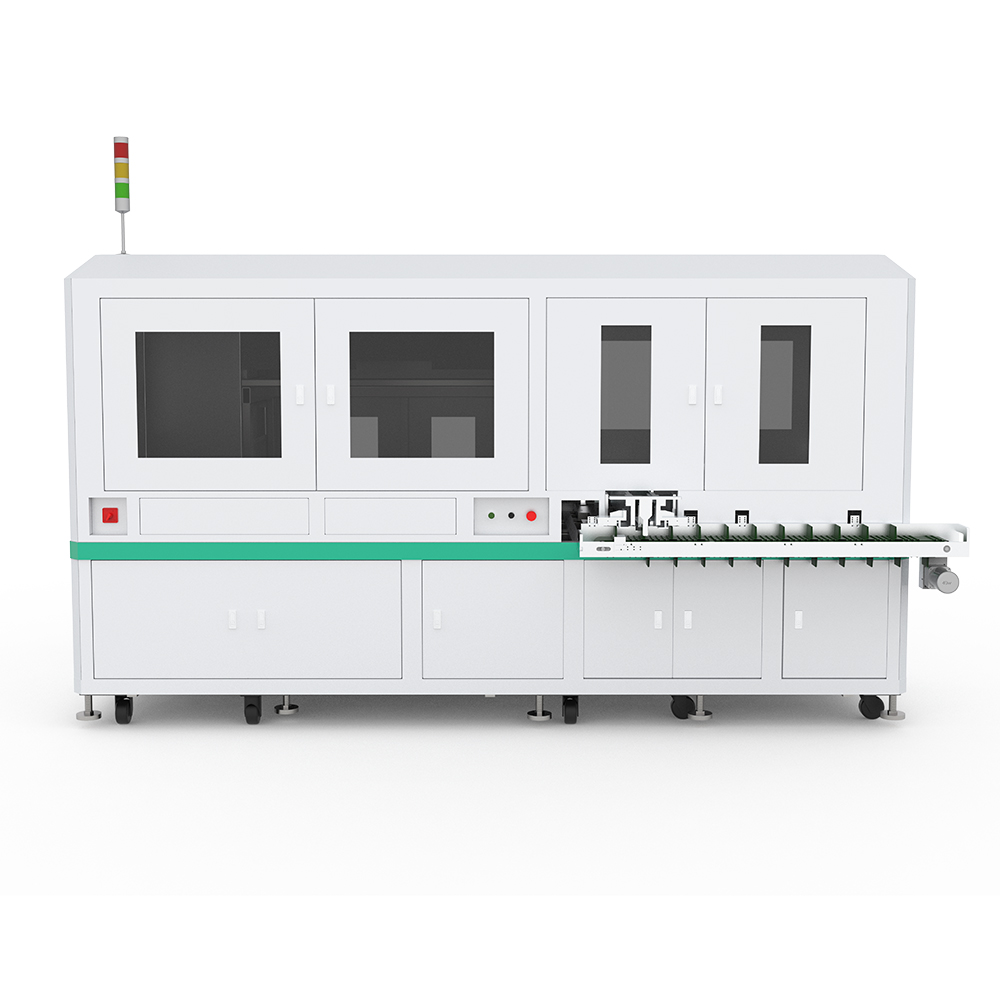
Bank card baseband punching process that meets international standards
The physical size of bank cards is not arbitrarily designed but strictly defined by the ISO/IEC 7810 standard developed by the International Organization for Standardization. According to this standard, the size of ID-1 format bank cards is 85.60 mm × 53.98 mm, with a fillet radius of 2.88-3.48 mm and a thickness of approximately 0.76 mm. The size and position of electronic chips are also clearly defined: the chip height is 0.71 inches, the width is 0.51 inches, 0.34 inches from the left edge of the card, and 1 inch from the top. Any card that exceeds the allowable deviation range may not be able to be read properly by POS terminals or ATMs, so the punching and cutting process of the card base must achieve extremely high geometric accuracy.
The smart card punching machine is responsible for the core task of accurately separating large card bases into individual finished cards in the bank card base punching process. The traditional card punching method relies on manual feeding and positioning, with a production capacity of only about 5000 sheets per hour, and the accuracy is greatly affected by the experience of the operators. Modern smart card punching machines control positioning accuracy between ± 0.05 mm and ± 0.1 mm through the coordination of servo feeding systems and precision molds. The machining capability at this level of precision is the fundamental guarantee to ensure that every bank card meets the dimensional tolerance requirements of ISO 7810. The equipment is widely used in the production of various card products such as bank cards, smart cards, business cards, game cards, playing cards, anime cards, star cards, etc., achieving one-stop molding from rolls or sheets to finished cards.
For specific stamping process parameters, the precision requirements for mold fillet processing are very strict for bank card baseband stamping that meets international standards. According to the ISO 7810 standard, ID-1 cards must have four rounded corners. The tolerance range of the radius is only ± 0.30 mm. The high-precision mold of the smart card punching machine is made of sturdy hard alloy material, and through CNC wire cutting processing, the forming accuracy of the rounded corners can reach ± 0.05 mm, far exceeding the upper limit required by the standard. The cutting edge should also be smooth and free of burrs. Burrs can cause the reader to get stuck. The 7.5KW servo power supply system can provide sufficient shear force to punch thick card substrates (such as 0.76mm PVC or PET materials) while maintaining uniform stamping speed. Therefore, the cutting surface is vertical, the edges are smooth, and there is no need for subsequent polishing processes. It can directly enter the packaging or personalization process.
How to reduce the loss of expensive chip substrates through automated punching technology
Chip substrate is one of the most expensive raw materials in smart card production. In the process of card splicing and punching, if there is a slight deviation in the feeding position, only some punching points in the entire card base may fall into the effective position, and the substrate in other positions will be completely scrapped. The smart card punching machine solves this loss problem through two core technologies: layout visual correction positioning and step-by-step precise feeding.
CCD visual correction positioning is a key means to reduce substrate loss. The smart card punching machine is equipped with a high-resolution industrial camera above the feeding platform to collect real-time positioning marks on the card base, convert pixel coordinates into mechanical coordinates, and then achieve real-time position compensation through the UVW alignment platform. When the card gene undergoes slight deformation during hot pressing, lamination, printing, or transportation, the visual system can automatically recognize the offset and correct the punching position, thereby avoiding whole-page scrap caused by inaccurate positioning. Taking standard bank card splicing (usually 3 × 6 or 4 × 7 arrays) as an example, the positioning defect rate under traditional punching technology is about 1.5%-2.0%, while smart card punching machines equipped with visual correction can reduce the defect rate to below 0.3%. Based on the production of 20000 bank cards per day, this means that more than 300 card-base materials can be saved per day. Calculated at a cost of approximately $0.08-0.12 per chip base material, a single device can save nearly $10000 in material costs for the enterprise annually.
At the same time, the step-by-step precise feeding mechanism enables the equipment to accurately feed the set length of substrate in a step-by-step manner during each cutting cycle. Coupled with high-sensitivity positioning sensors and imported high-precision ball screw modules, it ensures that the repeated positioning accuracy of each feeding step is stable at the sub-millimeter level. This segmented feeding method is more adaptable to the deformation fluctuations of card-based materials compared to continuous feeding, greatly reducing material waste caused by feeding errors. This level of accuracy is particularly important for punching cards containing embedded chip modules—the solder pad position of the chip module has strict tolerance requirements relative to the card edge, and excessive feeding errors can cause the chip position to shift after punching, making it impossible to align the write contact points during subsequent personalization processes.
Multi-station integration: an integrated financial card solution from positioning to punching
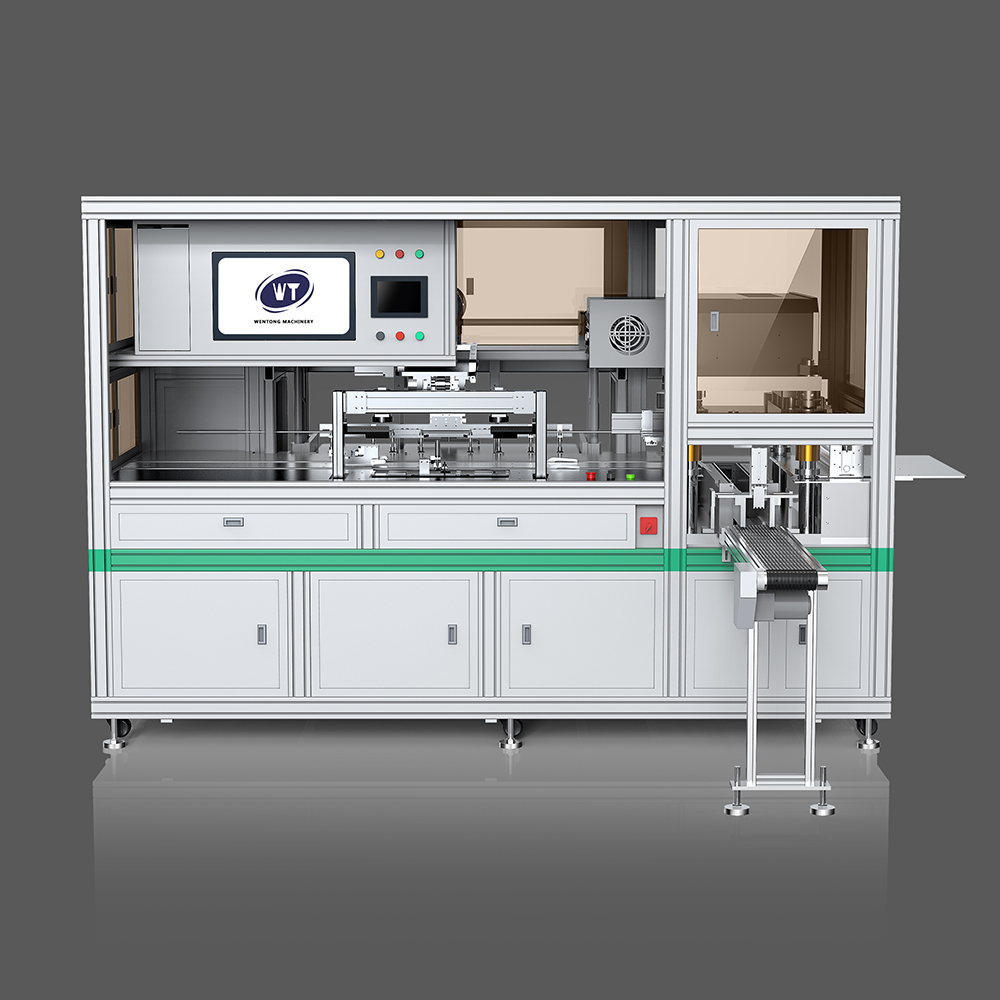
Modern smart card punching machines integrate multiple workstations on the same machine, achieving full process automation from feeding, positioning, and punching to finished product collection. A typical complete process includes card loading, dual card inspection, multi-station punching, OCR finished product inspection, qualified product receiving, and unqualified product disposal. The core value of multi-station design lies in significantly reducing order switching time. The traditional card punching method requires dismantling multiple sets of molds and debugging them one by one when producing cards of different specifications, and the time for changing lines usually exceeds 30 minutes. The intelligent card-punching machine with modular design, with its lightweight wooden mold structure and standardized mold interface, can shorten the mold-changing time to 2-3 minutes, and the order switching and machine adjustment can be completed in only 15 minutes. This feature makes it particularly suitable for serving the diverse and small-batch order demands in the printing industry.
Another major advantage of multi-station integration is the ability to simultaneously punch complex shapes and multiple functional holes. For smart cards, in addition to external punching, it is often necessary to punch chip slots (i.e., holes) at designated locations. In traditional craftsmanship, shape punching and punching are usually divided into two processes, requiring two positioning steps, which can easily result in secondary positioning errors. The smart card punching machine completes the shape punching and chip slot punching at the same station or multiple stations synchronously, eliminating the positional deviation caused by secondary clamping. Specifically, the device can perform both external cutting and internal punching actions in one stamping stroke—the mold integrates an external punching blade and an internal punching punch, and the relative position of the two is guaranteed by wire cutting processing, with an accuracy of ± 0.02 mm. The size of the chip slot from the card edge produced in this way fully meets the tolerance requirements of the contact position of the contact-type smart card module in the ISO 7816 standard.
In terms of finished product collection, the smart card punching machine provides two flexible collection methods: collecting cards in order, which is suitable for production scenarios where the punched cards need to maintain the original arrangement order. For example, when producing continuously numbered membership cards or personalized customized game cards, collecting cards in order can ensure the convenience of subsequent code packaging. Collecting by category, the qualified and defective products are separated and sent to different magazines through an automatic sorting system. After the magazines are full, they can automatically switch without stopping the machine. The switching between these two modes can be completed through the human-machine interface without the need to replace any mechanical parts. The cutting power of the equipment is driven by a 7.5 kW servo motor, which has the advantages of fast speed, stable power, and low noise. The cutting speed can be adjusted according to different material thicknesses (paper, film, soft magnetic film, etc.). For example, by connecting an automatic counting packaging machine through a conveyor belt, cards can be automatically packed into bags or boxes according to the predetermined quantity, forming a fully automated production line.
Conclusion
Through the above technical analysis, it can be seen that modern smart card punching machines have formed a complete technical closed loop in financial-grade precision control. From a data perspective, the Indian smart card market is expected to continue expanding at a compound annual growth rate of 7.40% between 2025 and 2034, with the financial sector being one of the most important drivers of growth. Under this market trend, the daily production capacity of a batch of smart card punching machines can reach 18000-22000 sheets, with a positioning accuracy of ± 0.1 mm. Higher precision models can even improve the alignment accuracy to ± 0.05 mm. Through visual correction and positioning of the layout, the punching defect rate can be controlled at an extremely low level, effectively reducing the loss of expensive chip substrates; through step-by-step precise feeding and multi-station integrated design, the time for switching and adjusting orders has been reduced from over 30 minutes for traditional equipment to less than 15 minutes, and the time for changing molds has been further shortened to 2-3 minutes. In addition, the dual mode selection of sequential and classified collection in the finished product collection process provides a flexible automation solution for printing industry customers to cope with multivariety and small batch orders. The smart card punching machine is gradually becoming a reliable technical guarantee in the production process of bank cards and other high-precision cards by organically integrating technical elements such as visual positioning, servo power, modular molds, and multi-station integration. For printing enterprises, introducing punching and cutting equipment with the above technical characteristics can not only meet the certification requirements of international bank card organizations (such as Visa and Mastercard) for card physical size and chip position but also achieve significant investment returns by reducing substrate loss and shortening order replacement time in the context of continuously rising raw material costs. Taking a medium-sized printing factory with an annual output of 5 million bank cards as an example, after adopting a smart card punching machine with visual correction and multi-station integration functions, the annual material cost is saved by about 25000 US dollars, the downtime for changing lines is reduced by about 200 hours, and the comprehensive production efficiency is improved by more than 30%. The equipment investment payback period is usually between 12 and 18 months. These data fully demonstrate that financial grade processing accuracy is no longer just a pursuit of technical indicators but can be directly quantified as production cost advantages and market competitiveness.