Visual positioning system and PLC control technology for smart card punching machines
blog 2026-05-13 19:47:52 8
How to achieve drilling accuracy of ± 0.05 mm in a CCD image alignment system
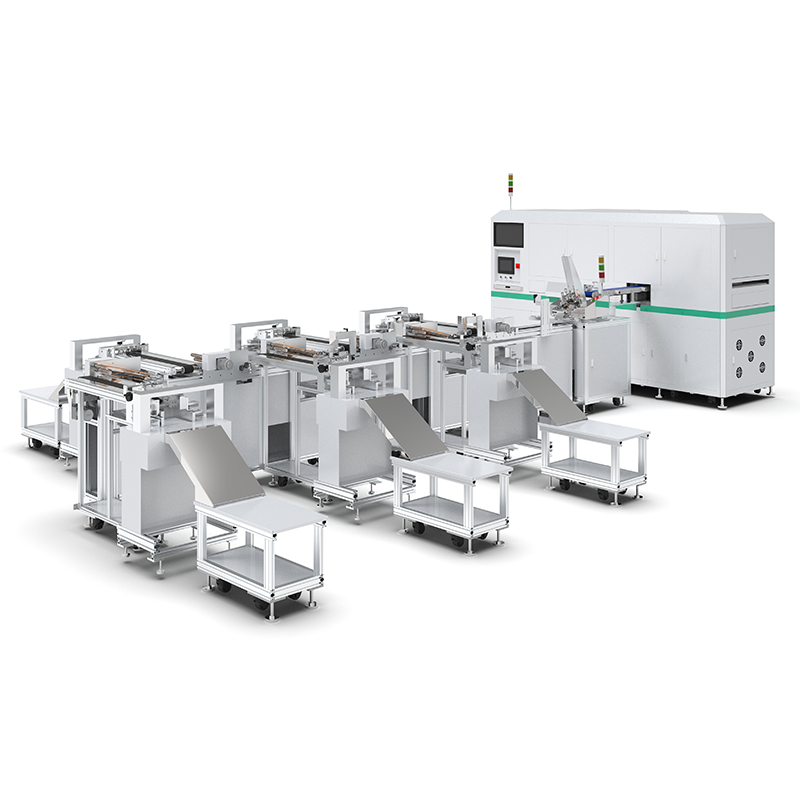
In the core technology system of the smart card punching machine, the CCD image alignment system is the decisive module for achieving a drilling accuracy of ± 0.05 mm. The working principle of this system can be summarized as four closed-loop steps: “photography, calculation, correction, execution”: the high-resolution industrial camera built into the device quickly captures images of the printing targets or feature edges on the card material. After grayscale processing, edge detection, and template matching, the image is processed by a dedicated image processing card to calculate the X, Y, and angular offsets between the current product position and the reference position and then drives a high-precision alignment platform to complete micrometer-level displacement compensation. The entire alignment cycle time is usually controlled within 400 milliseconds to ensure that each card can obtain independent position correction during the high-speed continuous cutting process of the equipment.
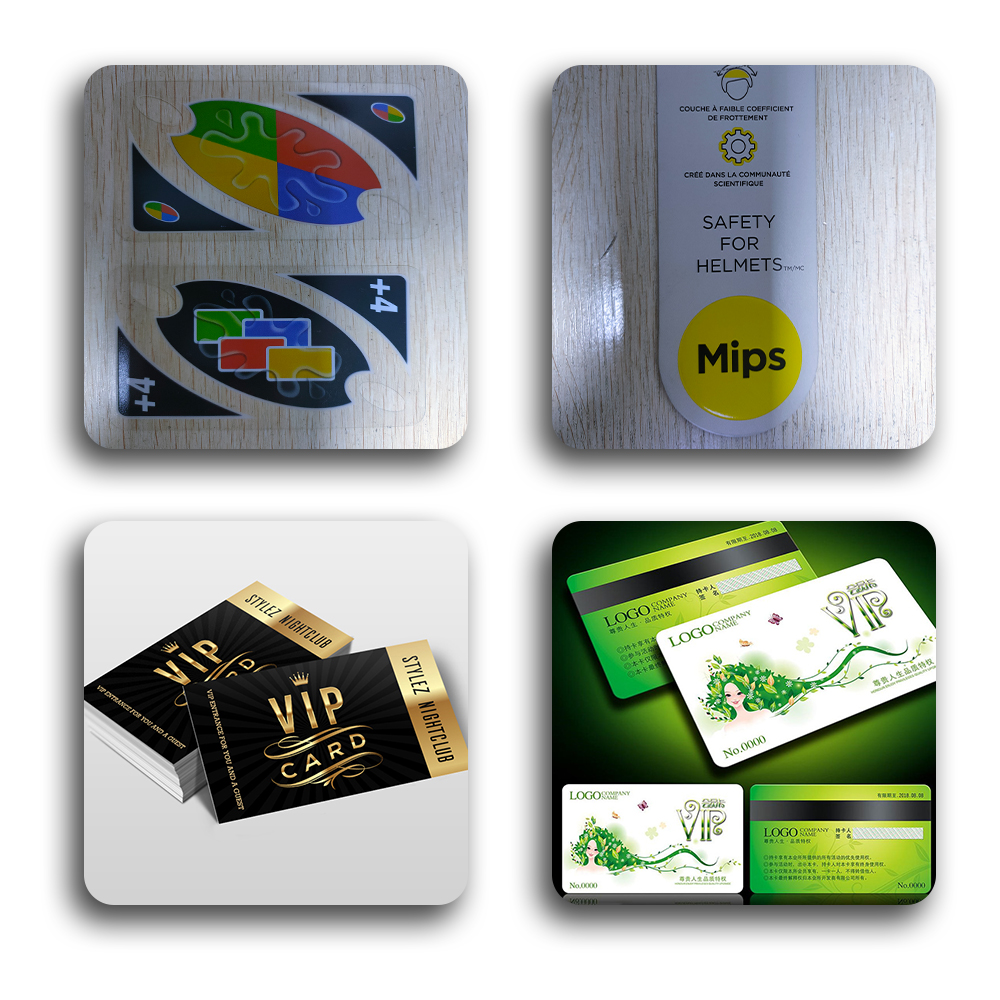
For the mass production of card products, a repeat positioning accuracy of ± 0.05 mm has important engineering significance. Taking bank cards, social security cards, and other products containing chips or magnetic strips as an example, if the punching position deviation exceeds 0.1 mm, it may cause the chip to deviate from the edge of the card or the magnetic strip reading and writing area to shift, resulting in the entire batch of cards being scrapped. The smart card punching machine has completely solved this problem through the CCD visual positioning system and can stably produce high-precision cards such as bank cards, credit cards, membership cards, star cards, etc. that meet ISO standard sizes. It is worth emphasizing that the system realizes a direct die-cutting process without the need for nail holes and connecting points—traditional die-cutting methods rely on pre-punched positioning holes, which not only wastes materials but also increases the process. The visual positioning system directly recognizes the target of the printed pattern itself, eliminating the dependence on nail holes and connecting points from the source. Actual production data shows that the intelligent card punching machine using CCD visual positioning can control the defect rate below 0.3% in the processing of large quantities of consistent products such as business cards, game cards, playing cards, anime cards, etc. The finished product has smooth edges without burrs, and the card edge quality is significantly better than mechanical positioning methods.
In addition to high-precision positioning, the CCD system of the smart card punching machine also endows the equipment with strong material adaptability. Whether it is copperplate paper, PVC, PET film, or soft magnetic film, as long as there are identifiable printing features or specially reserved targets on the material surface, the system can work stably. For small batch sampling orders, this feature is particularly important—users do not need to make specialized positioning molds for sampling. They only need to output the designed card layout file directly onto the material, and the smart card punching machine can automatically complete punching through visual alignment. This “what you see is what you get” work mode enables printing companies to quickly respond to customer sampling needs, reducing the sample production cycle from days to hours. Combining lightweight wooden molds with 2-3 minutes of mold-changing time, the equipment demonstrates great flexibility in scenarios involving multiple varieties and small batch orders.
Stability advantages of servo motor drive in high-speed card feeding
The servo motor drive system is the power foundation for the intelligent card punching machine to achieve a “short, flat, and fast” production rhythm. Modern smart card cutting machines have fully adopted high-power servo motors to replace traditional hydraulic or pneumatic cutting mechanisms, with cutting power generally configured as 7.5 kW servo motors. The direct advantages brought by this configuration include fast and infinitely adjustable punching speed. For different materials with a thickness range of 0.3 mm to 1.2 mm (such as thin paper, thick cards, soft magnetic sheets, etc.), operators can directly set the most suitable punching speed and punching stroke on the touch screen, avoiding material deformation due to over-punching or efficiency reduction due to slow speed. Compared with hydraulic systems, servo drives also have significant advantages such as low noise, low energy consumption, and low maintenance costs. In a continuous 12-hour full-load production scenario, power consumption can be reduced by about 35%.
In the card-feeding process, intelligent card-punching machines commonly adopt a structure driven by dual servo motors and imported high-precision ball screw modules. The core value of this design lies in the following: On the one hand, two servo motors control the movement of the X-axis (horizontal) and Y-axis (vertical), respectively, achieving step-by-step precise feeding—the equipment can automatically step to the second row position after punching the first row of cards, with a step distance accurate to 0.01 mm, completely without manual intervention; On the other hand, due to the extremely high repeatability positioning accuracy of the ball screw module itself, coupled with the feedback of the closed-loop encoder of the servo motor, the feeding process is almost unaffected by the external dimensions of the card or material warping. According to actual test data, after 100,000 consecutive feedings, the cumulative error of the step position is still less than 0.05 mm, which is crucial for the production of products such as playing cards and game cards with layout.
The “short, flat, and fast” characteristics of smart card punching machines are particularly reflected in order switching and small batch production scenarios. The equipment adopts a lightweight wooden mold design, and the weight of the entire mold is only about 30% of traditional metal molds. Operators can complete the disassembly of old molds and installation of new molds in 2-3 minutes. Combined with the parameter memory function of the servo system, the cutting speed, step distance, cutting stroke, and other parameters of each order can be saved as a recipe. When the same order is produced again, the operator only needs to call the recipe and replace the mold, and the entire machine adjustment time only takes about 15 minutes. For printing companies that undertake a large number of small batch orders, this characteristic directly translates into an improvement in equipment utilization: traditional equipment often requires 1-2 hours of downtime adjustment when switching orders, while smart card punching machines compress nonproduction time to the extreme, allowing the equipment to complete 5-6 different orders in one working day. In addition, the equipment is also suitable for die-cutting of small packaging boxes. Its precise feeding and high-precision punching capabilities can handle the crease lines and irregular contours of packaging boxes, further expanding the business scope of printing enterprises.
Digital management: Real-time monitoring of production data and fault diagnosis
The digital management capability of the smart card punching machine relies on a high-performance PLC control system, achieving a leap from single-machine automation to whole-line intelligence. At the equipment level, PLC is responsible for coordinating the collaborative work of the CCD vision system, servo drive system, feeding system, and receiving system. Through the touchscreen human-machine interface, operators can view key data such as current cutting speed, cumulative output, remaining material length, and waste bin status in real time. More advanced is that the PLC system has a complete self-diagnostic function: when the equipment detects situations such as heavy trucks (two cards overlapped and sent in), card failure, material fracture, or abnormal cutting, the system will issue a shutdown command within 0.1 seconds and display specific alarm codes and troubleshooting suggestions on the screen at the same time. This proactive fault diagnosis mechanism significantly reduces the technical threshold for operators. According to the production records of a printing enterprise, the introduction of a smart card punching machine has shortened the average maintenance response time caused by downtime due to faults from 45 minutes to less than 10 minutes.
In terms of data interconnection, modern smart card cutting machines are usually equipped with industrial Ethernet interfaces, supporting mainstream communication protocols such as Modbus TCP and OPC UA. This means that the equipment can upload real-time production data to workshop-level manufacturing execution systems (MES) or enterprise resource planning (ERP) systems. Managers can view the operational status, current order completion progress, overall equipment efficiency (OEE), and other indicators of each device on their office computers or even mobile phones. When the device issues a fault alarm, the system can also automatically notify designated maintenance personnel through WeChat, email, or SMS, with suggested repair plans attached. For customers in overseas markets such as India, the Middle East, and Southeast Asia, this remote monitoring feature enables Shenzhen equipment suppliers to provide efficient cross-border technical support—most common faults can be diagnosed through remote viewing of PLC logs without the need to dispatch engineers to handle them on-site, thereby significantly reducing after-sales service costs and time.
Finished product collection and waste disposal are the last link in the digital management of smart card cutting machines and also important aspects that reflect the overall integration capability of the equipment line. This device provides two ways to collect finished products: the first is to collect them in order, and the punched cards are stacked in the receiving trough in the production order for subsequent quality inspection and packaging. The second method is to collect by category. When the equipment punches and cuts laminated materials (such as cards with two different designs, A and B, arranged on the same material), the PLC controls the sorting mechanism to automatically send the cards of different styles into different collection boxes based on the results of CCD visual recognition. This function completely replaces the manual card sorting process. Taking standard splicing materials as an example, each material can produce 8-10 cards, and the manual card sorting efficiency is about 20 cards per minute. The automatic classification and collection of intelligent card cutting machines can achieve an equivalent speed of over 300 cards per minute, and the efficiency is improved by more than 15 times. At the same time, the built-in automatic waste removal system of the equipment continuously discharges the remaining frame waste after punching through independent waste collection rollers or crushing devices, avoiding waste accumulation and interference with normal production. For customers who wish to achieve full line automation, smart card punching machines can also be directly connected to back-end packaging equipment (such as automatic counting packaging machines, shrink film packaging machines, etc.), forming a one-stop solution from front-end punching, waste removal, and finished product classification to final packaging, greatly reducing manual intervention points and improving the overall reliability of the production line.
Conclusion
Based on the above technical analysis, the intelligent card punching machine provides a high-precision, high-efficiency, and highly flexible solution for the production of card products (including smart cards, bank cards, business cards, game cards, playing cards, anime cards, star cards, etc.) through three core technologies: a CCD visual positioning system, a servo drive system, and PLC digital management. From the perspective of accuracy indicators, the CCD image alignment system has achieved a repeat positioning accuracy of ± 0.05 mm, which is at least four times higher than traditional mechanical positioning methods (typical accuracy is ± 0.2 mm to ± 0.3 mm). In actual production, this means that the defect rate has been reduced from 2%-3% of traditional equipment to below 0.3%. Calculated based on producing 100000 cards per day, more than 2000 defective products can be reduced per day, and raw material waste has significantly decreased.
From the perspective of production efficiency, the smart card punching machine uses a 7.5 kW servo motor as the punching power, combined with a dual servo-driven ball screw module for step-by-step precise feeding. The continuous production speed can reach 200-300 punching cuts per minute (depending on the number of card rows). More importantly, the equipment achieves a mold change time of 2-3 minutes and an order switching and adjustment time of approximately 15 minutes through the use of lightweight wooden molds and a parameter formula memory function. Compared to traditional card punching equipment, which usually requires 30-60 minutes for mold change and machine adjustment, the smart card punching machine can save about 1.5 hours of nonproduction time per day by switching 3 orders per day. It can increase effective production time by 37.5 hours per month (25 working days), which is equivalent to an additional 4 production days.
From the perspective of overall automation level, the smart card punching machine realizes two automatic collection methods for finished products: in order or by classification and can be connected to the backend packaging overall solution. The automatic waste removal system ensures the feasibility of long-term unmanned operation, and the real-time monitoring and fault diagnosis function of the PLC reduces the average repair time of faults by about 78%. For printing companies in the target market of India, these features are particularly attractive—the Indian market has the characteristics of multiple varieties, small batches, and frequent order switching, and although the cost of manual sorting is relatively low, the error rate is high. Automated classification, collection, and remote diagnosis functions can simultaneously solve efficiency and quality control problems. In summary, the smart card punching machine provides a cost-effective technical solution for the card printing industry, from sampling to mass production, from a single machine to a whole line, with a punching accuracy of ± 0.05 mm, 15-minute order switching ability, 2-3 minute mold replacement time, and burr-free finished product quality.