Efficient performance of a smart card punching machine in the production of game cards and anime peripherals
blog 2026-05-12 19:37:44 13
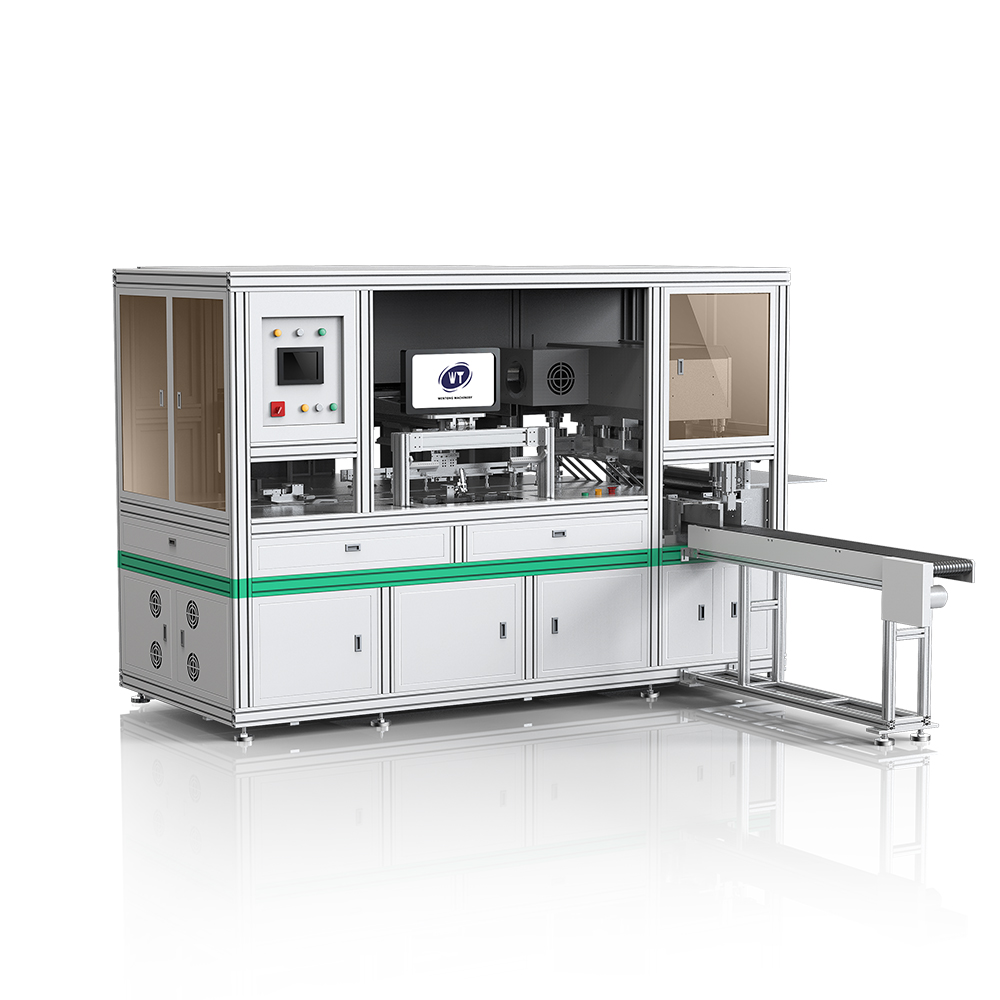
The secret to the roundness of game card edges: the application of high-precision molds
In the production of game cards and anime cards, the roundness of the edges directly determines the tactile quality and collectible value of the cards. The traditional punching method, due to insufficient mold accuracy, is prone to leaving burrs or broken edges on the edges of the card, seriously affecting the aesthetics and durability of the finished product. The application of high-precision molds is the core technological path to solve this problem. At present, advanced mold manufacturing technology can control the machining accuracy within ± 0.03 mm, with flat and seamless blade edges, and can achieve precise forming of 90-degree right angles and smooth transitions of R angles. When the precision of the mold reaches the level of ± 10 μ μm of the part tolerance, the product surface can achieve the “only installation without repair” effect without burrs. From the perspective of material mechanics, the more uniform the shear stress distribution at the edge of the die blade during the punching process, the smaller the plastic deformation zone on the material fracture surface, and the higher the smoothness of the formed cross-section. This explains why high-precision molds can significantly reduce burrs: when the blade clearance is controlled within the range of 5%-8% of the material thickness, the shear force concentration is optimal, and one-time separation can be achieved without secondary tearing.
The smart card punching machine adopts a precision mold solution to achieve the simultaneous formation of card shape and rounded corners without the need for secondary trimming. When the equipment is working, the PLC program control system cooperates with the servo power supply to cut off the optional 7.5 KW high-power servo motor and cooperates with the high-sensitivity photoelectric sensor to cut off the material position in real time, ensuring accurate alignment between the mold and the material every time. The use of high-precision molds enables printing manufacturers in the Indian market to stably produce high-end gaming card products with smooth edges and uniform dimensions, greatly reducing customer complaint rates caused by burrs or dimensional deviations. From a technical perspective, the key variable determining the amount of burrs is the matching relationship between mold accuracy and stamping power output. When the punching force is insufficient, shear separation will not be the main cause of burrs. The main reason is the occurrence of microtearing between the cutting mold and the material. The stamping power of this device is a 7.5 KW servo, which can complete a complete stamping stroke within 0.2 seconds. The instantaneous shear force is sufficient to neatly cut paper or PVC materials with a thickness of less than 0.8 mm, without residual fibers at the edges.
It is worth mentioning that the mold of this equipment is made of lightweight wood, which significantly reduces the weight compared to traditional metal molds. The mold replacement time only takes 2 to 3 minutes, which increases the efficiency of mold replacement by more than 90% compared to traditional metal molds that take more than 30 minutes. The cost of mold processing is reduced by more than 60% compared to traditional metal molds, and the replacement operation is extremely simple. This design combination of “lightweight mold + fast alignment” effectively solves the industry pain point of frequent production changes for multiple game card products and is very suitable for undertaking small batch and multi-variety anime peripheral production orders. In the Indian market, due to local printing companies often serving multiple small and medium-sized anime IP-authorized customers simultaneously, orders exhibit the characteristics of “multiple batches, small batches, and high-frequency switching.” The rapid replacement capability of lightweight wooden molds directly translates into a significant improvement in the overall utilization rate of the equipment—taking switching 5 orders per day as an example, this equipment can save about 2 hours of mold replacement waiting time per day compared to traditional equipment, which is equivalent to an increase of 20% in effective production time per day. In addition, the lightweighting of molds also brings about an improvement in operational safety. It can be replaced by a single person with bare hands, without the need for lifting equipment or professional tools, reducing the skill threshold for operators.
Efficiency analysis of large-scale high-speed punching and cutting of playing cards and anime cards
The production of playing cards and anime cards often faces two core contradictions: on the one hand, the market demand requires extremely high single-batch production; On the other hand, the fine printing patterns of the product itself require extremely high positional accuracy and edge quality during the punching process. Traditional punching equipment often struggles to balance the seemingly contradictory requirements of “high speed” and “high precision.” The smart card punching machine adopts an integrated operation process of fully automatic feeding, feeding, punching, card sorting, and receiving, achieving a critical efficiency breakthrough in the core punching process. The punching speed of this device can reach 12000 to 30000 sheets per hour (adjusted according to the layout), which can meet the large-scale production needs of various types of cards from playing cards to irregular cards. Taking the standard playing card layout as an example (9 cards per layout), the actual output speed of this device is about 3000 cards per hour, which translates to approximately 27000 cards per hour. Compared to traditional mechanical punching equipment (with a common speed of 8000-12000 sheets per hour), the production efficiency of smart card punching machines has increased by about 125%, which is equivalent to one device completing the workload of two to three devices in the past.
While pursuing high efficiency, the intelligent card punching machine is equipped with a layout visual correction positioning system and a step-by-step precise feeding mechanism, ensuring that the positional accuracy of each card remains within a high standard range of ± 0.10 mm. On high-speed production lines, traditional punching and cutting equipment often suffers from problems such as card surface pattern deviation and uneven edge cutting due to feeding errors. However, smart card punching and cutting machines use high-sensitivity photoelectric sensors to monitor material position changes in real time and feed back any detected deviation to the servo system for dynamic compensation, thereby accurately locking the punching point position and avoiding processing errors caused by high-speed operation. Specifically, the working principle of the visual correction system is as follows: in each feeding cycle, the industrial camera installed in front of the punching station collects the positioning marks (usually cross lines or circular marks) on the materials at a rate of 30 frames per second, calculates the actual offset in the X and Y directions through the image algorithm (the accuracy can reach ± 0.02 mm), and then the servo system makes real-time micro adjustments to the feeding platform according to the offset to ensure that the punching position of each first mock examination is perfectly aligned with the printed pattern. This process is fully automated and does not require manual intervention, maintaining stable operation even at a maximum speed of 30000 sheets per hour.
The combination of the step-by-step feeding structure of the device and visual correction positioning technology forms a closed-loop control system: the visual system detects each step, the servo system dynamically compensates, and the punching system synchronously executes. This technological architecture enables devices to not only handle large-scale production but also demonstrate outstanding flexibility in handling short and personalized orders. For the Indian printing industry, facing the growing demand for small-batch customized orders and the rapid development of the gaming card and poker market, this device can help enterprises efficiently switch between card orders of different specifications. The order structure of the overseas printing and packaging market is accelerating towards small batches and short delivery times, and short-plate business has become a normal expectation. The dual capabilities of “large batch high speed + small batch flexibility” of smart card punching machines provide reliable technical support for Indian printing enterprises to cope with market changes. In terms of order switching, the device can complete the entire process from disassembling the mold of the previous product to calling the parameters, installing the mold, and confirming the first piece of the next product in just 15 minutes. This is thanks to the built-in order memory system of the device—when a certain card product completes trial production and passes quality confirmation, all process parameters such as mold position parameters, feeding length, punching pressure, visual correction template, etc. are saved as independent production formulas. The next time the same product is produced, the operator only needs to select the corresponding formula from the touch screen interface, and the device will automatically call all parameters without the need for re-debugging. This feature is particularly practical for poker card manufacturers: taking the production of 54 standard poker cards as an example, when it is necessary to switch between different packaging schemes or products of different sizes, a 15-minute machine adjustment time makes it possible to complete 3-4 order switches within a day, while traditional equipment often takes a whole morning to complete a switch.
How to solve scratches and electrostatic interference during the card punching process
Anime cards and playing cards usually use glossy paper or film coating technology, with high surface glossiness and strong visual texture, but this also makes them highly susceptible to damage under friction and static electricity. The traditional punching process can easily generate friction marks or electrostatic adsorption between the card surface and the metal parts of the equipment during the feeding, positioning, and dropping processes, resulting in scratches or adhesion of the finished product, seriously affecting the quality of the shipment. In response to this technical challenge, the intelligent card-punching machine adopts a low-friction coating design on the material-conveying channel and mold contact surface, effectively reducing the physical loss of the card during high-speed movement. Specifically, all guide plates, pressure wheels, and conveyor belt support surfaces in contact with the card surface in the equipment are coated with PTFE polymer materials with a friction coefficient as low as 0.05-0.10 (equivalent to metal sliding on ice) and have self-lubricating properties, leaving no scratches on the card surface. In multi-station punching and cutting processing, the use of module transfer can effectively prevent cards from being scratched during transportation. Compared with traditional pneumatic blowing or roller pressing methods, module transfer uses a servo-driven clamping mechanism to “transport” cards from the previous station to the next station, with almost no relative sliding between the cards and the equipment, completely eliminating the physical root cause of friction scratches.
Static interference is also an important factor affecting the yield of card products. The static charge accumulated during the processing of cards can adsorb dust in the air and even cause two or more cards to stick together, affecting the normal operation of the automatic feeding system. The mechanism of static electricity generation mainly comes from two aspects: one is the contact-separation friction between the card and the conveyor belt or guide plate; The second is the rapid peeling effect between the mold blade and the material during high-speed punching. In dry processing environments (especially during the dry season in some parts of India, where relative humidity can be as low as 20%), static voltage can accumulate to several thousand volts or even tens of thousands of volts, which is sufficient to adsorb small dust particles and cause card adhesion. In response to this issue, the equipment has been designed with anti-static devices (such as static elimination rods) at the receiving station and feeding path, combined with a vacuum adsorption platform to achieve stable card separation and collection, fundamentally eliminating processing quality hazards caused by static electricity. The working principle of the static elimination rod is to ionize the air with high voltage to generate positive and negative ions, neutralize the static charges accumulated on the surface of the card, and quickly reduce the static voltage to within ± ±50V. In addition, the device does not need to reserve nail holes and connection points required by traditional punching and cutting processes at the edge of the card, completely eliminating the risk of leaving small scratches on the smooth card due to cutting connection points, directly improving the beauty of the final product. In traditional craftsmanship, in order to keep multiple cards from scattering after punching, it is necessary to leave small connection points between the cards and then break the connection points through tapping or rolling in the subsequent process. This process often causes irreversible indentation or abrasion on the surface of the glossy card. The step-by-step feeding structure of the smart card punching machine allows each card to be independently punched and collected immediately, without the need for connecting points, completely avoiding this quality hazard.
The application scenarios of smart card punching machines are extremely wide, not only suitable for mass production of playing cards, game cards, and anime cards, but also for efficient processing of various types of cards such as business cards, smart cards, bank cards, star cards, etc. It is also suitable for cutting and processing various materials such as paper, film, and soft magnetic sheets. The equipment is controlled by a microcomputer and integrates automatic feeding, visual positioning, servo cutting, automatic collection of finished products, and automatic removal of waste materials, achieving one-stop processing from raw materials to finished products. In terms of finished product processing, the equipment supports two methods of collection: sequential collection and classified collection, fully meeting the receiving requirements of different customers. The sequential collection method is suitable for standard stacked products (such as stacking one deck of playing cards), and the equipment automatically separates and stacks every 54 cards or each deck of cards through counting sensors and sorting baffles. The classification collection method is suitable for sorting different types of products (such as automatically sorting cards with slight defects into defective collection boxes), providing a hardware foundation for achieving fully automatic quality inspection and rejection. The two collection methods can be freely switched through the human-machine interface without the need to replace mechanical components. In addition, the smart card punching machine also supports connection with the subsequent packaging equipment—after collecting finished products, they can be directly connected to the automatic counting machine, heat shrink film packaging machine, or boxing machine, realizing a fully automatic production line from raw materials to finished product packaging, greatly reducing manual intervention links, and further improving production efficiency and quality consistency.

Conclusion
Based on the analysis of the above technical dimensions, the intelligent card punching machine provides complete and reliable technical support for the processing of card products such as game cards, anime cards, and playing cards, thanks to its high-precision mold that brings ± 0.03 mm edge-forming accuracy; high-speed punching system that provides a production capacity of 12000 to 30000 sheets per hour; and systematic solutions in terms of scratch prevention and anti-static. From the demand trend of the global card market, the growth potential of this industry provides a solid market foundation for device applications—the global smart card market size has reached 65.2 billion US dollars in 2025 and is expected to expand to 122.8 billion US dollars by 2035 at a compound annual growth rate of 6.3%. From the local market practice in India, international card manufacturers have announced an investment of 250 million US dollars to build a card printing factory in India, with an initial production capacity of 2 million cards per year and the potential to expand to 26.7 million cards per year in the future. This large-scale investment will undoubtedly drive strong demand for upstream cutting equipment. At the same time, the characteristics of efficient mold changing (as fast as 2 to 3 minutes) and quick order switching (completing all machine adjustments within 15 minutes) enable it to handle the production requirements of multiple varieties and batches of orders with ease. In terms of actual production data, the overall efficiency index (OEE) of the equipment can be stably maintained at over 85%, far higher than the 55%-65% level of traditional equipment. In terms of finished product qualification rate, thanks to the comprehensive effect of visual correction positioning and anti-static measures, a qualification rate of over 99.3% can still be maintained under high-speed production conditions of 30000 sheets/hour, with typical defects such as scratches, burrs, and electrostatic adhesion accounting for less than 0.5%. This equipment is capable of completing precision drilling and shape cutting without burrs, high precision, or scratches. It is a reliable technology choice for the printing and packaging industry to achieve intelligent, flexible, and efficient production, which helps related enterprises maintain technological advantages and cost control capabilities in fierce market competition. For the Indian market, which is actively expanding its business card printing capacity, the introduction of smart card cutting equipment with the above technological features will directly translate into improved product quality, reduced production costs, and accelerated market response speed, thus occupying a favorable position in fierce regional competition.