Three major technological turning points for smart card punching machines to move towards full automation
blog 2026-05-11 19:13:09 15
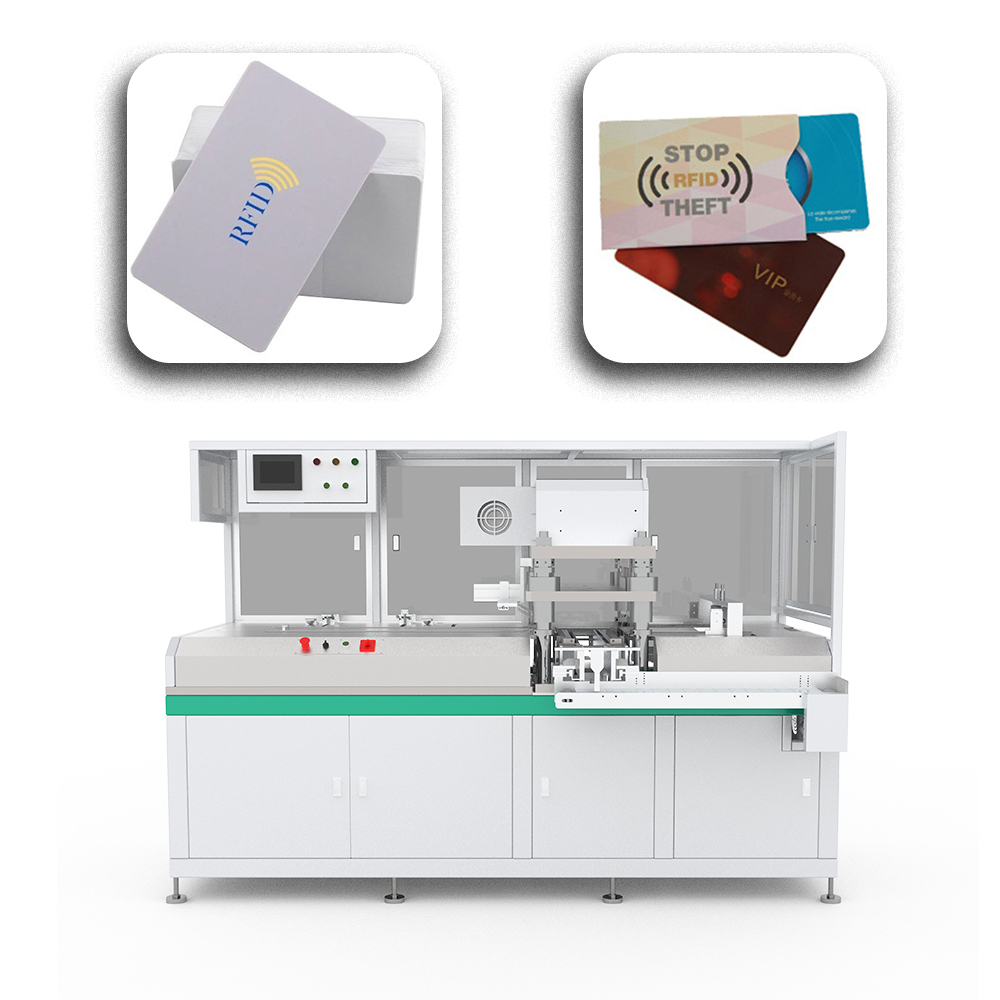
In the wave of automation upgrades in the card production industry, smart card punching machines are becoming landmark equipment driving printing enterprises from labor-intensive production to intelligent manufacturing. This device is widely used in the production of various types of cards, such as smart cards, business cards, game cards, playing cards, anime cards, bank cards, star cards, etc. It is also suitable for die-cutting of paper and film materials such as small packaging boxes. It can achieve precise feeding, automatic collection, and waste removal, fundamentally changing the traditional card cutting process’s reliance on manual labor. If the core of competition in the card industry in the past decade was production scale, now this competition has shifted to the ability of equipment to respond to “short, flat, and fast” demands—small batch orders, extremely short machine adjustment times, flexible mold switching, and almost perfect positional accuracy and card edge quality. Starting from three technological turning points, this article will analyze the comprehensive upgrade of intelligent card punching machines in terms of PLC multi-station control, robot visual collaboration, and cost efficiency optimization.
The Core Logic of a PLC Control System in Multi-Station Synchronous Drilling
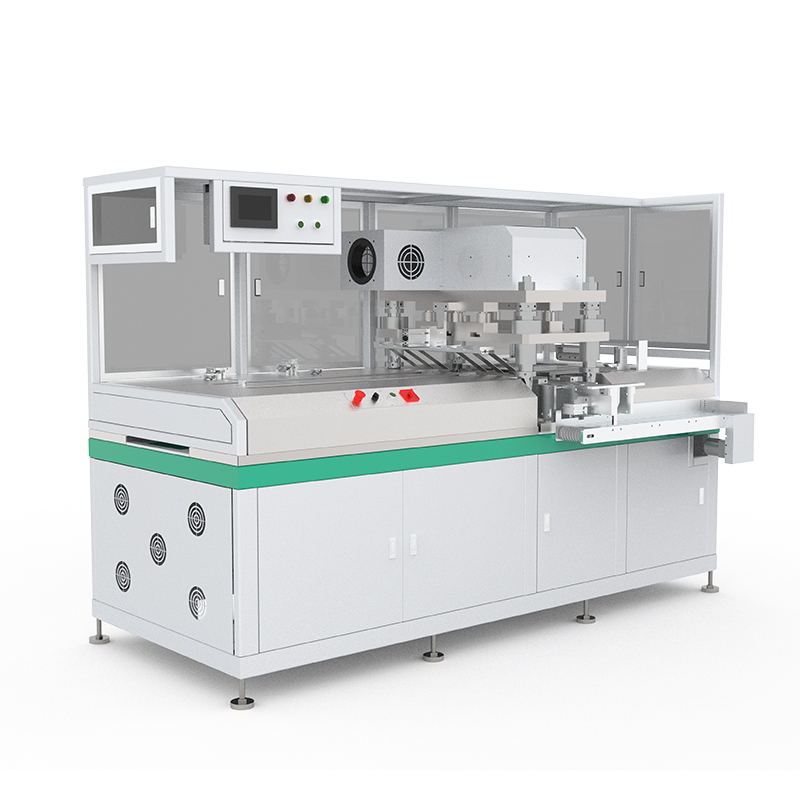
Multi-station synchronous punching is the core execution capability of an intelligent card punching machine. In traditional semi-automatic equipment, each cutting workstation relies on operators to start one by one, and there are significant time differences and intervals between processes, which not only lowers the pace but also causes deviations in finished product dimensions due to accumulated errors. The smart card punching machine achieves joint synchronous control of multiple punching stations through PLC, embedding interlocking logic and a real-time feedback mechanism into the dynamic scheduling of each workstation, fundamentally changing the serial limitation of multi-station operations. Taking the intelligent OCR card four-head punching machine as an example, the entire process includes multiple stages such as card loading, double-sheet detection, four-die workstations, OCR detection, finished product card collection, and waste card disposal. Operators can independently turn on or off any workstation as needed to flexibly arrange the process flow. The core equipment driving all of this is the combination of PLC host and A-series pulse servo motor, which, in conjunction with the HMI touchscreen, completes parameter issuance and status monitoring.
The core logic of a PLC for multi-station synchronization is reflected in its “precise stepping” capability. The servo precision of the smart card punching machine can reach 0.01mm per step, and the high pulse output capability drives the ball screw module to drive the action of each workstation. Specifically in terms of operational logic, the PLC main control unit first calculates the start-up timing of each workstation based on the feed length and actual position data returned by sensors and then aligns the action windows of all workstations to the same reference beat through synchronization algorithms. During this process, the pulse servo responds to PLC instructions with high speed and precision and works with high-sensitivity photoelectric sensors to complete longitudinal positioning. Then, the servo module is used for lateral positioning and feeding, and the accuracy can be stably controlled between ± 0.03 mm and ± 0.05 mm. Once a workstation is delayed due to material abnormalities or mechanical jamming, the PLC will pause the entire system by interrupting the fixed angle to avoid the occurrence of “card explosion.” During the entire punching process, equipment vibration may cause slight deviation in card positioning. A PLC combined with an OCR visual inspection module monitors the punching effect in real time. When multiple unqualified products appear continuously, it automatically stops and alarms, effectively reducing waste production and improving product production quality.
At the same time, PLC-based logic control greatly shortens the response time of equipment to order switching. In traditional die-cutting equipment, different orders require changes to punching parameters and workstation combinations, and machine adjustment and mold change can take tens of minutes or even hours. The intelligent card-punching machine with PLC digital parameter memory function compresses the machine adjustment time to less than 15 minutes, and the fastest time to replace molds (especially lightweight wooden molds) is only 2-3 minutes. The operator only needs to retrieve the pre-stored parameter template from the scene configuration interface of the new order, and the servo motor drive module will automatically perform initial positioning. The panel level parameter import has reduced the tuning time from the industry standard of 40 minutes to within 15 minutes. At the same time, the intelligent card-punching machine adopts a 7.5 kW servo drive for punching power, providing an abundant power guarantee for multi-station synchronous punching with low noise and high response speed. All the logical collaboration, power distribution, and timing alignment of multiple workstations ultimately rely on this core control architecture built on PLC, which is the technical cornerstone for smart card cutting machines to move from “working” to “high frequency, high quality, and no delay.”
Collaborative operation of an automatic robotic arm feeder and visual correction system
On the basis of achieving precise alignment in multi-station synchronous punching, the intelligent advancement of smart card punching machines is reflected in the material flow process. In traditional card die-cutting equipment, the feeding process often relies on manual feeding one by one, which not only consumes a lot of physical energy but also leads to uncontrollable random deviations in the position and posture of materials between batches. Even if the PLC control is precise, if the material itself has deviated from the preset benchmark, the cutting accuracy cannot be guaranteed. The solution of the smart card punching machine is to deeply integrate the automatic feeding of the robotic arm with the visual correction system, forming a closed-loop collaboration of “feeding, calibration, and punching.” The robotic arm unit extracts the cards or offset sheets to be cut from the material box through a feeding arm equipped with multiple groups of feeding suction cups and smoothly feeds the sheets into the punching area through a servo-driven guide mechanism. At the same time, in order to cope with various card types and sheet specifications, the mechanical equipment is also equipped with automatic tension control and roll diameter automatic shutdown functions. During this process, the robotic arm replaced manual labor to complete repetitive and heavy feeding tasks and also provided stable and repeatable material posture conditions for the visual correction system.
The visual correction system is the core technical layer that ensures the positional accuracy of the finished product of the smart card punching machine. The principle of visual correction is not complicated but highly precise—during the feeding process, an industrial CCD camera equipped with a high-magnification optical lens captures the positioning marks on the material in real time, including circular holes, right angles, edges, special symbols, etc. The system uses image processing algorithms to compare the actual positioning points captured with the ideal positions in the preset template and calculates the deviation values of X-axis translation, Y-axis translation, and angle rotation. This calculation process not only requires determining the magnitude of the deviation but also identifying the direction of the deviation, which poses a great challenge for high-speed moving chips. Taking the leading visual alignment system in the die-cutting machine industry as an example, it can automatically capture product targets and calculate real-time XYR (three degrees of freedom) deviation to control the UVW platform for precise correction. After the calculation is completed, the visual system feeds back offset data to the PLC through IO control, and then the servo motor drives the die-cutting tool holder to perform dynamic position correction. This closed-loop calibration not only ensures high accuracy but also has real-time response capability under high-speed working conditions, achieving an accuracy of ± 0.03 mm and a production capacity of 9000 pieces/hour for mass production output. Visual correction technology also has a bidirectional position adjustment function, which can correct both the feeding direction and the layout direction simultaneously. At the same time, based on visual results, it continuously corrects the length of the next feeding, gradually converging the feeding accuracy towards high-precision dynamic balance.
The automatic feeding of robotic arms and the visual correction system not only jointly improve the yield rate of production but also significantly reduce the skill requirements of operators for the equipment. In the traditional punching process, experienced technicians rely on manual adjustment of positioning to complete product replacement cutting, often facing subjective fluctuations in accuracy. Now, the “visual positioning die-cutting” method of smart card punching machines has completely replaced traditional positioning methods such as small hole positioning and color code tracking, solving the problem of achieving high-precision punching on material belts that cannot be effectively positioned. For expensive printed materials, visual correction also means a significant reduction in waste—the precise control of the dual vision system significantly improves the utilization rate of expensive materials. In addition, in the domestic printing industry, the defect recognition accuracy of AI quality inspection systems has reached 99.7% in scenarios such as card production, and the annual efficiency of processing printed materials exceeds 30000 sheets per hour. This highly accurate recognition capability ensures that the monitoring effect of the intelligent card-punching machine during automatic feeding and punching processes is almost impeccable, almost eliminating the loss of batch good products caused by misjudgment. The robotic arm solves the problem of supply efficiency, while the visual system solves the problem of precision control. The two work together, laying a solid foundation for the automation of intelligent card cutting machines.
Quantitative Analysis of Labor Cost Reduction and Single Equipment Output Ratio
After completing a comprehensive analysis of equipment technology, the next step is to answer a question that concerns any printing enterprise customer the most: what are the economic benefits of smart card punching machines in real production environments? The value of digital transformation needs to be reflected through quantifiable indicators, including labor reduction, capacity improvement, investment return, etc. These data will become the most powerful basis for printing enterprises to make decisions on automation transformations.
The first set of data is labor cost savings. Card production is a typical labor-intensive process, and even a semi-automatic cutting workshop requires multiple operators: one person is responsible for feeding and receiving materials, one or two people are responsible for waste collection and finished product classification, and the technical leader also frequently shuttles between various machine positions to handle mold changes and machine adjustments. In the fully automated production mode using smart card punching machines, the punching process that originally required 3 to 4 people to collaborate can be reduced to only 1 person. Based on the current salary structure of China’s printing industry, the labor cost of skilled workers in the printing industry has shifted from variable costs to fixed costs, and the supply-demand relationship in the labor market has resulted in high employment costs. This means that a single device can directly reduce labor costs by 150000 to 200000 yuan per year. When there are several intelligent punching machines in parallel in the workshop, the compression effect of labor costs is doubled. Under the operation of multiple machines, the total labor costs can be saved by 450000 to 600000 yuan per year. Internationally, according to global printing industry census data, nearly half of printing service providers have not yet deployed automation, but facing labor shortages and faster digital workflow demands, automation is becoming the new standard in the industry. The aging problem of technical personnel in the printing industry cannot be ignored—67% of global printing technicians are over 45 years old, and the difficulty of attracting and training young employees continues to increase, leading to an increasingly severe talent gap in the industry. In this situation, the smart card punching machine has resolved the impact of labor shortage on enterprises through full automation and an extremely low skill threshold.
The second set of data is the synergistic improvement of equipment efficiency and product quality. In the field of card punching, many printing factories use a “single person/single day” output ratio as a reference unit, while fully automatic punching equipment with the advantages of fast speed and high accuracy can provide output capabilities far exceeding those of peers. The smart card punching machine adopts a high-sensitivity photoelectric sensor combined with an imported ball screw module system and dual servo motor drive, ensuring smooth movement, accurate movement distance, and long-term positioning accuracy deviation of less than 0.02 mm. It is particularly noteworthy that the core value of this equipment is its high-speed switching ability for small batch orders. Affected by the lightweight mold’s changing speed of less than 3 minutes for one-click order switching within 15 minutes, the equipment completely solves the problem of traditional punching machines being difficult to adapt to multiple varieties and short delivery times in the era of not increasing order volume. From the perspective of overall device matching scenarios, the smart card punching machine not only solves the punching problem but also includes two key ways of collecting finished products: the first is to collect in order, which is suitable for process flows that require maintaining product order; the second method is to collect by category to meet the needs of customers for automatic sorting and intelligent packing. Furthermore, when enterprises need to achieve more efficient production flow, this equipment can also be connected to the back-end product packaging machinery to achieve a comprehensive solution from punching to packaging, greatly saving the turnover time of intermediate links.
The third set of data focuses on investment return rate and potential risk of capacity waste. Overall, the investment payback period for a smart card punching machine after being introduced into the production line is usually 12 to 18 months. The formation of such a rapid return period relies on its ability to solve the difficulties faced by traditional production lines when facing small batch orders. Experts warn in industry reports that companies that continue to invest in traditional production lines will face over 35% of idle production capacity by 2028. Due to the inability to economically cope with the idle production capacity caused by small-scale production, it has become the most core structural contradiction in the printing industry. At the same time, 75% of printing companies worldwide have fewer than 50 employees, and limited funds limit the large-scale deployment of new technologies, which objectively forces the industry to choose the most cost-effective automation equipment. The burr-free cutting effect and high precision of ± 0.02 mm brought by the application of intelligent automation have also significantly increased the product reputation of enterprises after obtaining customer quality certification, greatly reducing the entry threshold for high-end orders.
Conclusion
Connecting the above three technological turning points can make a more accurate data-driven judgment on the value of smart card punching machines. Firstly, at the level of multi-station synchronous punching and cutting, the PLC control system achieves a servo positioning accuracy of 0.01 mm per step and a maximum order switching efficiency of 15 minutes. The punching and cutting accuracy is controlled within an industrial-grade internal tolerance of ± 0.03 mm, and the shortest mold change time is only 3 minutes, realizing the optimization of the industry in the scenarios of card stacking cutting, “short, flat, and fast.” Secondly, in the integration of a robotic arm and visual correction, a production capacity of 9000 pieces/hour can be achieved, while high-precision visual positioning ensures that the product cut does not leave burrs, the finished product position accuracy is high, and the edge quality is stable. Thirdly, from the perspective of enterprise economic benefit indicators, replacing the traditional three-person production capacity layout with one operator can reduce labor costs by 150000 to 200000 yuan per year for a single piece of equipment, and the investment payback period of 12 to 18 months for the equipment has reached the hard target of factory decision automation. The comprehensive technological breakthrough of smart card punching machines has made “short, flat, fast” no longer a slogan but a series of measurable, replicable, and sustainable productivity figures. At present, in emerging production areas such as India and Southeast Asia, smart card punching machines are facing new opportunities for expansion. With the rapid growth of demand for large-scale printing parts in these regions, the global new installation of die-cutting machines will enter the fast lane of growth in the post-press processing market by 2025. The investment demand for automation equipment in multiple emerging markets has begun to shift from price-oriented to technology-barrier- and value-oriented, which means that smart card punching machines will play a decisive role in the future global automation upgrade.