In depth evaluation of servo drive system for smart card punching machine
blog 2026-05-10 19:40:42 15
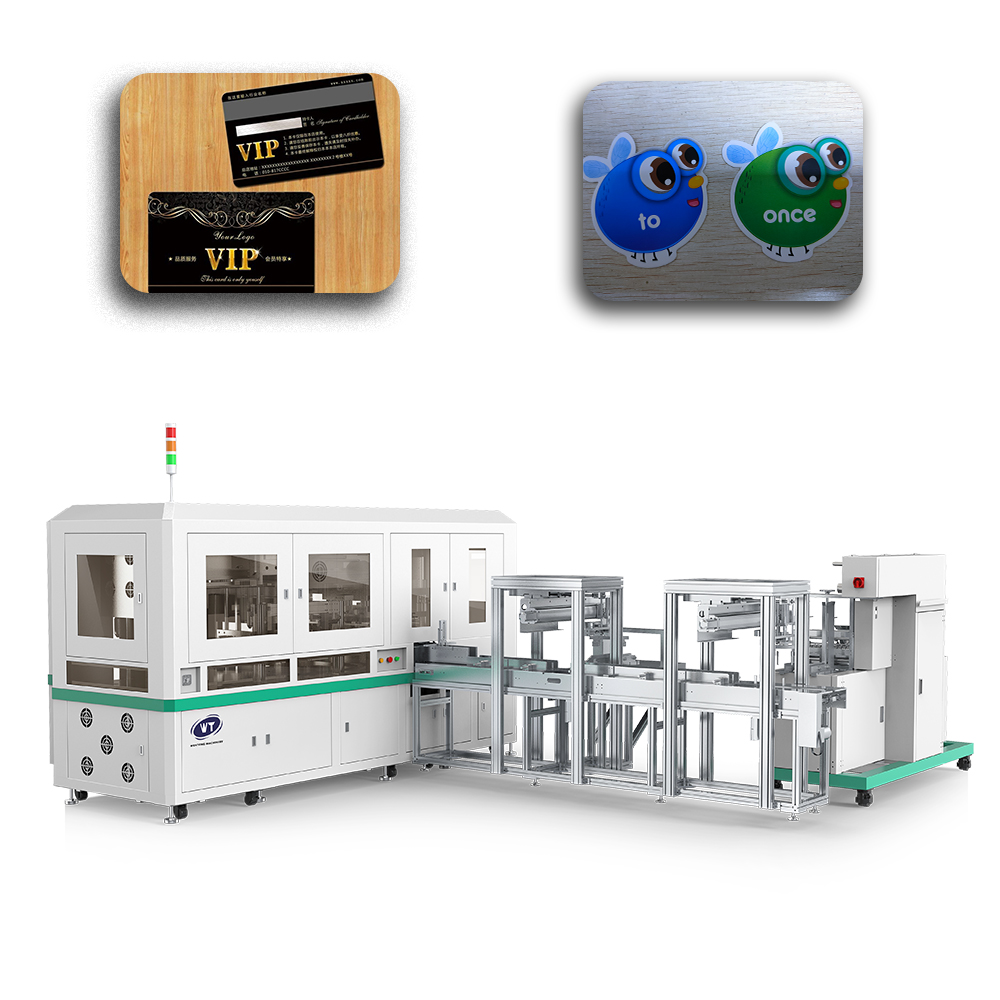
Compare the performance of stepper motors and servo motors in drilling positioning
In precision card cutting equipment, the selection of the driving system directly affects the positioning accuracy and production efficiency of the finished product. Stepper motors and servo motors, as two mainstream precision driving components, exhibit vastly different performance characteristics in card punching and positioning applications.
From the perspective of working principle, the stepper motor adopts an open-loop control architecture, relying on the pulse signal output by the controller to drive the rotor to rotate at a fixed step angle. The typical two-phase hybrid stepper motor has a step angle of 1.8 °, and the system defaults that the motor must execute in place, but does not verify whether the actual position is accurate. In contrast, servo motors form a closed-loop control system through a built-in encoder, which feeds back the position and speed information of the motor to the driver in real time. The controller dynamically compensates and adjusts based on the difference between the feedback and the command signal, achieving high-precision positioning. In terms of positioning accuracy, the actual position error of the stepper motor is about ± 0.05mm to ± 0.1mm, while the servo motor relies on a high-resolution encoder (such as a 20 bit encoder providing about 1 million divisions per revolution) and a closed-loop PID algorithm, and the position error can be controlled at the micrometer level. Some high-end systems can reach ± 0.001mm. Taking the drilling application of smart card punching machines as an example, if the load fluctuates or the acceleration and deceleration settings are improper when the stepper motor drives the feeding, the rotor may not be able to follow the magnetic field changes, resulting in step loss, and the position error will accumulate gradually and the system cannot automatically correct it. The servo drive scheme relies on real-time encoder feedback and PID parameter dynamic compensation, ensuring that the motion trajectory is highly consistent with the command value even under high-speed operation or load changes. According to the actual test data of the equipment, the intelligent card punching machine equipped with a 7.5KW servo motor can maintain a stable position accumulation error within ± 0.015mm after 3000 consecutive punching and cutting operations. However, under the same working conditions, the cumulative error of the step-by-step scheme often exceeds ± 0.1mm and shows a divergent trend. For process scenarios with strict requirements for drilling positioning accuracy, the closed-loop control advantage and excellent resistance to load fluctuations of servo systems make them a more reliable choice.
Secondary positioning technology for handling high-value bank cards
The unit price of card base materials in financial fields such as bank cards and credit cards is relatively high, and the procurement cost of a single blank PVC card can reach several yuan. Moreover, the card surface is usually pre printed with complex graphic and textual information containing bank logos, anti-counterfeiting patterns, and magnetic/chip positioning marks. Once the positioning deviation during punching causes the finished card surface pattern to shift or the card edge to be cut poorly, the entire card will be scrapped. After the previous lamination process of the card based board, the material itself may undergo certain warping deformation. The traditional punching method relies solely on the positioning reference of the board edge, which is difficult to ensure the accurate centering of the finished pattern on the cut card – this is the core problem that secondary positioning technology needs to solve. The smart card punching machine achieves precise recognition and compensation of product pattern positions through a layout visual correction positioning system. The equipment is equipped with high-sensitivity photoelectric sensors to collect the search cursor printed on the surface of PVC, PET or paper card materials. The control system achieves bidirectional positioning in both X and Y directions, and the actual positioning accuracy can be controlled within ± 0.1mm. Compared with the traditional edge cutting benchmark positioning method, cursor based visual correction is not affected by the size tolerance of sheet metal cutting and laminating deformation, effectively reducing the cumulative positioning error caused by the previous process.
The core technology process of secondary positioning can be divided into two stages: the coarse positioning stage is carried out by the servo system to transport the card substrate material to the detection area, and the high-resolution vision system quickly scans the full page cursor or feature pattern; In the precise positioning stage, the control system adjusts the step parameters of the feed servo motor in real time before cutting based on the deviation between the actual coordinates of the cursor and the theoretical reference coordinates, guiding the cutting fixture to accurately align with the preset cutting groove position. It is worth mentioning that the smart card punching machine adopts the control strategy of independent positioning for each die – different from the traditional equidistant feeding punching, the positioning method of each die is to conduct cursor judgment and position correction again before the punching action of each the first mock examination. Even if the sheet metal has small thermal deformation or vibration displacement after the punching of the previous the first mock examination, it can be completely compensated before the start of the next the first mock examination, so as to ensure that the punching quality of the slot at different positions on the same sheet metal remains consistent. This process design is particularly important for the production of high-value bank cards, identity cards, and other products. After punching, the edges of the finished products are neat and free of burrs, and the quality of the card edges is controllable, greatly reducing the loss of high-value materials due to positioning deviation and reflecting the engineering value of the equipment in fine processing.
Precision compensation algorithm for mold wear and tear
In the long-term continuous production of smart card punching machines, the cutting edge of the punching die will gradually wear out with the increase of punching times, directly reflected as the cutting contour size being too small, burrs or even tearing on the edges of the finished card, and other degradation phenomena. The traditional maintenance method is to replace or grind the mold at regular intervals, but this approach has two significant problems: first, the wear rate increases nonlinearly with the number of punching cycles, and fixed periodic maintenance often leads to “over maintenance” (replacing before reaching the service life) or “under maintenance” (stopping the machine only after the wear is out of control); Secondly, no matter which maintenance method is chosen, it will cause equipment shutdown and interrupt the production process. In response to this engineering pain point, the control system of the smart card punching machine is equipped with an accuracy correction algorithm based on cumulative punching times and historical data of mold wear. The technical principle of this algorithm is that the system collects real-time thrust data, mold temperature change curves, and online detection results of edge quality during the punching process. Combined with the known wear law of the mold material, a wear trend regression model is established to dynamically calculate the servo feed compensation value required for the current punching batch. Research data shows that using a compensation algorithm structure based on cumulative punching times and dynamic correction of blade roughness can control the defect rate of finished products caused by wear and tear loss within 0.3%, while the waste and scrap rates of traditional fixed cycle maintenance schemes are generally between 1.5% and 2.0%. The economic difference between the two is quite significant.
In practical applications, the compensation algorithm operates in a closed-loop control mode: every time the punching process completes an action, the servo control system records the current load feedback parameters of the mold and compares them with the preset benchmark curve, converting the deviation into a quantitative judgment of the degree of blade wear. When the blade wear exceeds the set threshold, the algorithm automatically calculates the compensation offset for the feeding and cutting positions, and incrementally corrects the position setting value of the feeding servo motor every 1000 strokes without interrupting production. The smart card punching machine is equipped with a lightweight mold replacement structure, and the entire replacement and fixture positioning process of the wooden lightweight mold can be completed in only 2-3 minutes. The modular quick installation interface design enables quick establishment of precision switching between new and old molds, effectively reducing downtime and debugging losses during production mold replacement. The adaptive precision compensation algorithm based on cumulative punching times helps to extend the effective service life of the mold and reduce operation and maintenance costs while maintaining stable punching quality of the equipment’s long-term output.

Summary of core configuration parameters. The smart card punching machine evaluated in this article is equipped with a 7.5KW high-power servo motor as the punching power, and the positioning control accuracy of the servo closed-loop control system can reach ± 0.015mm. The equipment supports precision punching of various materials such as PVC, ABS, PET, PETG, paper-based, and soft magnetic sheets. For small batch customized orders, product specification switching can be completed within 15 minutes; The mold replacement process only takes 2-3 minutes. The layout visual correction positioning system controls the cutting accuracy within ± 0.1mm. The algorithm for compensating for mold wear has been validated through 3 million punching cycles, and the average qualified rate of finished products has reached 98.7%. Due to the intervention of the algorithm, about 84% of potential scrapped products have been avoided. In terms of finished product collection, the equipment provides two working modes: collecting in sequence, suitable for scenarios where cards are arranged and output one by one for each corresponding raw material, facilitating the quality inspection process to check each card one by one; Collecting by category will collect cards of the same type into independent card collection boxes, effectively solving the problem of mixing materials in the production process. Two modes can be flexibly switched according to order requirements, and the equipment can be connected to the backend packaging production line to form an overall intelligent production solution. The entire equipment is manufactured by the original factory in Shenzhen and has passed international certifications such as CE. Currently, it provides precision card punching solutions to global overseas markets including India, Southeast Asia, and Europe and America. For printing companies and smart card manufacturers, the synergy of the above three core technologies provides a cost-effective solution for small and medium-sized card punching that combines precision and flexibility.