How does the smart card punching machine solve card burrs and displacement?
blog 2026-05-07 19:59:14 22
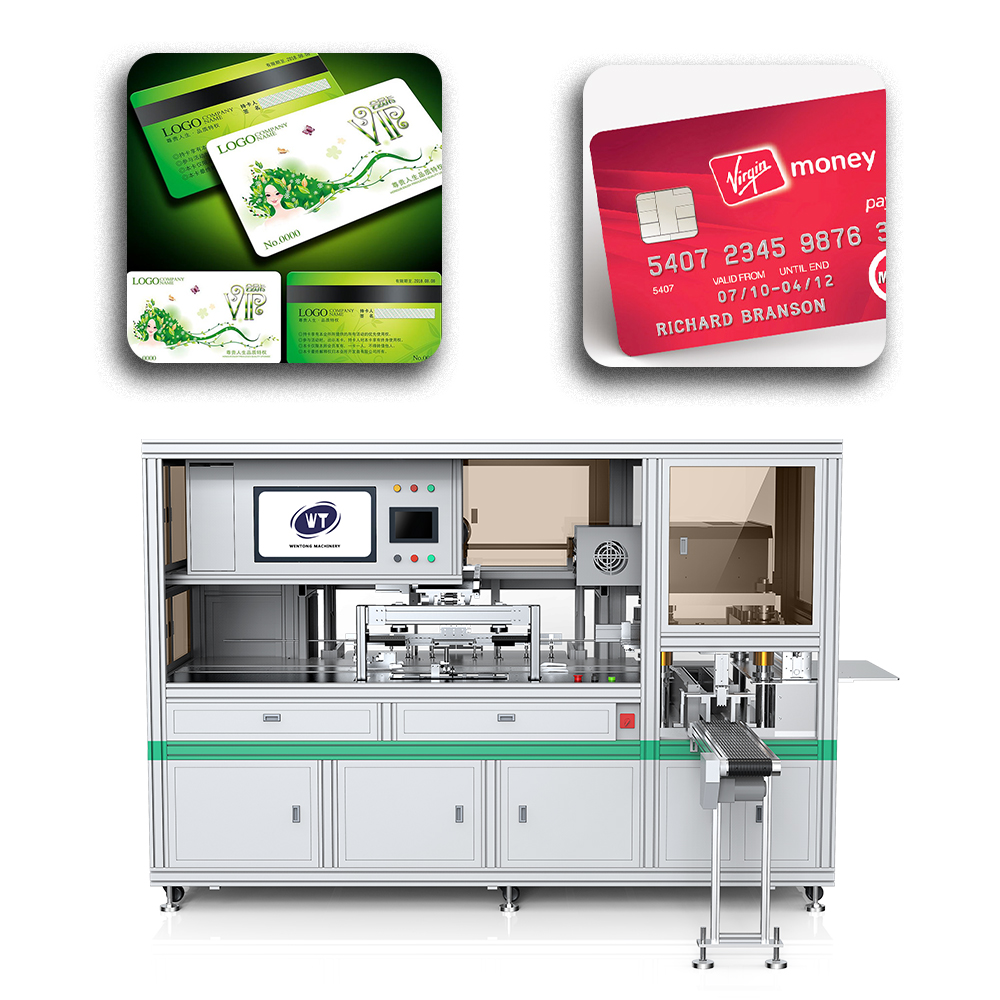
Solving card edge roughness: application of high stability punching technology
The key to the punching quality of card products lies in whether the cutting edge is smooth and even. Traditional punching methods are prone to producing burrs during the machining process due to factors such as tool wear, material thickness changes, and mechanical clearances. Improper handling of lap joints can lead to abnormalities such as burrs, which is a headache for many printing factory owners. Burrs not only affect the feel and appearance of finished cards, but in products such as bank cards and star cards that require high edge flatness, they may also directly lead to the scrapping of the entire batch of products. The ideal punching equipment should ensure speed while minimizing the impact force of materials on the paper feeding table, thereby ensuring accurate positioning and clean cutting edges.
The core of high stability punching technology lies in the collaborative optimization of punching power system and mold accuracy. The leading smart card cutting machines in the current industry generally use high-power servo motors as the cutting power source, which happens to be the key technical configuration of the equipment – driven by a 7.5KW servo motor for cutting action, with low noise, fast speed, stable power, and flexible adjustment of cutting speed according to material thickness. Compared to ordinary motors, servo systems can achieve micrometer level repetitive positioning accuracy, eliminate the influence of mechanical clearance on cutting quality, and ensure smooth edges without burrs or collapse of finished products. At the same time, the punching die made of high-quality mold steel can ensure precise blade clearance, allowing the four sides of the finished card to achieve perfect forming of right angles and rounded corners.
In addition to the technological investment in the power system, the guarantee of cutting accuracy also depends on the matching of the feeding system and mold design. High sensitivity positioning sensors, combined with imported high-precision ball screw modules for feeding, ensure that the position parameters of each cutting point are adjustable and controllable. Combined with the step-by-step precise feeding technology of the smart card punching machine, the material can obtain precise position control at each punching station, avoiding offset errors caused by pushing inertia. In addition, some models adopt advanced material sorting and conveying structures combined with anti-static systems to further ensure the stability and reliability of material conveying, effectively reducing card adhesion and edge wear caused by electrostatic adsorption. The overall optimization from power, feeding to mold constitutes a complete solution for high-quality card edge forming.
Say goodbye to misalignment and waste: cost savings brought by automatic calibration system
The misalignment and waste caused by inaccurate punching and cutting positioning are a huge “invisible” loss in the printing industry. When mechanical components become loose, the working surface of the fence type cardboard is uneven, and the feeding positioning is not smooth, it will directly affect the punching accuracy, resulting in a large number of semi-finished products being scrapped. Some printing factories have inventory backlog rates as high as 40%, with stagnant inventory caused by processing errors directly resulting in economic losses of hundreds of thousands or even millions of rupees. The problem of misalignment not only consumes profits, but also consumes manpower, time, and material costs, becoming an important factor restricting the profit margin of printing factories.
The board surface visual correction and positioning system of the smart card punching machine is designed to solve this pain point. The system uses a CCD visual imaging system to real-time recognize feature symbols such as circular holes, right angles, edges, and text on materials, achieving precise correction of vertical, horizontal, and angular position offsets. The CCD visual positioning system, in conjunction with the UVW three-axis linkage platform, provides real-time feedback on the current coordinate values of the material, and the platform adjusts itself to the set position. This process does not require manual intervention, and the response time from recognition to correction is controlled within 1.0 second to ensure that the cutting action is always aligned with the target position.
The cost savings brought by the automatic calibration system can be seen from two dimensions: material utilization and production efficiency. In terms of punching accuracy, the equipment using this technology can achieve a punching accuracy of ± 0.10mm, fully complying with the ISO CR-80-7810 international standard, ensuring consistent dimensional height of the finished product. High precision not only reduces the loss of waste caused by misalignment, but also breaks the dependence on “nail holes” and “connection points” in traditional punching and cutting processes – due to precise positioning, there is no need to set auxiliary connection points for the mold forming position, and the finished product is completely separated from the layout with smooth and clean edges. In terms of production capacity, the real-time production capacity of the smart card punching machine can reach 18000-22000 sheets per hour (depending on the template layout), greatly reducing the processing cycle of a single card. From a longer-term perspective of customer cooperation, stable quality, smooth edges, and high precision of finished products can help printing factories establish a solid quality reputation in competition with peers and win the trust of more high-value card orders.
3-minute mold change: Let your punching machine no longer stop due to wire changes
In the production mode of multiple varieties and small batches, rapid mold change is the key factor determining equipment utilization rate. The mold replacement of traditional punching equipment often takes tens of minutes or even hours, and during downtime, not only is the production line idle, but valuable manual calibration time is also occupied. The core goal of the SMED rapid mold change method proposed in lean production is to shorten the line change time to less than 10 minutes, and even achieve the ideal state of “one minute mold change”. This concept is gradually moving from theory to practical application.
The smart card punching machine has achieved a major breakthrough in mold changing design – the use of lightweight wooden molds has reduced the mold changing time of the entire production line from tens of minutes in the past to 2-3 minutes. Advanced equipment can even achieve a mold change time of less than 3 minutes for the entire line, and multiple punch presses can change molds simultaneously without interfering with each other. The lightweight mold material allows operators to independently disassemble and assemble without the need for complex auxiliary tools. The new mold positioning structure replaces the traditional bolt locking method. After replacing the new mold, the motion control system can automatically identify and calibrate through one click operation, without the need for repeated cutting and calibration.
The smart card punching machine is also designed with a quick response capability of 15 minute order switching for small batch order scenarios. The equipment not only supports automatic feeding function, but also achieves seamless connection between different production tasks; The advanced card conveying structure and dual servo screw alternating feeding system ensure the high-speed production rhythm after switching. After the order switch is completed, the automatic stacking and collection of waste materials will immediately start, shortening the line changing time to the limit and allowing the printing factory to truly achieve a “short, flat, and fast” production rhythm. The convenience of order switching and machine adjustment also provides unprecedented production flexibility for printing factories – one device can simultaneously meet the production needs of various card products such as smart cards, game cards, playing cards, anime cards, bank cards, star cards, etc., and adapt to multiple materials such as paper, film, and soft magnetic sheets. When receiving customer sampling requirements, the equipment can respond quickly and complete small-scale trial production in a timely manner without affecting the main production line.
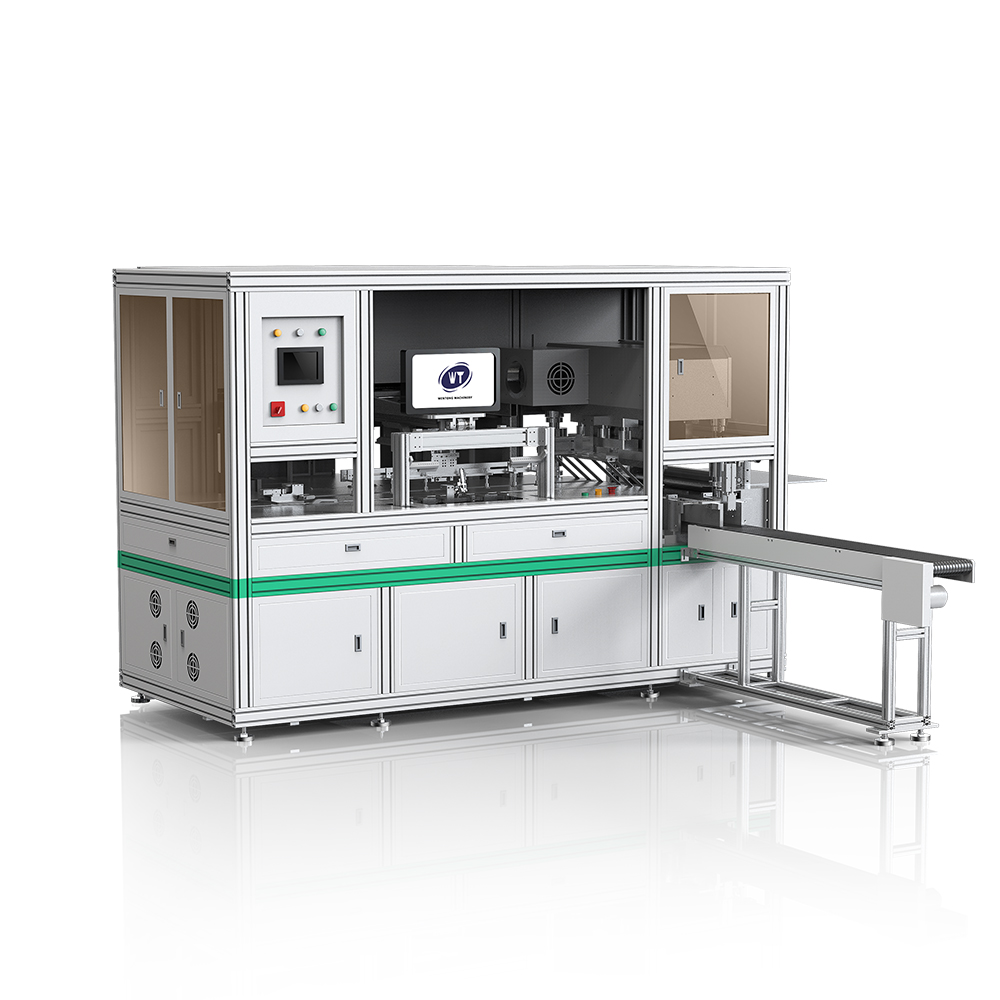
Conclusion and Data Review
Based on the above technical analysis, the intelligent card punching machine provides high-value solutions for the printing industry from three dimensions: in terms of quality, through high-precision punching at the ± 0.10mm level, combined with real-time calibration of the CCD visual correction positioning system, it ensures that the edges of the card products are smooth, flat, burr free, and displacement free, fully complying with ISO international standards; In terms of efficiency, the combination of 2-3 minutes of lightweight mold changing and 15 minutes of fast order switching significantly reduces production line downtime. Combined with high-speed production capacity of 18000-22000 sheets per hour, it significantly improves equipment utilization; In terms of cost, precise positioning control and automatic waste collection system minimize material loss – based on an annual production capacity of about 5 million cards, even if only a 2% waste rate is saved, the material cost corresponding to about 100000 cards can be saved annually, which is enough to recover additional purchase costs within a few months after the equipment is put into operation.
For printing factory owners deep in the Indian market, choosing such a smart card punching machine has gone beyond simple equipment procurement. It represents a fundamental transformation from “traditional punching” to “precision manufacturing”, completely removing the two most unbearable cost nails of “burrs” and “displacement” from the operation and maintenance level.