How to transform a production line with a fully automatic intelligent punching and cutting machine?
blog 2026-05-05 17:57:38 98
Automation integration of the stamping process from single-machine operation to online production
The business card printing industry has long been based on traditional stamping processes, such as manual feeding, single-machine processing, and manual collection. At one end of the production line, there is a smart card punch press, and the operator manually feeds the coil or sheet into it. Any major changes require manual intervention, which not only reduces efficiency but also leads to production line suspensions, making it difficult to break through the bottleneck of overall production line efficiency.
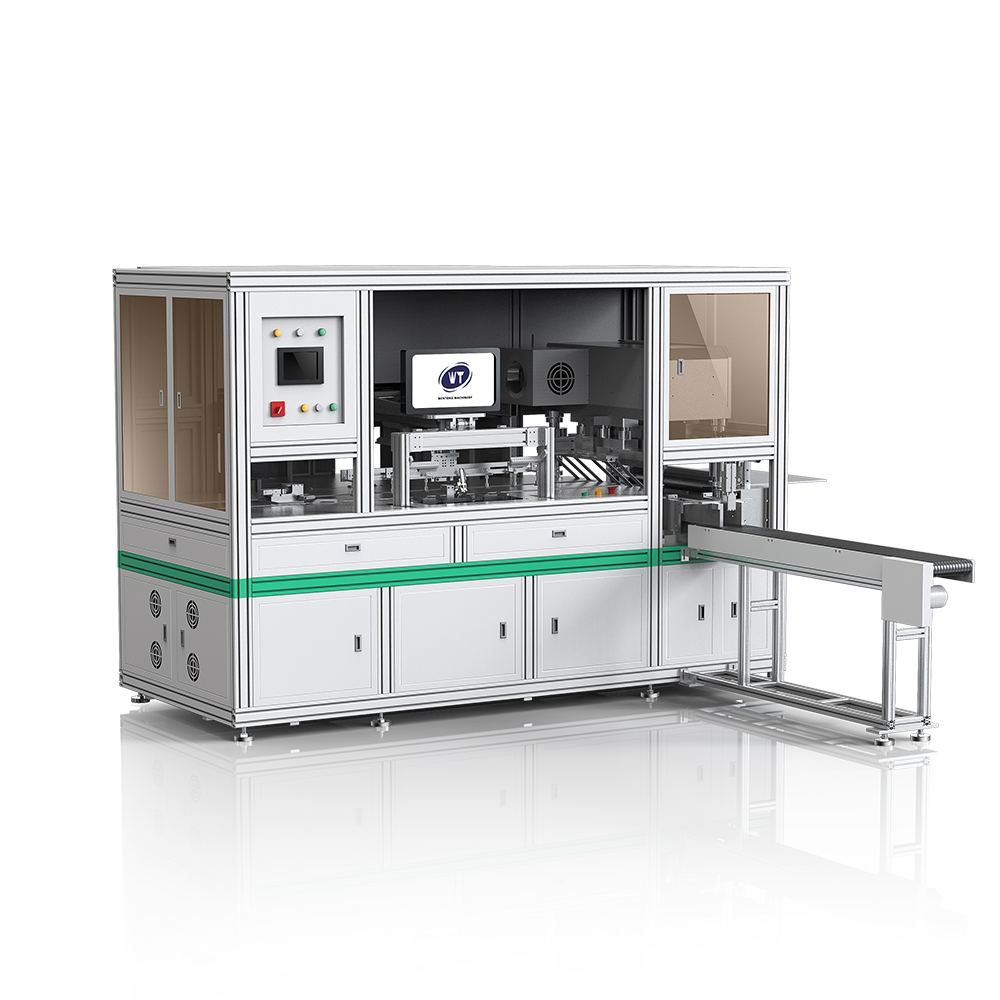
The smart card punching machine adopts a step-by-step precise feeding design, and the servo of each running trajectory is driven by a PLC control system so that the positioning between workstations is at the micrometre level. The entire process of machine structure includes automatic feeding, two-piece inspection, servo cutting, OCR visual inspection, finished product sorting, and automatic waste removal. This machine can handle tasks from raw materials to finished products in one stop, without the need for manual handling and temporary storage. For example, the high-speed fully automatic card punching machine publicly used in China is completely controlled by PLC, integrating automatic feeding, CCD visual positioning, servo cutting, card automatic collection, and garbage automatic collection. The process chain is interlocked, and the real-time output capability can stably reach a scale level of 18000-22000 pieces per hour.
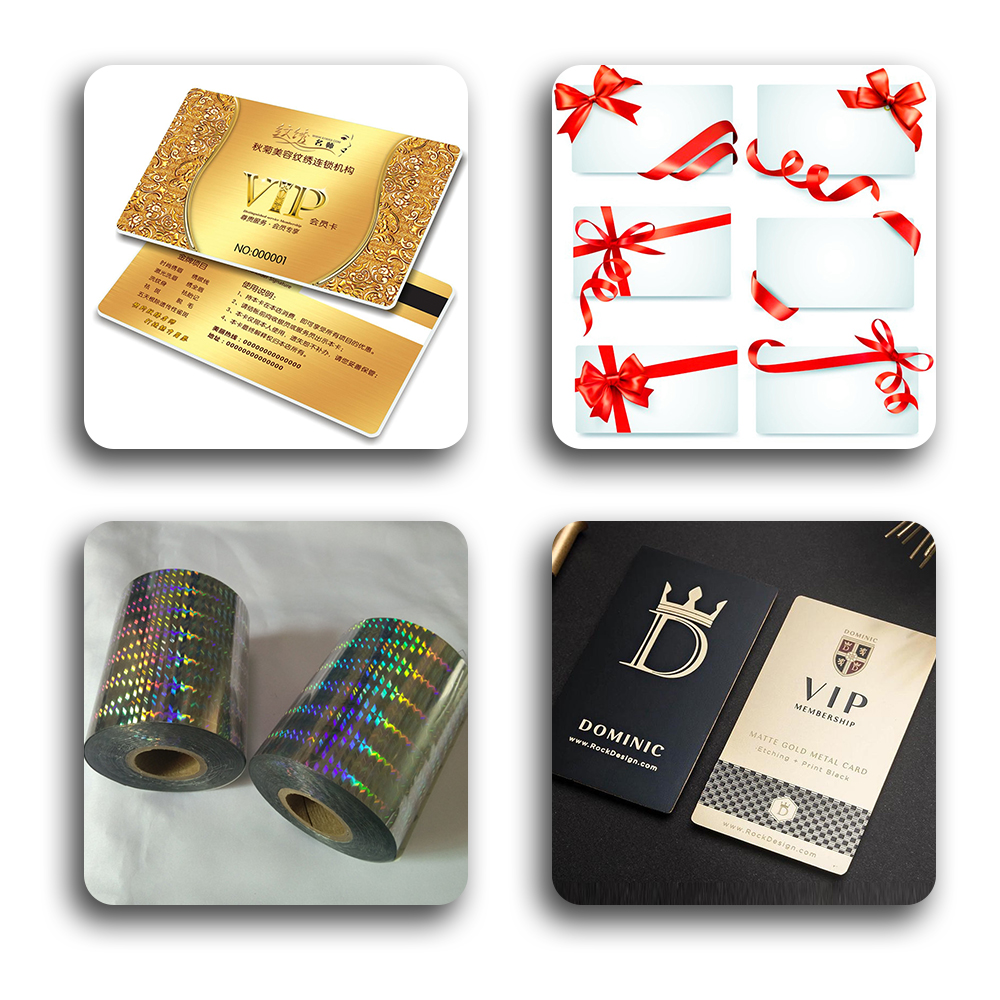
Smart card punching machines are widely used in various scenarios, such as for smart cards, bank cards, business cards, game cards, playing cards, anime cards, celebrity cards and other card products. It can also be used for stamping small packaging boxes and other printed products such as paper, film, and soft magnetic sheets. The fragmented and isolated single process of the previous “stamping equipment” has been transformed into tightly integrated components on fully automated production lines, almost eliminating the need for manual intervention in between – from bundling materials to finished product stacking and packaging, using smart card stamping machines can be directly integrated into the entire automation process.
How can AI intelligent detection remove waste cards in real-time during the punching process?
Due to equipment vibration, material deformation, or mould ageing, small deviations in card positioning often occur during the stamping process. A deviation of 0.05 millimetres can even cause the stamping indentation to deviate from the nominal position, damaging the characters and coil areas of bank cards or smart recognition cards and therefore classified as unsellable waste. In many cases, traditional production lines perform sampling processes to detect many small deviations. When inspectors find defective products, hundreds of scrap cards may have been produced continuously.
Nowadays, smart card punching machines have solved this problem through an integrated AI visual inspection system. In the later stage of each smart card punching machine, the device is equipped with high-resolution industrial cameras and deep learning detection modules. After the card completes the punching action on the conveyor belt, the visual inspection system can quickly capture the image of the finished product and complete image processing and comparison within milliseconds to accurately identify multiple indicators such as punching position, card edge quality, contour deviation, etc. The judgement results are divided into two levels (OK or NG). The controller of the smart card punching machine will automatically issue a rejection command for unqualified waste cards and defective products. The waste will be transferred separately and poured into the waste collection box, without entering the subsequent card collection and packaging process. The public technical solution shows that the intelligent OCR card four-head punching machine starts visual photography through IO control and receives the recognised OK/NG results to check whether the punching effect is qualified. Unqualified products are discarded and collected, which helps customers greatly improve product quality and production efficiency. More importantly, when multiple non-conforming products are detected continuously, the system can automatically shut down and sound an alarm and notify the operator to check for positioning errors or mould wear, fundamentally solving the problem.
The value of this AI visual ability is equally prominent in the process of mould replacement and debugging. 2. The operator replaces the mould, changes the product size, loads and unloads the lightweight wooden mould, and quickly aligns it, which only takes 2-3 minutes. Then, the device automatically completes target positioning and XY θ coordinate correction based on the layout visual correction and positioning system of the equipped smart card punching machine, completely solving the hidden danger of entrance and exit accuracy caused by manual calibration. No more connection points are needed, and there is no need to pre-order the product. The finished product has good positioning accuracy, smooth and neat edge quality, and no burrs, setting a new benchmark for the professional surface forming quality of card products. The standard for precision testing of die-cutting machines is that the cutting position deviation of ordinary die-cutting machines is ≤ ± 0.1 mm. However, high-performance intelligent card punching machines are equipped with servo drives and visual verification, locking the positioning accuracy index within ± 0.03 mm, so that each card can be accurately punched in the form of data within the nominal size range of controllable engineering specifications.
Punching system, providing real-time feedback on OEE production
For business card manufacturers aiming to upgrade lean manufacturing, simply knowing that the equipment is running is not enough. Managers are waiting for a fundamental question, which is the ratio of the effective time of equipment used to manufacture qualified products to the planned production time. In industry, this issue is called OEE (Overall Equipment Efficiency). OEE is a comprehensive efficiency indicator composed of time utilisation, performance utilisation, and qualified product rate. It is used to measure the comprehensive efficiency loss from time loss, speed loss to quality loss. It is almost impossible to obtain OEE results with an accuracy rate of over 70% in a medium-sized business card printing factory with 10 intelligent card punching machines, relying on manual meter reading and filling for efficiency statistics. This is because the time spent on replacing moulds, the decrease in hourly output caused by equipment micro-pauses, and the implicit time loss caused by waste will be ignored and buried in cross-day statistics.
The introduction of a production line equipped with modern smart card punching machines has completely changed this situation. The control system of the smart card punching machine collects real-time time data, production quantity, qualified product rate, and shutdown reason identification from the PLC end and generates a visual OEE board and various data processing through the HMI human-machine interaction interface. Management personnel can check the current equipment and time utilisation of the entire cutting line at any time without estimating the time required to replace moulds and clear faults. At the same time, it can also monitor performance utilisation and determine whether the equipment has insufficient production capacity due to raw material conveying resistance or reduced operator speed. More valuable is that the qualified product rate data will be connected with artificial intelligence vision.
This fundamentally changes production management from passive inspection to proactive and refined control. A common reason why the OEE level in the printing industry remains below 70% is that it takes a long time to replace moulds and adjust machines. The order change and time adjustment of the smart card punching machine only take 15 minutes, and the mould change only takes 2 to 3 minutes. With the help of data-driven monitoring systems, factory operations can find the most accurate intervention point from the three efficiency traps of downtime losses, slow operation, and quality deviation, thereby more scientifically affecting the OEE international standard line of 85% of core equipment. In practical engineering innovation cases, printing and packaging enterprises have fully realised the vertical/horizontal data chain from ERP to equipment data collection, from suppliers to customers, and optimised the equipment layout and material transfer of processes such as die-cutting and box pasting. Therefore, the overall OEE growth rate increased by 31.9%, while the quality loss rate decreased by 33.1%. It demonstrates the feasibility of creating real cost reduction space through intelligent monitoring and process reconfiguration.
Conclusion
The rapidly growing smart card market in India, with a compound annual growth rate of 7.40%, is not difficult to become a strong driving force for manufacturing upgrading through the triple technology of smart card cutting machines, including connection, perception, and dataisation. The device itself enables traditional card punching operations to enter the unmanned continuous production process cycle through gradually precise feeding, visual correction, and precise cutting accuracy of up to ±0.03 mm. In waste screening, visual artificial intelligence detection allows for the analysis of pass rates before final card reception and real-time waste removal, preventing rework of waste and work orders in downstream packaging processes. Comparing the real-time OEE data feedback combination of the new generation smart card punching machine with traditional punching equipment and using the efficiency blind spots that cannot be seen in production management as clear indicators enables managers and engineers to accurately guide decision-making direction. According to actual production data in the industry, after users upgrade their smart card punching machines, the mould change time can be reduced from the original 20-30 minutes to less than 15 minutes, a decrease of more than 50% compared to the previous year. The scrap rate can be controlled within a manageable range, and a one-click link can be established with the packaging sorting line, ultimately resulting in the OEE of the core production process exceeding the international threshold of 85%. From the above data results, it can be seen that the intelligent card punching machine, with its absolute product advantages of short, flat, fast, small batch, and high precision, is completely changing the post-punching process of the business card industry, providing higher efficiency and more stable quality assurance for the Indian market and even the global business card industry.