What is the difference between laser cutting and punching when making irregular cards?
blog 2026-03-05 21:52:25 16
In the printing and packaging industry, especially in the Indian business card market, the cutting process of “irregular cards” has become the most important part of quality control. This is because more and more people want personalized wedding invitations, anime and game cards, and holiday promotion cards. Currently, laser cutting and punching are the two most common processing methods. Many people who purchase PVC punching machines do not know how to use them. This article will discuss the main technical differences between the two so that you can make better choices on how to set up a production line.
Laser cutting is technically a ‘non-contact thermal processing.’ It rapidly melts or evaporates objects by using a laser beam with a large amount of energy. Punching is a type of “contact cold processing” that uses a PVC card punch to push the mold in and then uses physical shear force to separate the material. The cost, accuracy, and efficiency of these two types of energy directly affect their development methods. Understanding this difference is crucial for maintaining low production costs for the common multi-variety and small-batch orders in the Indian market.
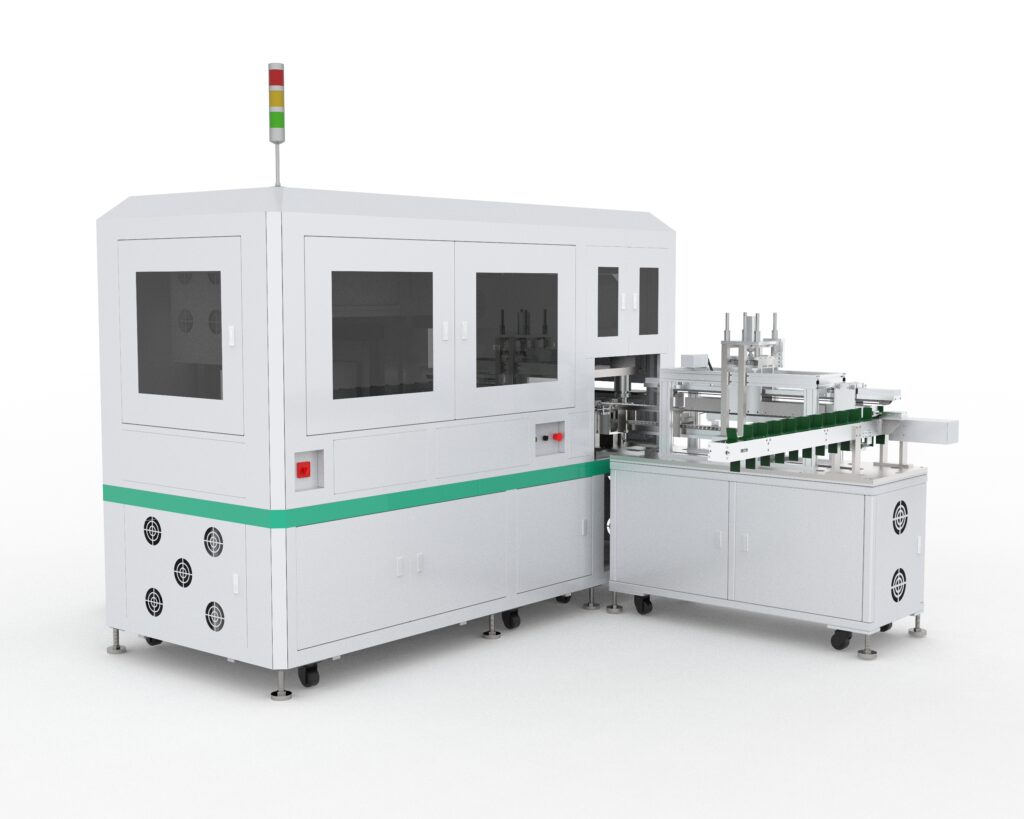
1. Edge quality and accuracy: cold shear and thermal effects
Edge quality is the most important factor determining the level of high-precision game cards or star cards. Laser cutting makes it easy to cut complex shapes because it focuses the beam very precisely. However, since laser cutting is a heat treatment process, if the settings are not set correctly when cutting materials such as PVC, a small heat-affected zone may be formed. This may cause discoloration or odor at the edges, which is a risk for very discerning customers of the brand.
On the other hand, using a PVC card punching machine for punching is a physical cutting process. Adopting a high-power servo system of 7.5 KW for stamping and cutting. This gives them strong and stable shear forces. Due to the principle of cold cutting, the edges of the finished product are smooth and free of burrs. There are no issues with yellowing or odor. The edges of the perforated card are very straight and smooth to the touch. This makes PVC card punching machines the best choice for producing high-end business cards and bank cards, especially for Indian customers who use thick PVC or soft magnetic sheet materials.
2. Mold and order replacement efficiency: competition between sampling cost and change speed
Printing factories often need to change orders, and the price of molds and the speed of order changes directly affect how much money they earn. The biggest advantage of laser cutting is that it does not require any molds and can be directly programmed on a computer. This is very good for cards and samples that differ greatly from each other. But this usually means that the equipment is expensive and it takes a long time to manufacture many things.
Our PVC card punching machine uses a lightweight wooden mold solution. The standard CR80-sized cards and certain shapes of playing cards popular in the Indian market are much cheaper to make with wooden molds than with steel plate molds. Replacing the mold only takes 2 to 3 minutes, and the equipment can switch and change orders within 15 minutes. This makes the “short, flat, and fast” production model a reality. When customers need to make samples, the mold system can respond quickly. Once mass production is confirmed, it can be easily connected to high-speed stamping, thus avoiding the speed bottleneck of laser cutting in mass production.
3. Adaptability of materials and production process
Laser cutting is less effective on certain materials than on others. It can cut many things, but if it comes into contact with highly reflective materials or PVC containing chlorine, it may release harmful gases or damage the lenses. The stamping process is very flexible, which can be seen from the stability of the mechanical structure.
Our PVC card punching machine can punch many things, such as different types of paper, PVC film, soft magnetic film, and so on. You can also use it in many different places. By changing the mold and feed settings, you can easily create paper invitations for Indian festivals, high-end PVC smart cards, or celebrity collectible cards with magnetic stripes. The device has a slow and precise feed system, and the servo system ensures that every step of the feed is very precise. This means that even if the printing positioning marks are not perfect, the visual correction and positioning functions of the layout can still be automatically fixed to ensure the high quality of the finished product.
4、 Waste disposal and collection of finished products
Despite rising labor costs, factories in India are still striving to achieve automation as much as possible to reduce waste. After laser cutting, cleaning waste usually requires the assistance of people or complex ventilation systems. Modern PVC card punching machines are better at integrating systems. Our equipment is designed for post-processing and can achieve precise feeding, automatic collection, and waste removal.
After punching is completed, the machine will automatically separate the finished product from the waste. There are two flexible ways to collect finished products: 1. Put them together for future manual quality inspection or special packaging; 2. Sort them by category and state the differences between different orders or damaged items. The device has reserved interfaces that can be connected to the overall solution of backend product packaging, which is even more important. This means that the entire process from the roll or sheet to the final packaging box can be fully automated. This means that Indian factories producing playing cards or gaming cards can directly link the punching and cutting processes with sorting and packaging lines. This makes the cost of hiring short-term workers lower.
5. Technical disassembly of modern PVC punching machines
We have broken down the main technical points of the PVC card punching machine to help the technical manager choose the appropriate tool. This is not just a machine; this is also a way to solve the problem of “short delivery time and wide variety” in the Indian market.
Visual correction and positioning: The device has a system that can read positioning marks on the printing surface. Even if there are color matching errors or paper bends due to moisture during the printing process, the machine can automatically calculate the amount of addition or removal for each punch and cut to ensure that they all conform to the pattern range.
Step-by-step precise feeding: The servo motor is driven by a stepper feed mechanism, and the step pitch error of each step is controlled at the micrometer level. This is different from traditional devices that only push once. This is very important for making continuous cutting cards that require multiple perforations, as it can prevent errors from accumulating.
The design of nail-free connection: This is a big step forward in the stamping process. To prevent the card from falling off, traditional card punching usually requires maintaining one or two connection points. Then, the edges are rough so that the card can be opened. Our designed molds have precise blade angles, allowing us to manufacture die-cut products without the need for nail holes or connection points. The cards do not come into contact with each other in the mold, and the special waste frame structure allows the waste skeleton to come out. Collecting finished products in order makes post-processing smoother.
Balancing sampling and mass production: Due to the quick replacement function of lightweight molds, customers can even use the same machine for sampling confirmation and batch production in the morning and afternoon. This device is very suitable for small batch orders, which helps Indian printing factories quickly complete orders from small and medium-sized buyers.
The position accuracy and edge quality of the finished product: The frame is very hard, with a servo power of 7.5 KW, which can prevent punching vibration. The edges of the finished product are very straight, especially at the rounded corners, smooth, and without dents. This is what a bank card should look like.
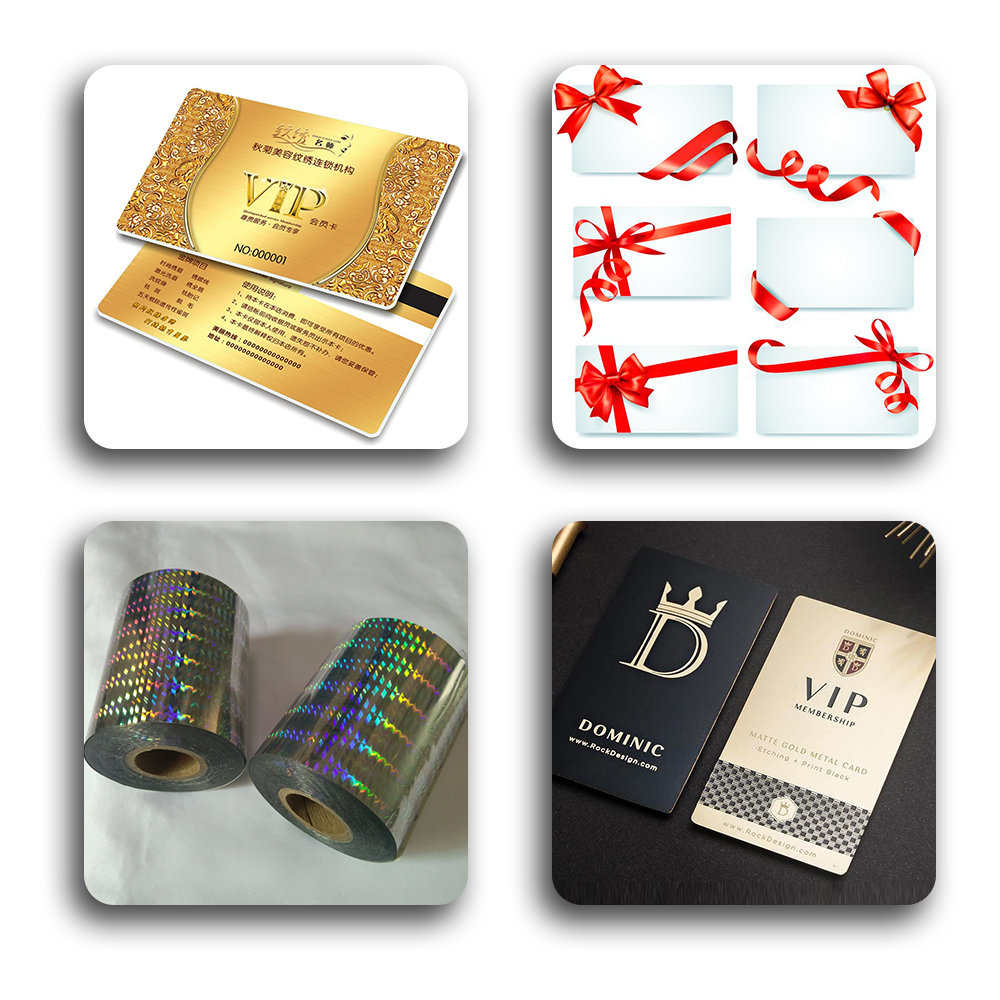
Conclusion
In short, laser cutting and punching are not only different ways of doing the same thing, but they can also be used together. Laser cutting is very useful for rapid prototyping of very complex and mold-free materials. But for printing companies that hope to save money, improve edge quality, make machines more flexible, and automate production, especially in markets like India where there are many orders for PVC cards, playing cards, and anime cards, high-performance PVC punching machines are definitely a better engineering choice.
Our equipment is based on the concept of “short, flat, and fast.” It has a servo power of 7.5 KW and can switch orders within 15 minutes and replace molds within 2 to 3 minutes. The data shows that this model can shorten the preparation time for small batch orders by more than 70%. By properly sorting garbage and picking up finished products, it can also save 2-3 hours of labor costs for the factory after production.